DEVELOPMENT ALTERNATIVES, INC./FINNET
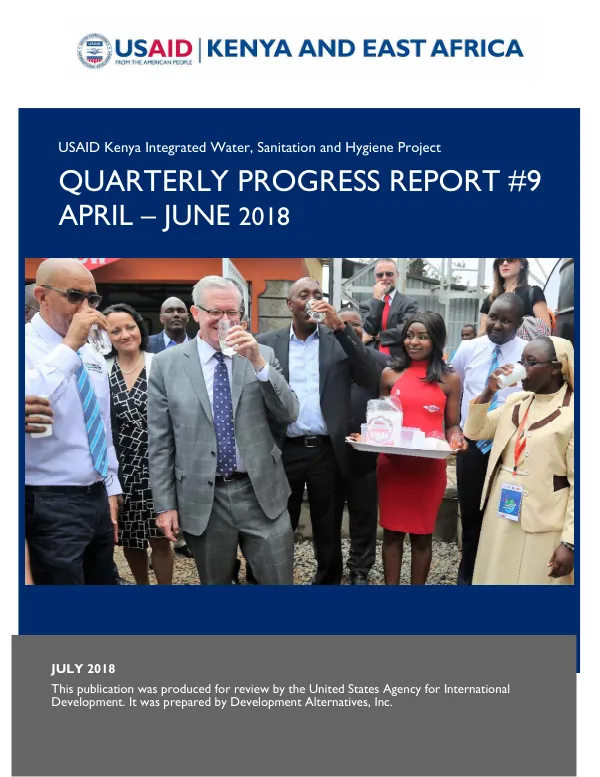
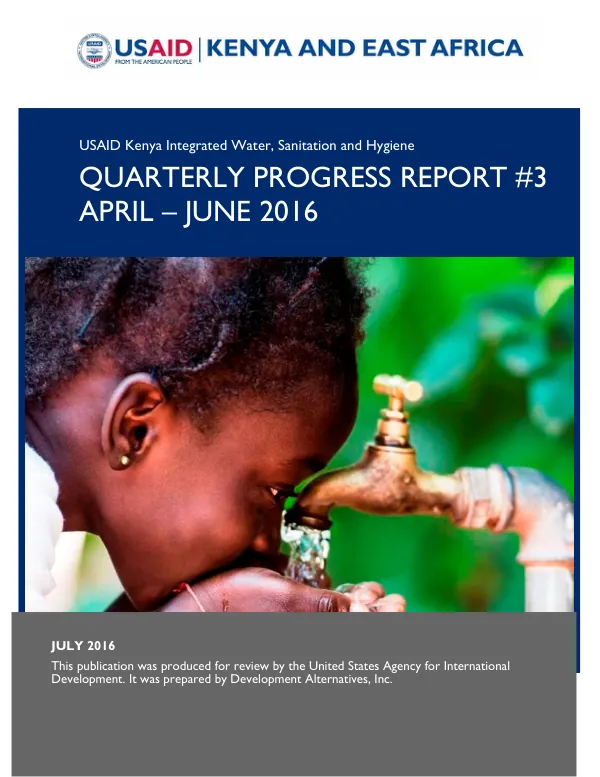
USAID/KENYA KIWASH PROGRESS REPORT FOR Q3 FY 2016
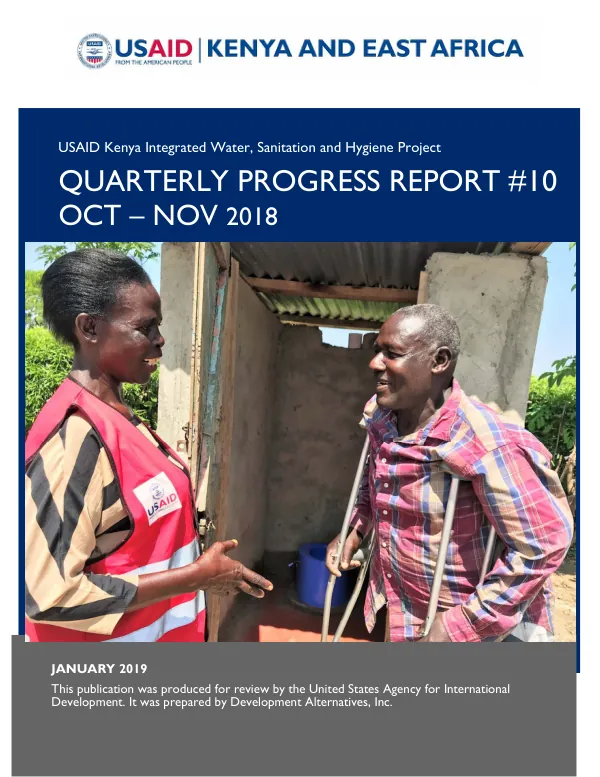
The Kenya Integrated Water, Sanitation and Hygiene project (KIWASH) aims to improve the lives and health of 1 million Kenyan citizens in nine counties through the development and management of sustainable water, sanitation, hygiene, and nutrition services.
2016 · 40 pages
Sign in to readA free account is required to download.
Abstract
This project is part of the USAID Kenya Integrated Water, Sanitation and Hygiene initiative. Corporate governance training was conducted for water service providers (WSPs) to enhance their performance and economic viability. A three-day training session was held for the Wote Water and Sewerage Company, covering corporate governance requirements set by the Water Services Regulatory Board (WASREB). Participants identified key actions to align with these requirements. Gender equality mainstreaming training was provided for three water utilities: Migori Water and Sewerage Company, Nairobi City Water and Sewerage Company, and Siaya Bondo Water and Sewerage Company. The training aimed to enhance the understanding of gender equality mainstreaming and its impact on utility performance and economic viability. Participants developed action plans to implement the knowledge gained and achieve institutional change. The project also focused on integrating water, sanitation, maternal and child health, and nutrition interventions at health facilities. Health facility assessments were conducted in six sub-county hospitals in Kisumu county and 10 high-volume hospitals in Makueni and Kitui counties. The data collected will guide planning and implementation of integrated interventions. In Kisumu, the KIWASH team collaborated with the Department of Nutrition and Agriculture to establish nutritious food production demonstrations. Seven sub-county hospitals and seven model irrigation sites were selected for the demonstrations. The project also obtained information on farmers who had partnered with the KAVES project and will engage them to provide demonstration farms for the nutritious food production concept. The Jaramogi Oginga Odinga Teaching and Referral Hospital in Kisumu was identified as a potential site for a demonstration farm to showcase small-scale irrigation technologies. The project aims to increase access to irrigation for farmers and communities, promoting sustainable agriculture practices. The project's progress is being monitored through various indicators, including the number of water service providers trained in corporate governance and gender equality mainstreaming. The integration of water, sanitation, maternal and child health, and nutrition interventions at health facilities is also being tracked. The project's impact on the lives and health of Kenyan citizens will be evaluated through regular assessments and evaluations. The KIWASH project is working closely with government agencies, NGOs, and other stakeholders to ensure the sustainability of the project's outcomes. The project's success will depend on the effective implementation of the interventions and the continued support of the stakeholders involved. The project's progress will be reported quarterly, providing updates on the achievements and challenges faced. The reports will also highlight the lessons learned and the lessons learned from the project's implementation. The KIWASH project is committed to improving the lives and health of Kenyan citizens through the development and management of sustainable water, sanitation, hygiene, and nutrition services. The project's success will depend on the effective implementation of the interventions and the continued support of the stakeholders involved.