DEVELOPMENT ALTERNATIVES, INC./FINNET
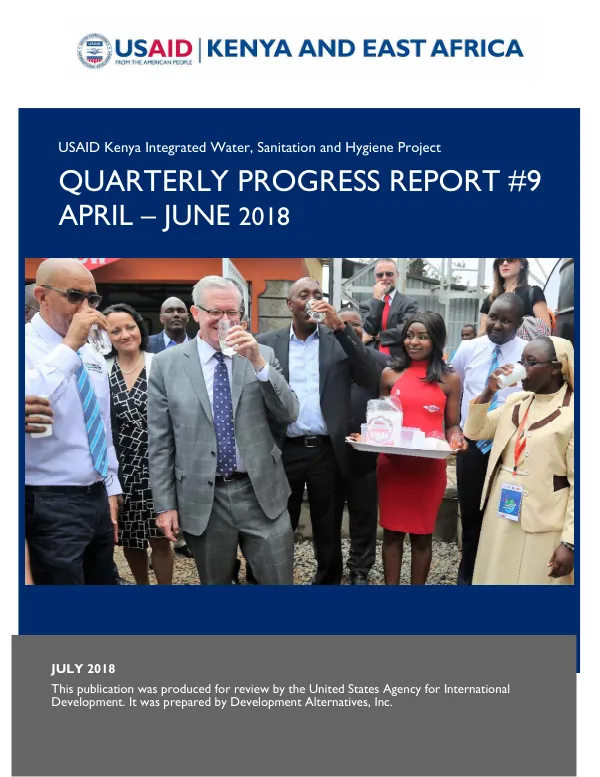
USAID/KENYA KIWASH PROGRESS REPORT FOR Q3 FY 2018
The Kenya Integrated Water, Sanitation and Hygiene project (KIWASH) aims to improve the lives and health of 1 million Kenyan citizens in nine counties through the development and management of sustainable water, sanitation, hygiene, and nutrition services.
2018 · 89 pages
Sign in to readA free account is required to download.
Abstract
This report covers the period from April to June 2018. Increased investments for WASH access have been observed, with the Cooperative Bank reviewing over KES 1.6 billion ($16 million) in financing proposals from eight Water Service Providers (WSPs) in various counties. The bank has also signed a Development Credit Authority (DCA) guarantee with USAID Kenya for lending to the water, agriculture, and energy sectors. The DCA guarantee terms include a maximum cumulative disbursement of US $9 million, a guarantee coverage of 50 percent of the outstanding principal of defaulted qualifying loans to borrowers, and a seven-year guarantee with an expiration date of September 29, 2023. US $1.2 million financing for Kakamega Water and Sewerage Company (KACWASCO) has been secured through a commercial financing proposal. The project aims to connect 6,000 new households with piped water and provide access to water through five water kiosks in Mumias town. A market demand assessment revealed that 96.1 percent of the population in Mumias are willing to pay for a connection. Coaching and mentoring support has been intensified for phase one WASH enterprises to improve and expand WASH services. The support has focused on enhancing the capacity of WASH enterprises to deliver high-quality services, improve their financial sustainability, and increase their access to financing. Access to water has been improved through the implementation of various projects. For instance, the Kiambere-Mwingi Water and Sanitation Company (KIMWASCO) has completed the construction of a new water treatment plant, which has increased the water supply to the surrounding communities. Similarly, the Kisumu Water and Sewerage Company (KIWASCO) has implemented a water conservation program, which has resulted in a significant reduction in water losses. Access to financing and credit for WASH services has also been improved. The Cooperative Bank has reviewed over KES 1.6 billion ($16 million) in financing proposals from eight WSPs, and the bank has signed a DCA guarantee with USAID Kenya for lending to the water, agriculture, and energy sectors. Sanitation and hygiene services have been improved through the implementation of various projects. For instance, the Kitui Water and Sanitation Company (KITWASCO) has implemented a sanitation program, which has resulted in a significant reduction in open defecation in the surrounding communities. Similarly, the Nairobi City Water and Sewerage Company (NCWSC) has implemented a hygiene program, which has resulted in a significant improvement in the hygiene practices of the residents. Governance and policy have been strengthened through the implementation of various projects. For instance, the Water Services Regulatory Board (WASREB) has developed a new water pricing policy, which has resulted in a significant increase in the revenue of the water service providers. Similarly, the Ministry of Health has developed a new policy on water, sanitation, and hygiene, which has resulted in a significant improvement in the WASH services in the country. Environmental sustainability has been improved through the implementation of various projects. For instance, the Stockholm Environment Institute (SEI) has conducted a study on the environmental impact of the water services in Kenya, which has resulted in a significant improvement in the environmental sustainability of the water services. Similarly, the Water Resources Authority (WRA) has implemented a program to reduce the environmental impact of the water services in the country. The project has made significant progress in achieving its objectives, and the next quarter's work plan will focus on building on the successes achieved so far. The project will continue to work with the water service providers, the government, and other stakeholders to improve the WASH services in the country.