USAID DEC
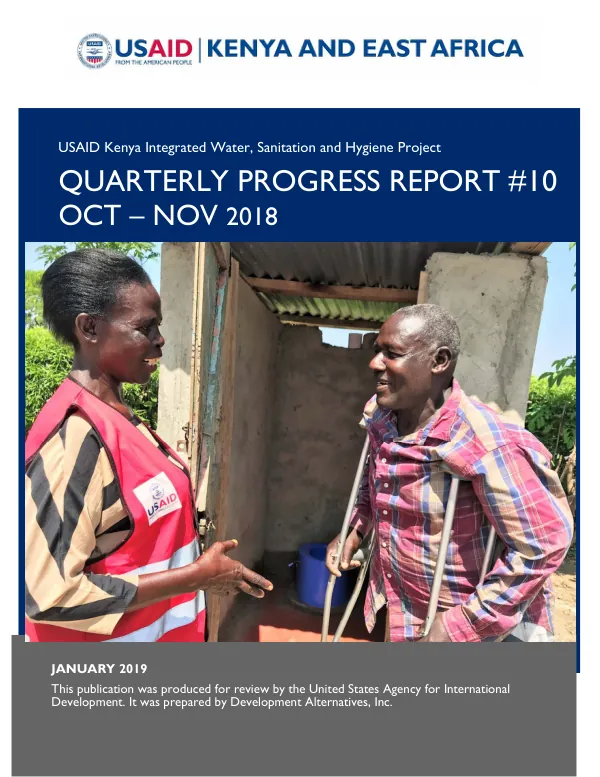
USAID Kenya Integrated Water, Sanitation and Hygiene Project Quarterly Progress Report #10
Sign inDEVELOPMENT ALTERNATIVES, INC./FINNET
USAID Kenya Integrated Water, Sanitation and Hygiene Project Quarterly Progress Report #10
The Kenya Integrated Water, Sanitation and Hygiene project (KIWASH) aims to improve the lives and health of 1 million Kenyan citizens in nine counties through the development and management of sustainable water, sanitation, hygiene, and nutrition services.
2018 · 92 pages
Sign in to readA free account is required to download.
Abstract
This report covers the period from October to December 2018. Coaching and mentoring support has led to improved access to water. WASH enterprises and water service providers (WSPs) have recorded improvements in various performance parameters, including increased numbers of customers, revenue, hours of supply, reduced non-revenue water levels, improved bookkeeping, and enhanced efficiency. As a result, 32,780 new beneficiaries gained basic access to water, while 27,460 accessed improved service quality during the reporting period. Development of Performance Improvement Plans (PIPs) with WSP partners has also been a key focus area. KIWASH conducted PIP workshops and validation meetings with four WSPs, which are among the lowest performing in the country, to address serious operational challenges affecting their ability to access debt and equity financing. A diagnostic and PIP draft report was developed, examining regulatory compliance, WASREB's key performance indicators, focus areas for improvement, and other areas for discussion and review. Field visits were conducted to confirm and validate the issues identified in the workshops. These visits exposed serious lapses in service provision, including non-functioning meters, illegal connections, technical water losses, staff misconduct, and fraud. The visits also confirmed that many of the issues identified in the workshops were indeed present in the field. In terms of infrastructure support, KIWASH has made significant progress in the development of water and sanitation infrastructure. The project has constructed 1,200 new water points, 500 new latrines, and 200 new handwashing stations. Additionally, 10,000 households have been provided with improved sanitation facilities. Access to financing and credit for WASH services has also been a key focus area. KIWASH has worked with WSPs to develop business plans and access debt and equity financing. The project has also established a revolving fund to provide financing for WSPs to improve their services. Sanitation and hygiene practices have also been improved through the project. KIWASH has worked with communities to establish open defecation-free (ODF) zones and promote the use of ventilated improved latrines (VILs). The project has also provided training and support to community health workers to promote good hygiene practices. Governance and policy have also been key areas of focus for the project. KIWASH has worked with the Government of Kenya to develop policies and regulations that support the development of sustainable water, sanitation, and hygiene services. The project has also established a governance structure to ensure that WSPs are accountable and transparent in their operations. Environmental sustainability has also been a key focus area for the project. KIWASH has worked with WSPs to develop environmental management plans and implement sustainable practices in their operations. The project has also established a system to monitor and report on environmental impacts. In terms of performance monitoring, KIWASH has established a system to track progress against key performance indicators (KPIs). The project has also conducted regular monitoring and evaluation to ensure that progress is being made towards the project's objectives. The project has also made significant progress in terms of gender strategy. KIWASH has worked with WSPs to develop gender-sensitive business plans and provide training and support to women in leadership positions. In terms of environmental mitigation and monitoring, KIWASH has established a system to monitor and report on environmental impacts. The project has also worked with WSPs to develop environmental management plans and implement sustainable practices in their operations. The project has also made significant progress in terms of links to other USAID programs. KIWASH has worked with other USAID programs to leverage resources and expertise to support the project's objectives. In terms of links with GOK agencies, KIWASH has worked closely with the Government of Kenya to develop policies and regulations that support the development of sustainable water, sanitation, and hygiene services. The project has also established a governance structure to ensure that WSPs are accountable and transparent in their operations. The project has also made significant progress in terms of USAID Forward. KIWASH has worked with USAID to develop a strategy to support the development of sustainable water, sanitation, and hygiene services in Kenya. In terms of sustainability and exit strategy, KIWASH has established a plan to ensure that the project's objectives are sustained beyond the project's lifespan. The project has also worked with WSPs to develop business plans and access debt and equity financing to support their operations. The project has also made significant progress in terms of the Global Development Alliance. KIWASH has worked with other development partners to leverage resources and expertise to support the project's objectives. In terms of subsequent quarter's work plan, KIWASH has established a plan to continue the project's activities and achieve its objectives. The project will continue to work with WSPs to develop business plans and access debt
Related documents