INTERNATIONAL CHILDREN'S FUND, INC.
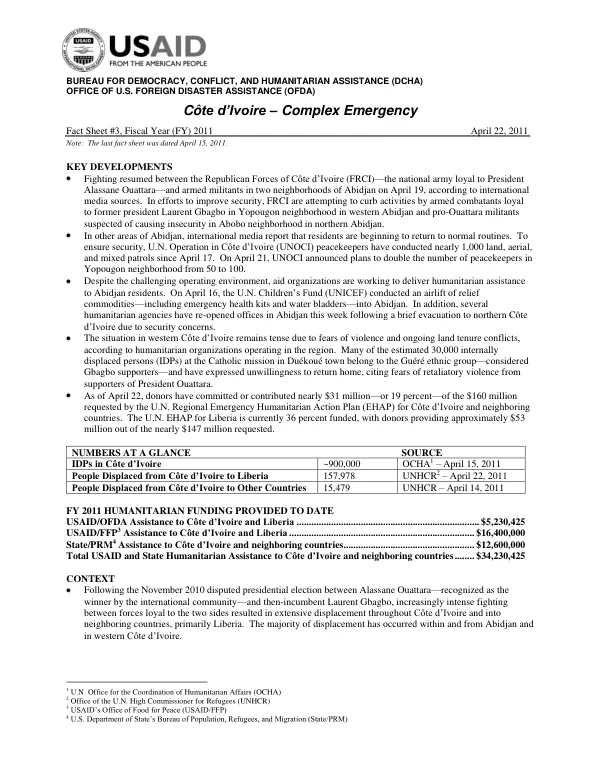
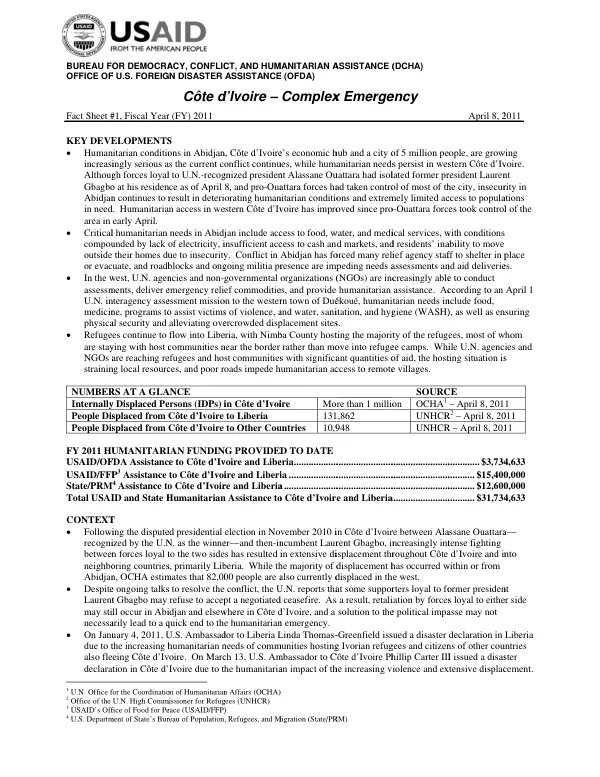
Côte d'Ivoire Complex Emergency Fact Sheet #1
Humanitarian needs in Côte d'Ivoire are escalating due to ongoing conflict between forces loyal to incumbent President Laurent Gbagbo and those supporting challenger Alassane Ouattara.
2011 · 4 pages
Sign in to readA free account is required to download.
Abstract
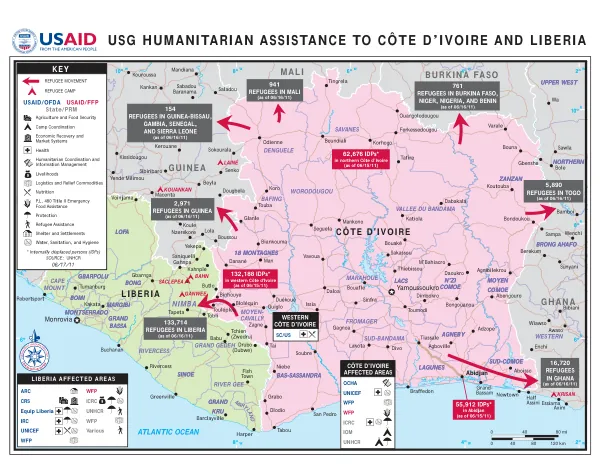
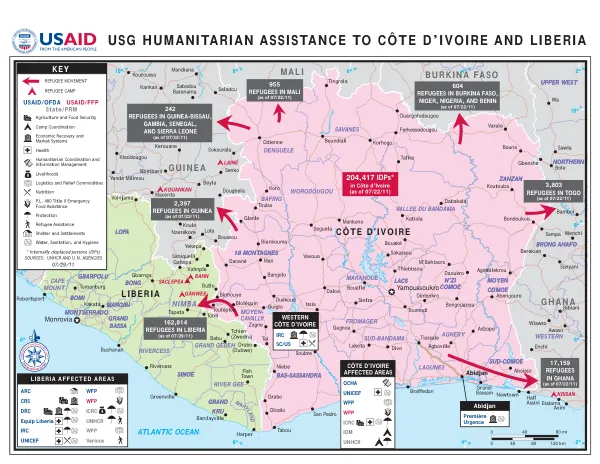
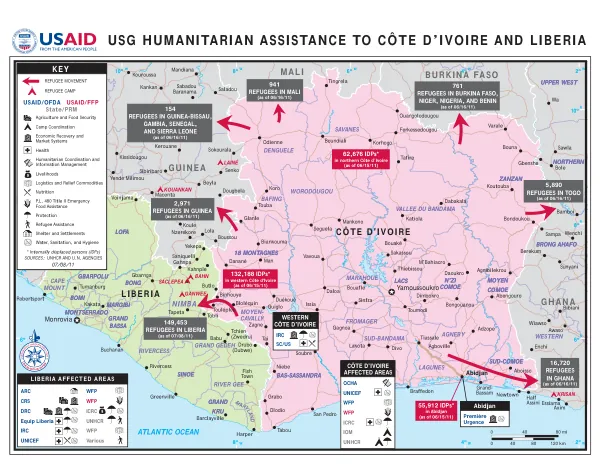
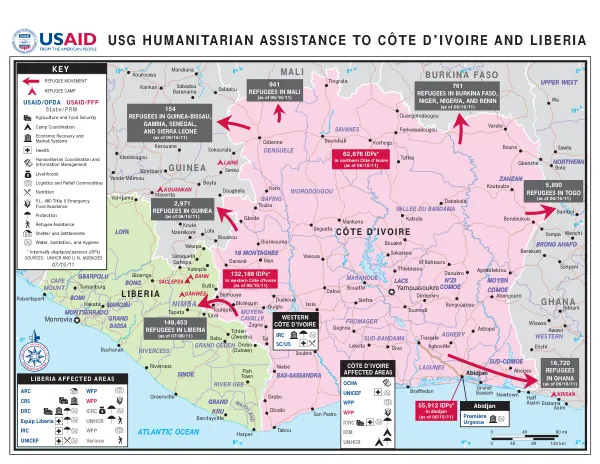
The situation has resulted in extensive displacement, with over 1 million people internally displaced and approximately 93,000 refugees in neighboring Liberia. The humanitarian crisis is characterized by shortages of food, water, and medical supplies, as well as limited access to cash and basic services. In Abidjan, the country's largest city, residents are facing severe shortages of water and electricity, with many neighborhoods experiencing permanent or intermittent unavailability of these essential services. Food prices have risen by 200 to 400 percent, and most medical facilities are either closed or unable to treat wounded patients due to a lack of supplies. Residents are walking several miles in search of food and water, despite the danger and the noon curfew. Humanitarian agencies, including the United Nations and non-governmental organizations (NGOs), are working to provide assistance to affected populations. The United Nations World Food Program (WFP) has suspended operations in Abidjan but continues to deliver emergency food assistance to other areas, including the western town of Duékoué. USAID's Food for Peace program is providing approximately 2,620 metric tons of food commodities valued at $4.5 million to WFP's emergency operation in Côte d'Ivoire. The humanitarian situation in Côte d'Ivoire is further complicated by the lack of medicine, supplies, equipment, and staff, which continues to hinder the provision of medical care to displaced people and victims of violence. In response to health and water, sanitation, and hygiene (WASH) concerns, USAID's Office of Foreign Disaster Assistance (OFDA) has committed $1 million to the United Nations Children's Fund (UNICEF) for health interventions and WASH activities to benefit approximately 277,000 internally displaced persons (IDPs) and other conflict-affected Ivorians. In addition to food and health assistance, USAID/OFDA has provided $500,000 to the United Nations Office for the Coordination of Humanitarian Affairs (OCHA) to support humanitarian coordination in Côte d'Ivoire. The U.S. Department of State's Bureau of Population, Refugees, and Migration (PRM) has provided $700,000 to the International Organization for Migration (IOM) to support IDP camp coordination programs and transportation of individuals fleeing Côte d'Ivoire, as well as $2.5 million to UNHCR for protection and camp coordination programs in Côte d'Ivoire and contingency planning in neighboring countries hosting Ivorian refugees.
Related documents