FEWS NET
USAID/OFDA Somalia Complex Emergency Fact Sheet #2
The complex emergency in Somalia has been ongoing since 1991, with widespread violence, floods, and recurrent droughts contributing to the humanitarian crisis.
2011 · 4 pages
Sign in to readA free account is required to download.
Abstract
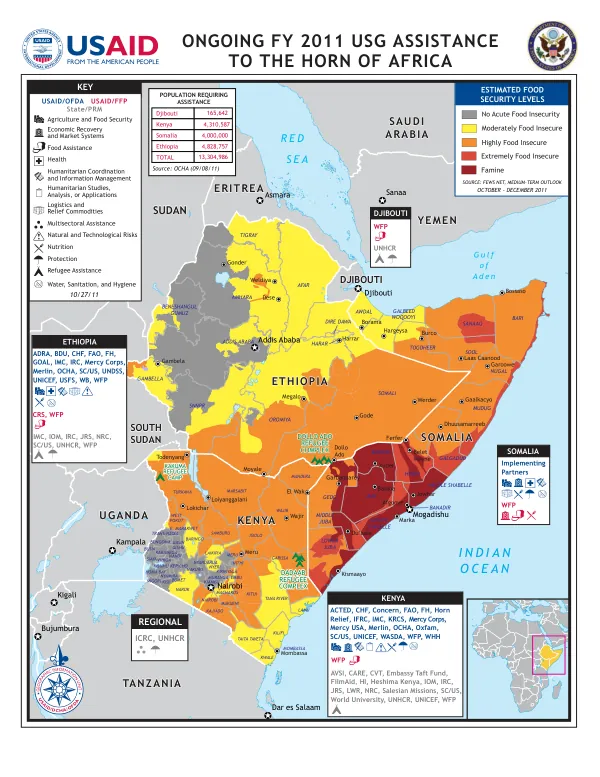
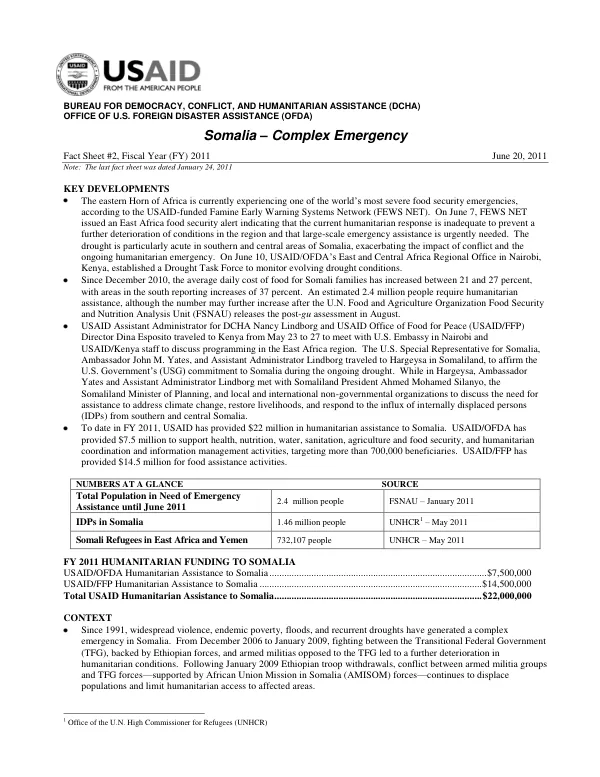
The situation has been exacerbated by conflict between the Transitional Federal Government (TFG) and armed militias, as well as the African Union Mission in Somalia (AMISOM). As a result, populations have been displaced, and humanitarian access has been limited. The drought has had a significant impact on the country, with consecutive seasons of failed or poor rainfall leading to rising inflation, crop failure, livestock mortality, and food insecurity. The cumulative effect of the drought has resulted in poor or failed crops, high food prices, and increased displacement. The conflict has also led to insecurity, targeted attacks, and bans against humanitarian agencies, hindering the provision of relief assistance to affected populations. According to the U.N. Office for the Coordination of Humanitarian Affairs (OCHA), an average of 80 people per day moved towards the Boqor and Malkadid refugee camps in southeast Ethiopia in May due to drought conditions. More than 10,000 Somali refugees arrived in Ethiopia during May, with a total of 357,000 Somali refugees hosted in the Dadaab refugee complex in Kenya. Humanitarian organizations, including the U.N. World Food Programme (WFP), have been working to address the crisis. WFP has distributed 38,800 metric tons of mixed food commodities to approximately 1 million beneficiaries throughout intervention areas, including central Somalia and Mogadishu. However, WFP faces significant funding and food shortages, with recent food distribution reduced to 33 percent of beneficiary needs. The harsh jilaal dry period and poor gu rains have led to a severe water crisis, with high water and cereal prices, and cereal availability, and deteriorating livestock body conditions in central regions of Somalia. As a result, southern Somalia is experiencing extreme food insecurity, exacerbated by conflict and restricted humanitarian access. The U.N. World Health Organization (WHO) has expressed concern regarding the rise in weapon-related injuries of children in Mogadishu. In May, 735 cases of child injuries were reported, with a significant increase in the number of children being admitted to hospitals. USAID has provided $22 million in humanitarian assistance to Somalia, with $7.5 million provided by USAID/OFDA for humanitarian activities, including health, nutrition, water, agriculture, and food security, and humanitarian coordination and information management. USAID/FFP has provided $14.5 million for food assistance activities, targeting approximately 1.2 million drought- and conflict-affected people in northern Somalia and accessible areas in central Somalia and Mogadishu. The situation in Somalia is complex, with ongoing conflict, drought, and drought-related displacement contributing to the humanitarian crisis. Humanitarian organizations are working to address the crisis, but significant challenges remain, including insecurity, funding shortfalls, and restricted access to affected areas.