CONCERN WORLDWIDE INTERNATIONAL
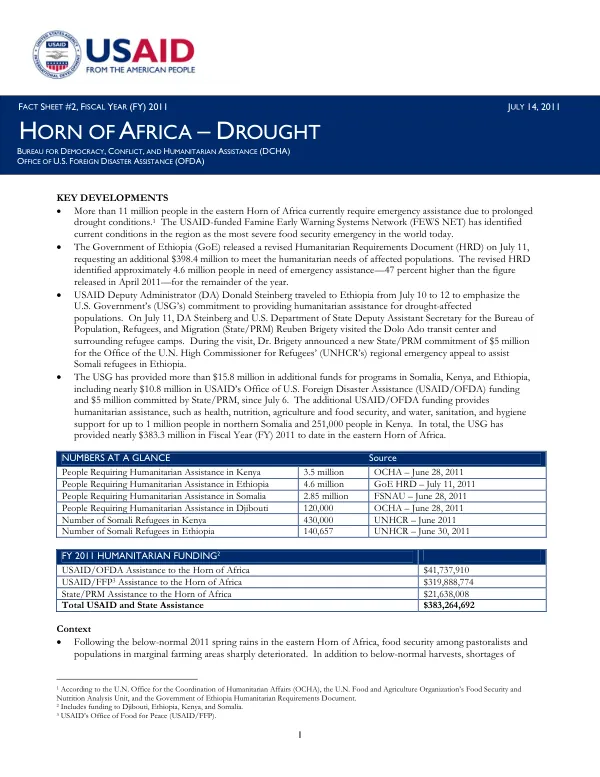
USG Horn of Africa Drought Fact Sheet #1
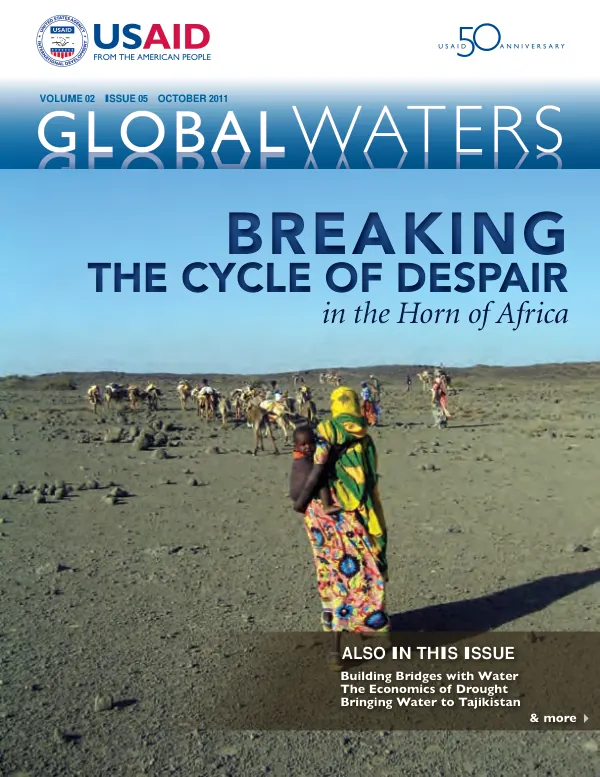
The Horn of Africa is experiencing a severe drought, with below-average 2011 spring rains leading to deteriorating food security among pastoralists and populations in marginal farming areas.
2011 · 7 pages
Sign in to readA free account is required to download.
Abstract
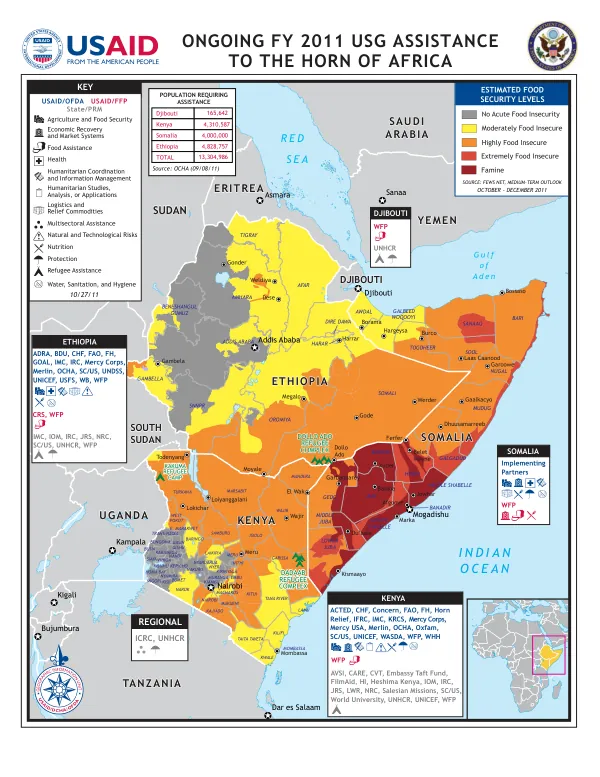
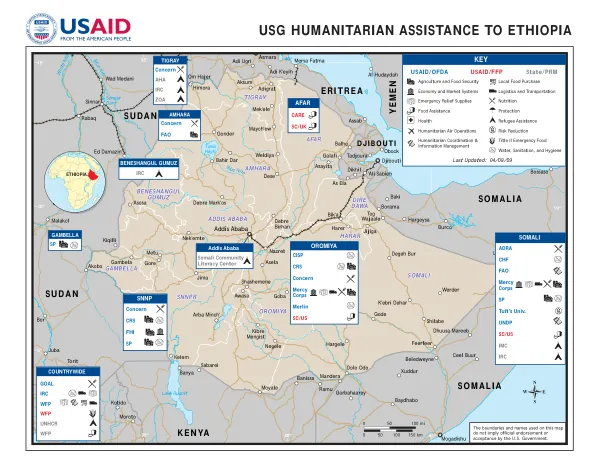
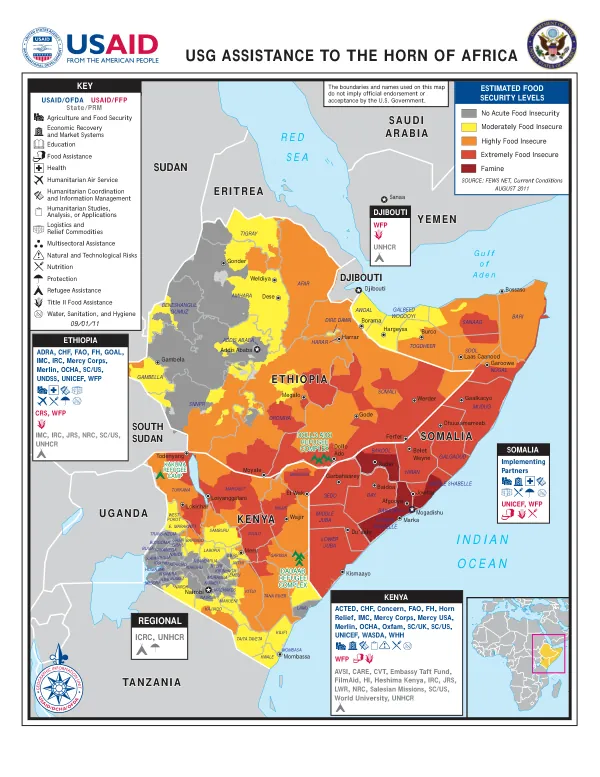
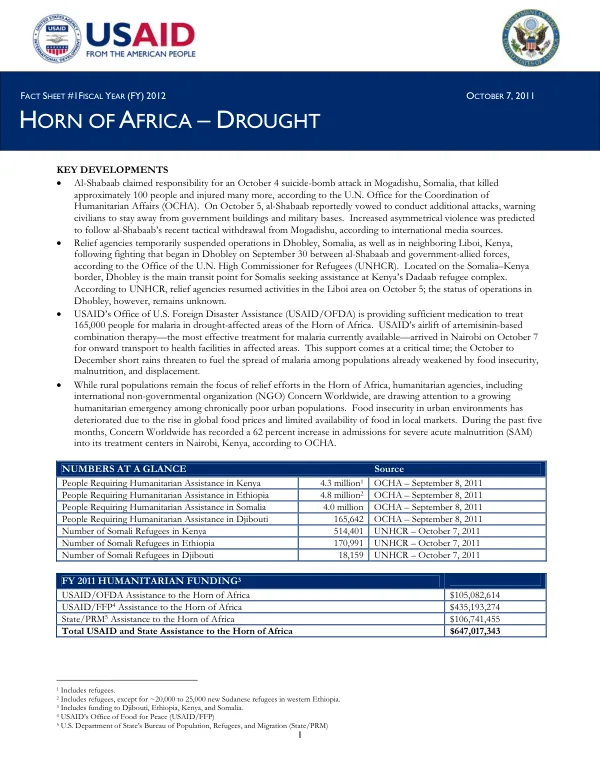
In Somalia, the U.N. has declared that acute malnutrition indicators, crude mortality rates, and food access levels have surpassed famine thresholds in areas of Bay, Lower Shabelle, Bakool, and Middle Shabelle regions, and among internally displaced persons in Mogadishu and the Afgooye corridor. Without improvement in humanitarian access, famine is expected to spread to areas of Gedo, Juba, and Hiran regions by December 2011, according to the USAID-funded Famine Early Warning Systems Network (FEWS NET). In response to the crisis, the U.S. Government has increased assistance to affected areas of Ethiopia, Kenya, and Somalia. USAID activated a regional Disaster Assistance Response Team (USAID/DART) in Nairobi, Kenya, and Addis Ababa, Ethiopia, to monitor regional drought conditions, identify humanitarian needs, and coordinate response activities with other donors. The U.N. World Food Program (WFP), the Government of Ethiopia's Disaster Risk Management and Food Security Sector, and the NGO consortium Joint Emergency Operation Program (JEOP) are providing ongoing food assistance to all 4.8 million people in need in Ethiopia. In Kenya, 4.3 million drought-affected people continue to require humanitarian assistance. The Food Assistance Cluster (FAC) provided food aid to an estimated 1.4 million Kenyans and more than 500,000 refugees in September. The FAC is scaling up operations to reach all people in need of food assistance by the end of November. Food security in Kenya is expected to gradually improve with the current onset of rains, but food availability remains a major concern due to transport problems and congestion at Mombasa port. Relief agencies are improving populations' resiliency through targeted support to primary livelihood activities. In smallholder farming areas in Southern Nations, Nationalities, and Peoples Region (SNNPR), USAID/OFDA is providing households with seeds and other agricultural inputs for use in the upcoming planting season. In pastoralist areas, USAID/OFDA is supporting FAO and other relief agencies to strengthen livelihoods through interventions that include distributing livestock feed, rehabilitating water points for livestock use, and vaccinating animals. The U.S. Government has provided significant funding to address the crisis in the Horn of Africa. USAID/FFP has provided emergency food assistance to more than 1.2 million people countrywide in Ethiopia, and nearly $3.9 million in USAID/OFDA funding to Ethiopia is reaching approximately 470,000 drought-affected individuals with food security and livelihoods activities. In Kenya, the U.S. Government has provided nearly $128.2 million in FY 2011 in-kind and monetary support to address the humanitarian crisis.
Related documents