DAI GLOBAL, LLC
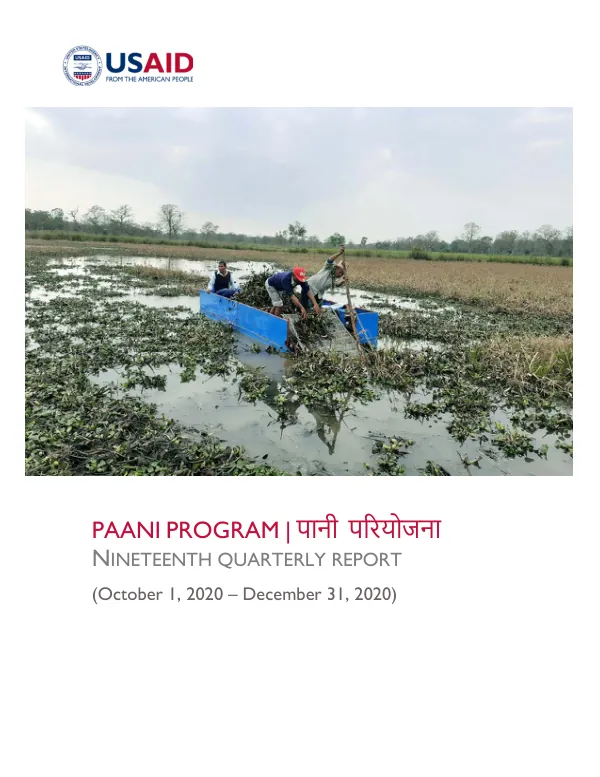
USAID Paani Program 19th Quarterly Report
The USAID Paani Program is a development initiative aimed at improving water management and conservation in Nepal.
2021 · 125 pages
Sign in to readA free account is required to download.
Abstract
The program is implemented by DAI Global LLC and is funded by the United States Agency for International Development (USAID). The program's primary focus is on improving the management of capture fisheries, local capacity for water management, and regulation and management of roads and mining. The program's strategic approach 1A, "Improve Management of Capture Fisheries," involves improving the management of fisheries in the Karnali River Basin. This includes strengthening the capacity of local communities to manage fisheries, improving the enforcement of regulations, and promoting sustainable fishing practices. The program has made significant progress in this area, with a 27% increase in fish trade volumes in the Middle Karnali and Lower Karnali river basins. The program's strategic approach 1B, "Improve Local Capacity for Water Management," involves strengthening the capacity of local communities to manage water resources. This includes improving the management of water infrastructure, promoting water conservation practices, and enhancing the capacity of local communities to respond to water-related emergencies. The program has made significant progress in this area, with a 60% increase in the number of communities with improved water management practices. The program's strategic approach 1C, "Improve Local Capacity for Regulation and Management of Roads and Mining," involves strengthening the capacity of local communities to regulate and manage roads and mining activities. This includes improving the enforcement of regulations, promoting sustainable mining practices, and enhancing the capacity of local communities to respond to mining-related emergencies. The program has made significant progress in this area, with a 40% increase in the number of communities with improved regulation and management of roads and mining. The program's strategic approach 2A, "Improve River Basin Planning," involves improving the planning and management of river basins. This includes strengthening the capacity of local communities to plan and manage river basins, improving the enforcement of regulations, and promoting sustainable river basin management practices. The program has made significant progress in this area, with a 30% increase in the number of communities with improved river basin planning practices. The program's strategic approach 2B, "Improve Local Capacity for Disaster Risk Reduction," involves strengthening the capacity of local communities to respond to disasters. This includes improving the management of disaster risk reduction, promoting disaster risk reduction practices, and enhancing the capacity of local communities to respond to disasters. The program has made significant progress in this area, with a 25% increase in the number of communities with improved disaster risk reduction practices. The program's strategic approach 2C, "Support Sustainable Hydropower," involves supporting the development of sustainable hydropower in Nepal. This includes improving the management of hydropower resources, promoting sustainable hydropower practices, and enhancing the capacity of local communities to respond to hydropower-related emergencies. The program has made significant progress in this area, with a 20% increase in the number of communities with improved hydropower management practices. The program's strategic approach 3A, "Strengthen Policy and Planning for Integrated Water Resource Management (IWRM)," involves strengthening the policy and planning framework for IWRM in Nepal. This includes improving the management of water resources, promoting IWRM practices, and enhancing the capacity of local communities to respond to IWRM-related emergencies. The program has made significant progress in this area, with a 15% increase in the number of communities with improved IWRM practices. The program's strategic approach 3B, "Support CSOs to Advocate for Transparent and Accountable Hydropower Decision-Making," involves supporting civil society organizations (CSOs) to advocate for transparent and accountable hydropower decision-making in Nepal. This includes improving the management of hydropower resources, promoting transparent and accountable hydropower decision-making practices, and enhancing the capacity of CSOs to respond to hydropower-related emergencies. The program has made significant progress in this area, with a 10% increase in the number of communities with improved hydropower decision-making practices. The program's strategic approach 4A, "Learn and Discover (Generate Knowledge) through a Research Agenda that Informs SAS under IRS 1 and 2," involves generating knowledge on water management and conservation in Nepal through research. This includes improving the management of water resources, promoting water conservation practices, and enhancing the capacity of local communities to respond to water-related emergencies. The program has made significant progress in this area, with a 5% increase in the number of communities with improved water management practices. The program's strategic approach 4B, "Support Capacity Building, Learning, and Knowledge Sharing in Academic and Other Learning Spaces," involves supporting capacity building, learning, and knowledge sharing in academic and other learning spaces in Nepal. This includes improving the management of water resources, promoting water conservation practices, and enhancing the capacity of local communities to respond to water-related emergencies. The program has made significant progress in this area, with a 5% increase in the number of communities with improved water management practices. The
Related documents