DAI GLOBAL, LLC
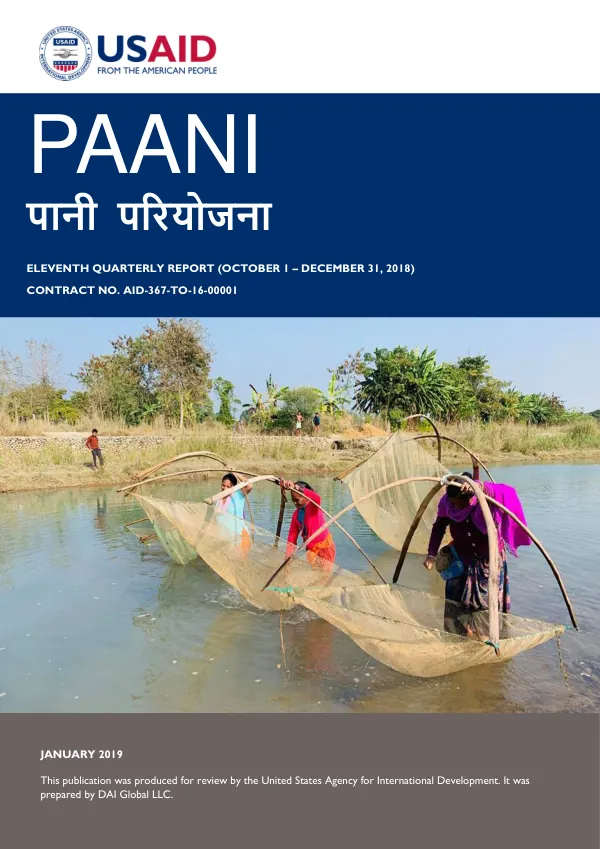
Eleventh Quarterly Report (October 1 – December 31, 2018) for USAID Paani Program
The USAID Paani Program is a development initiative aimed at improving water management and conservation in Nepal.
2018 · 168 pages
Sign in to readA free account is required to download.
Abstract
The program is implemented by DAI Global LLC and is funded by the United States Agency for International Development (USAID). The program's primary objective is to improve the management of capture fisheries, local capacity for water management, regulation and management of roads and mining, and invasive species management. The program is structured around four strategic approaches: improving management of capture fisheries, improving local capacity for water management, improving local capacity for regulation and management of roads and mining, and improving local capacity for managing invasive species. Additionally, the program focuses on improving river basin planning, supporting sustainable hydropower, and strengthening policy and planning for integrated water resource management. The program's activities are implemented in various river basins in Nepal, including the Karnali and Rapti rivers. The program's participants include local communities, government agencies, and other stakeholders. The program's achievements in the eleventh quarter (October 1 – December 31, 2018) include the completion of various activities, such as fisheries mini assessments, community-based anti-poaching units, and community fishing groups. The program's research agenda focuses on generating knowledge to inform strategic approaches under IRS 1 and 2. The program's research activities include the assessment of fish diversity, spring sources, and meetings with stakeholders. The program's indicator performance tracking table shows progress in various indicators, including fish diversity, spring sources, and meetings with stakeholders. The program's administration and management tasks include personnel updates, grant management, and approval requests submitted to USAID. The program's learning section highlights the results of analytic work, assessments, and evaluations, including the assessment of fish diversity and spring sources. The program's partnerships and collaboration include meetings with USAID/Nepal and other USAID programs, as well as meetings with stakeholders. The program's knowledge sharing activities include the development of a research agenda, the assessment of fish diversity, and the creation of a community biodiversity register. The program's cross-cutting issues include communications, indicator performance tracking, and major activities planned for the next quarter. The program's annex section includes various exhibits, such as gender and caste/ethnicity breakdown for PAANI events/activities, research on fish species, and information on invasive species in Bhagaraiya Lake. The program's achievements in the eleventh quarter include the completion of various activities, such as fisheries mini assessments, community-based anti-poaching units, and community fishing groups. The program's research agenda focuses on generating knowledge to inform strategic approaches under IRS 1 and 2. The program's indicator performance tracking table shows progress in various indicators, including fish diversity, spring sources, and meetings with stakeholders. The program's achievements in the eleventh quarter demonstrate progress in various areas, including fisheries management, water management, and invasive species management. The program's research agenda and indicator performance tracking table provide a framework for measuring progress and identifying areas for improvement. The program's administration and management tasks, partnerships and collaboration, and knowledge sharing activities highlight the program's commitment to effective implementation and knowledge sharing.