USAID
USAID's Assistance Helps ARAL Conserve Water and Energy
The Arab Aluminum Industries Co.
2015 · 1 pages
Sign in to readA free account is required to download.
Abstract
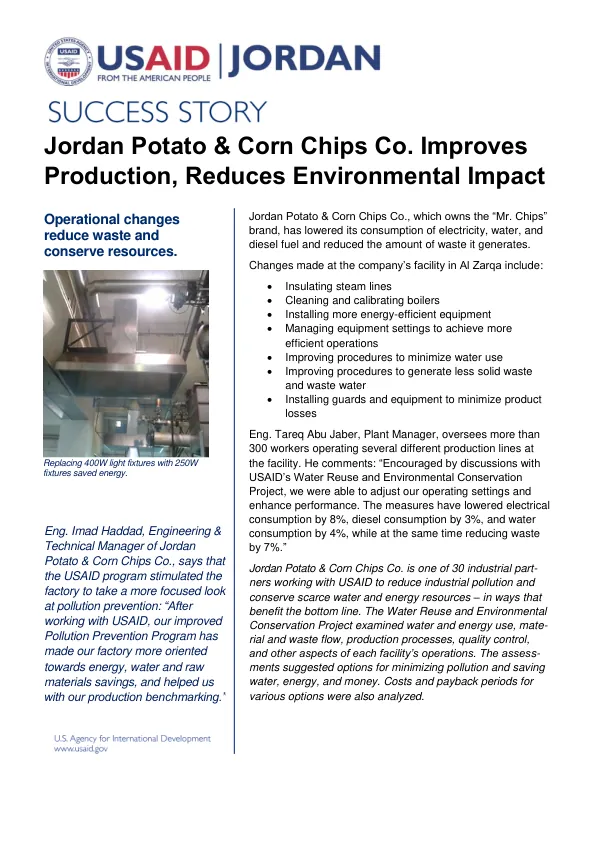
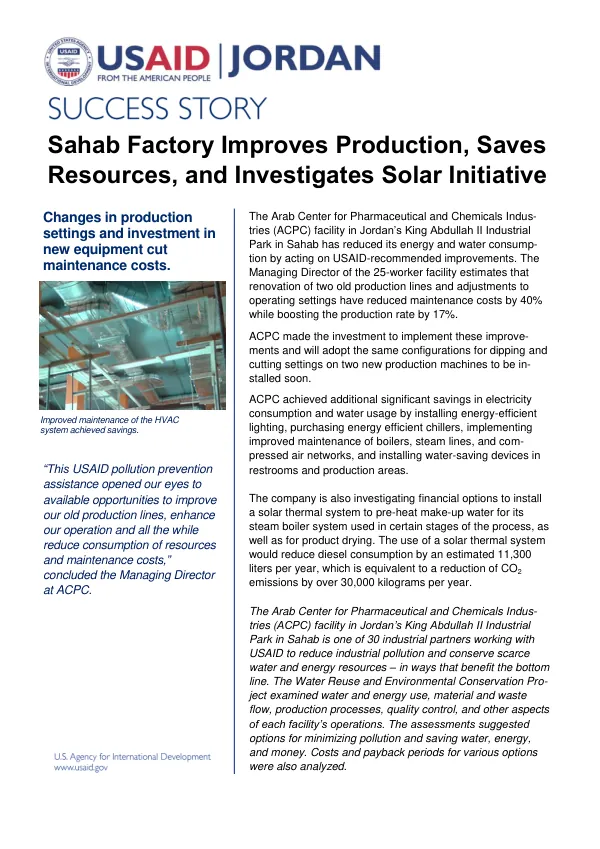
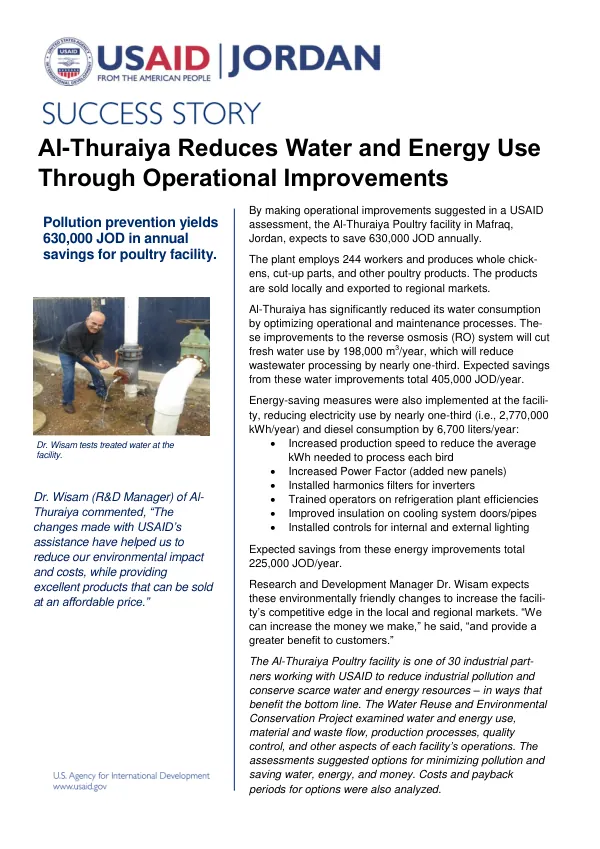
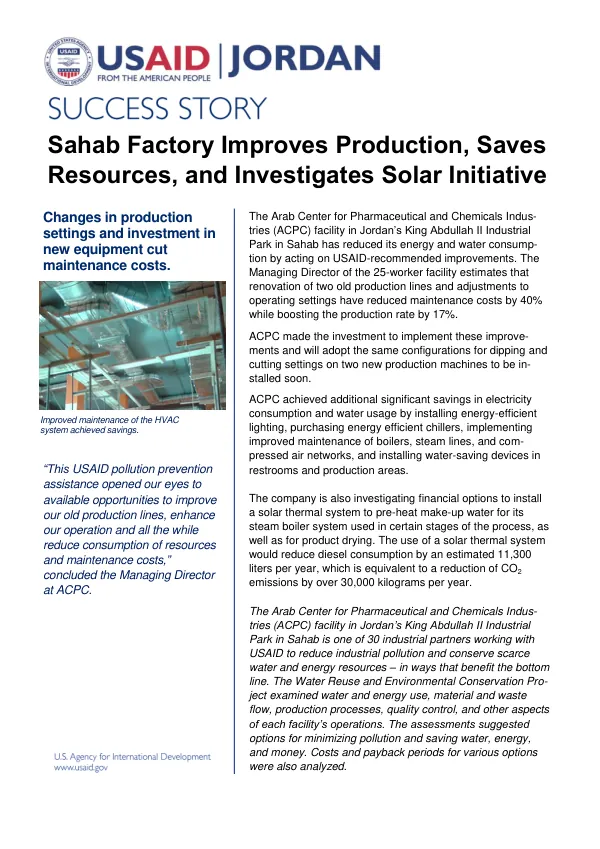
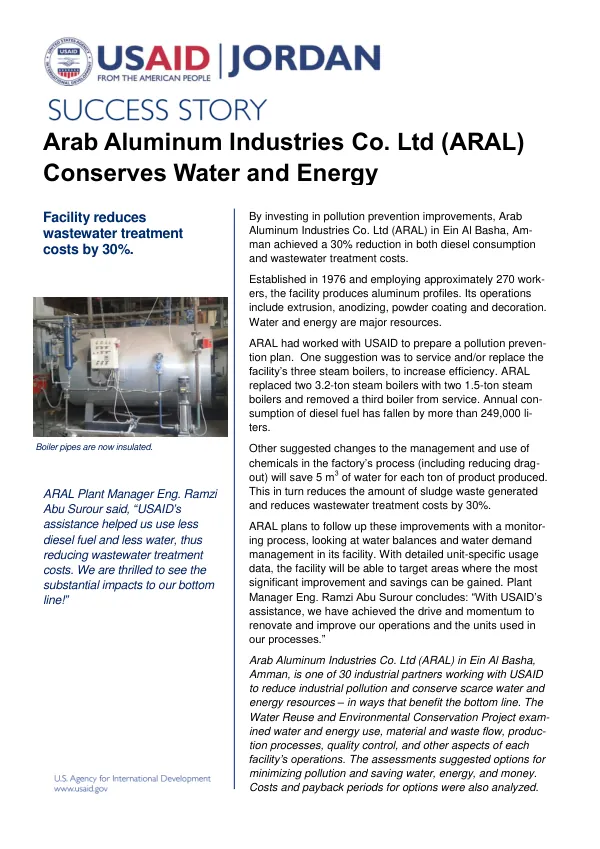
Ltd (ARAL) facility in Ein Al Basha, Amman, has achieved significant reductions in diesel fuel consumption and wastewater treatment costs through a series of pollution prevention improvements. Established in 1976, the facility employs approximately 270 workers and produces aluminum profiles through extrusion, anodizing, powder coating, and decoration. Water and energy are major resources for the facility, which had previously worked with USAID to prepare a pollution prevention plan. One key recommendation from the plan was to service and/or replace the facility's three steam boilers to increase efficiency. ARAL replaced two 3.2-ton steam boilers with two 1.5-ton steam boilers and removed a third boiler from service. As a result, annual consumption of diesel fuel has fallen by more than 249,000 liters. Additionally, suggested changes to the management and use of chemicals in the factory's process, including reducing drag-out, are expected to save 5 cubic meters of water for each ton of product produced. The reduction in water usage will lead to a decrease in the amount of sludge waste generated and subsequently reduce wastewater treatment costs by 30%. ARAL plans to follow up these improvements with a monitoring process, examining water balances and water demand management in the facility. This will enable the facility to target areas where the most significant improvement and savings can be gained. With detailed unit-specific usage data, the facility will be able to identify opportunities for further improvement. The Water Reuse and Environmental Conservation Project, which examined water and energy use, material and waste flow, production processes, quality control, and other aspects of each facility's operations, identified options for minimizing pollution and saving water, energy, and money. The project analyzed costs and payback periods for these options, providing facilities like ARAL with a roadmap for implementing sustainable improvements. By investing in pollution prevention improvements, ARAL has achieved a 30% reduction in both diesel consumption and wastewater treatment costs. The facility's success is part of a larger effort by USAID to reduce industrial pollution and conserve scarce water and energy resources. ARAL is one of 30 industrial partners working with USAID to implement sustainable improvements and reduce their environmental impact. The project's focus on water and energy conservation has enabled facilities like ARAL to achieve significant cost savings while also reducing their environmental footprint.