ABT ASSOCIATES
USAID’s Integrated Health Program Climate Risk Mitigation Plan
The USAID's Integrated Health Program (USAID IHP) aims to strengthen the capacity of Congolese institutions and communities to deliver high-quality, integrated health services.
2018 · 15 pages
Sign in to readA free account is required to download.
Abstract
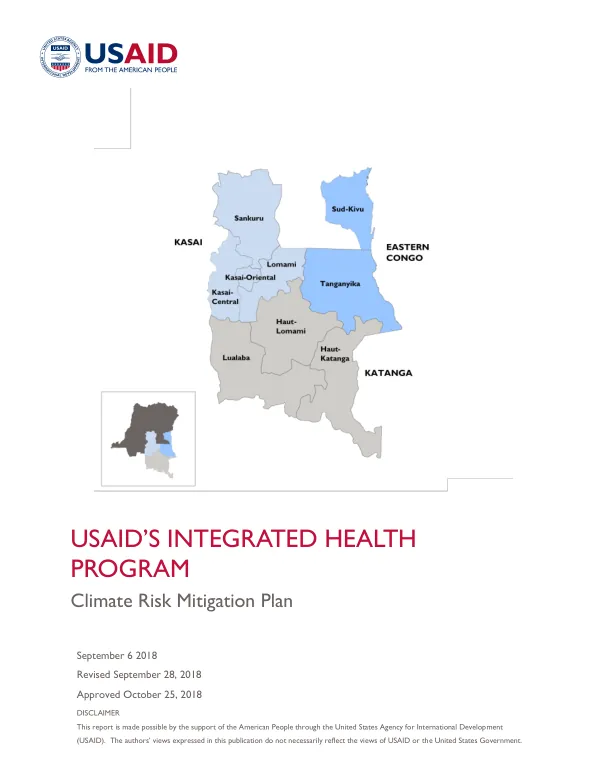
The program focuses on reproductive health and family planning, maternal, newborn, and child health, nutrition, tuberculosis, malaria, water, sanitation, and hygiene. Cross-sector areas of focus include gender, gender-based violence, climate change, and innovation. The program operates in nine provinces, operationally grouped in three regions: Eastern Congo, Katanga, and Kasai. The program's objectives are to sustainably improve the health status of the Congolese population and to strengthen the ability of the DRC health system to deliver high-quality services. A climate risk assessment was conducted to identify potential impacts of climate change on the program's objectives and target populations. The assessment used a 20-year time frame of climate projections and considered potential synergies and benefits that could be attained by working with other projects or stakeholders. The assessment identified several climate-related risks, including changes in agricultural patterns, loss of agricultural productivity, and reduced food availability. The program will modify its education packages to address these changes and work with the Ministry of Health to include awareness of possible changes to food availability. The major climate risk identified is the threat to the DRC's transportation infrastructure, which could negatively impact access to health centers and hospitals, and the delivery of medicines and supplies. The program will explore alternative delivery and transportation methods, such as using drones or water transportation. The program will also consider the impact of climate change on nutrition, including reduced access to healthy food and changes in agricultural patterns. The program will work with farmers, government extension workers, and other stakeholders to incorporate messages about nutrition and climate change into their programming. Overall, the USAID IHP aims to address climate-related risks and adapt to the changing climate to ensure the program's objectives are met. The program will work with various stakeholders to incorporate climate change considerations into its work plans and to develop strategies to mitigate the impacts of climate change. The program's climate risk management process will continue at the activity level, with a focus on addressing identified risks through activity-level risk management. The program will also consider the potential benefits of working with other projects or stakeholders to address climate-related risks. The program's climate risk assessment methodology included a review of the program's planned activities, facilities, and infrastructure. The assessment also considered the potential impacts of climate change on the program's objectives and target populations.