CHEMONICS
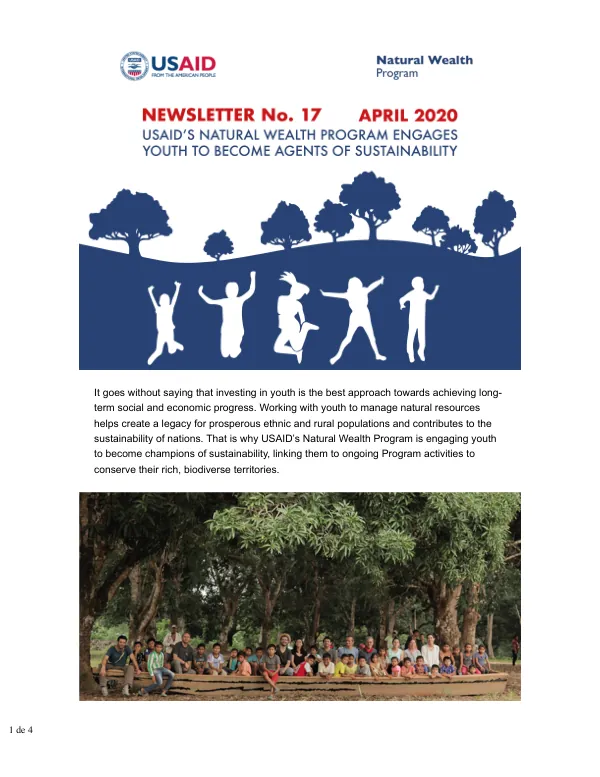
USAID's Natural Wealth Program Engages Youth to Become Agents of Sustainability
Investing in youth is a crucial approach towards achieving long-term social and economic progress.
2020 · 4 pages
Sign in to readA free account is required to download.
Abstract
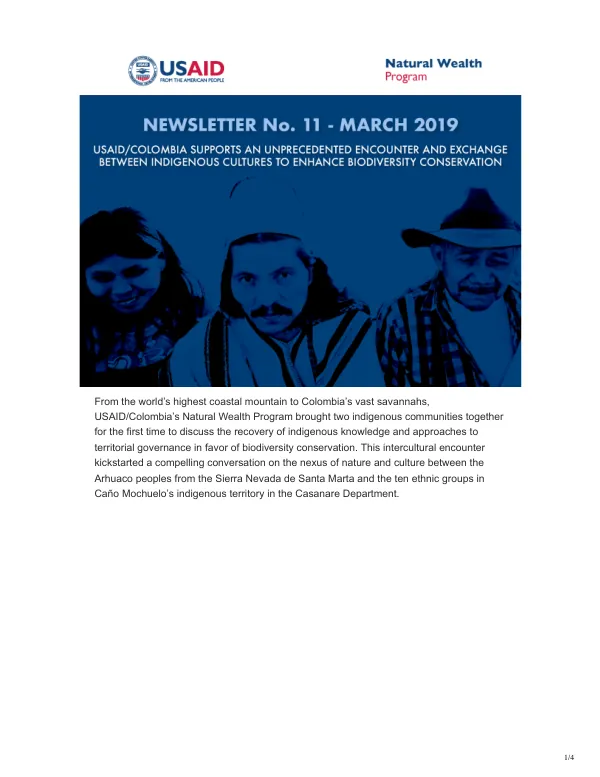
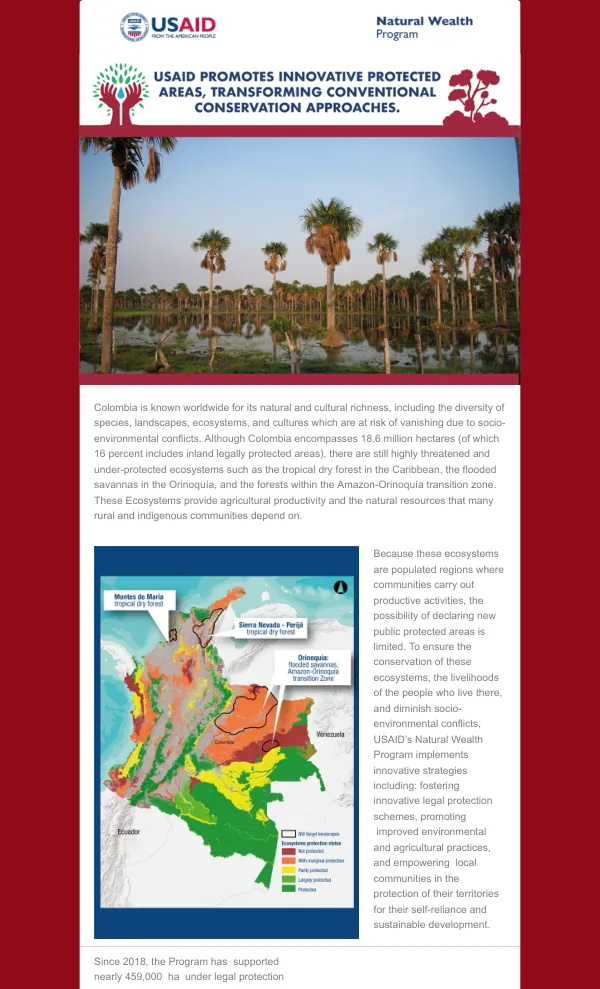
Working with youth to manage natural resources helps create a legacy for prosperous ethnic and rural populations and contributes to the sustainability of nations. USAID's Natural Wealth Program engages youth to become champions of sustainability, linking them to ongoing Program activities to conserve their rich, biodiverse territories. Through educational and government institutions, private organizations, and local NGOs, Natural Wealth has engaged young women and men in educational trainings to discuss, build knowledge, and implement actions around the importance of biodiversity as it relates to natural resources management, environmental education, land use planning, and agricultural production. This approach strengthens the next generation's capacity to preserve their communities' livelihoods and conserve the Caribbean tropical dry forest and the flooded savannas in Orinoquía, while also positioning youth to participate in new market opportunities, such as nature tourism and sustainable farming. Youth are acquiring traditional knowledge, monitoring biodiversity, and sharing information through communication groups to raise awareness and safeguard natural resources. As an example, Natural Wealth is engaging youth to become knowledge multipliers and promote, through radio, audiovisual tools, and social media, within their communities the importance of protected areas and ecosystems. In Montes de María, the Program is highlighting the importance of conserving tropical dry forest through schools and government entities. Under this activity, more than 40 students developed communications pieces, telling the role that biodiversity plays in their territory. The Program also works with indigenous youth from diverse communities, from the Arhuaco People in the Sierra Nevada de Santa Marta and the Caño Mochuelo Indigenous Council from the eastern plains in Casanare to the Yukpa people from the Serranía de Perijá. With youth and elders of these communities, the Program is helping to recover ancestral knowledge that is critical to managing their territory and pass-on cultural traditions to the newer generation. These knowledge and traditions are a key strategy for conserving biodiversity. For instance, the Arhuaco People, with the Program's support, are disseminating their first tropical dry forest cultural manual among schools throughout the Arhuaco Indigenous Reserve. Youth have the energy, curiosity, passion, and motivation to serve as a voice and an authority regarding the futures and the communities they want to create and live in. Investing in them and their environmental education is a recipe for the continuation of future generations living and conserving key areas for the economic development and the self-reliance of their communities.
Related documents