CHEMONICS
FY20 SECOND QUARTERLY REPORT: January 1 – March 31, 2020
The Natural Wealth Program, implemented by Chemonics International, supports the Government of Colombia in conserving the country's biodiversity in strategic landscapes.
2020 · 56 pages
Sign in to readA free account is required to download.
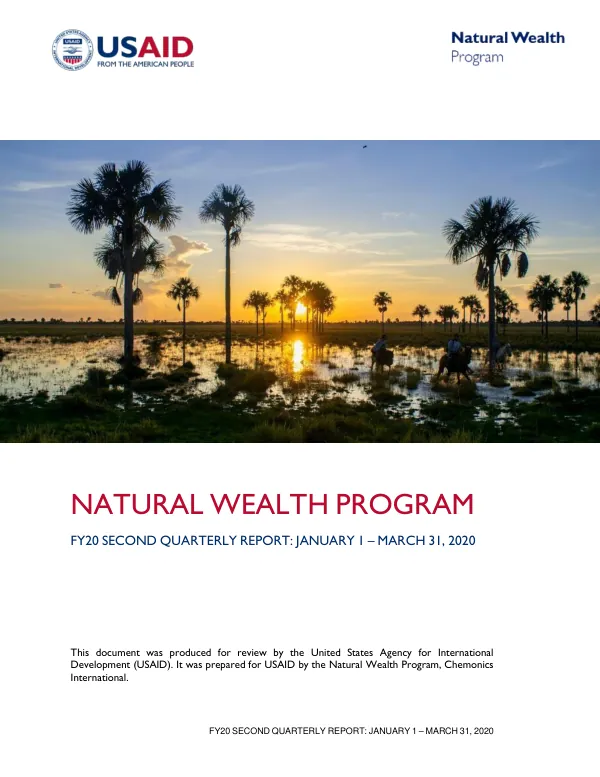
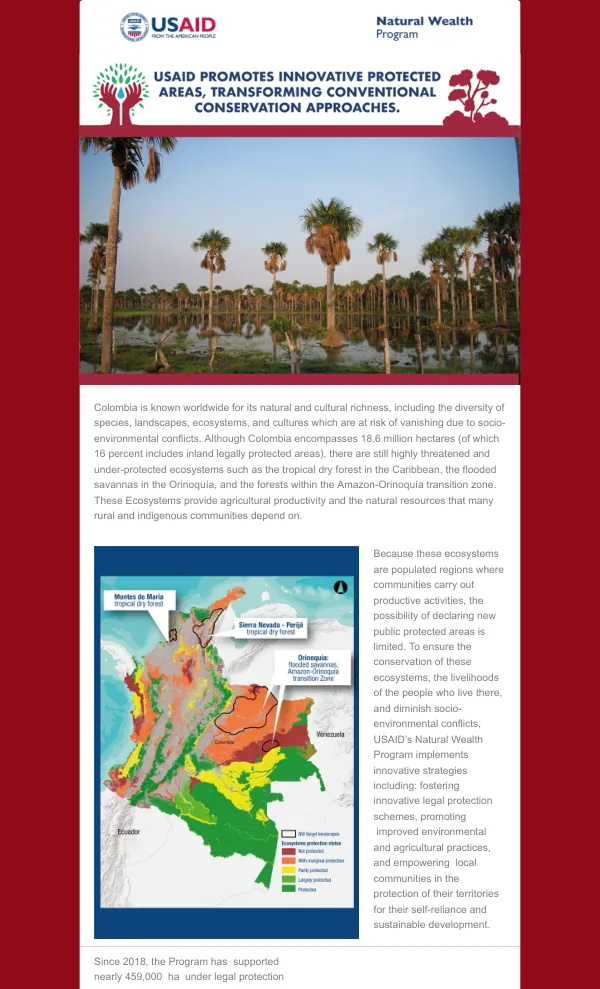
Abstract
The program focuses on the tropical dry forest in Montes de María and the Sierra Nevada de Santa Marta – Piedmont of Perijá, as well as the savannahs and freshwater ecosystems in the Orinoquía region. By promoting conservation measures and sustainable land uses, local populations benefit from the preservation of ecosystem services, achieving social and economic progress for a sustainable and lasting peace. The program's fiscal year 20 Second Quarterly Report presents progress towards key objectives and activities from January 1 – March 31, 2020, in line with its approved fiscal year 20 annual work plan. The report highlights the main achievements from Q2 FY20, including the placement of 30,393 hectares under improved natural resource management. This achievement is a significant step towards increasing the area of land under legal protection, demonstrating the economic and social benefits of conserving biodiversity. The program's objectives are focused on conserving Colombian biodiversity through more effective protection for priority species and ecosystems, establishing financial incentives for populations living in conservation corridors, and implementing the incorporation of priority conservation areas into territorial organization plans and their management policies. The report presents progress under each objective, highlighting the achievements and challenges faced by the program. In the Montes de María region, the program achieved significant progress in implementing conservation measures, including the establishment of 15 new conservation corridors and the protection of 10,000 hectares of critical habitat. In the Sierra Nevada de Santa Marta – Piedmont of Perijá region, the program worked with local communities to establish a network of protected areas, covering over 20,000 hectares. The program also made significant progress in establishing financial incentives for populations living in conservation corridors. In the Orinoquía region, the program worked with local communities to establish a payment for environmental services (PES) program, which provided financial incentives for conservation activities. The program also supported the development of a territorial organization plan, which integrated biodiversity criteria into local land use planning and management tools. The report highlights the challenges faced by the program, including the COVID-19 pandemic, which had a significant impact on program activities. However, the program adapted to the challenges and continued to make progress towards its objectives. The report concludes by highlighting the program's commitment to conserving Colombian biodiversity and promoting sustainable land uses, and its continued support for the Government of Colombia's conservation goals and social and economic well-being of local communities. The program's progress is measured through a set of performance indicators, which are presented in Annex A of the report. The indicators provide a comprehensive picture of the program's achievements and challenges, and will be used to inform future program activities and decisions. The report also includes a summary of the program's current staffing structure, communications deliverables, and program maps, which provide additional information on the program's activities and progress. Overall, the Natural Wealth Program's fiscal year 20 Second Quarterly Report presents a comprehensive picture of the program's progress towards its objectives and activities from January 1 – March 31, 2020. The report highlights the program's achievements and challenges, and provides a clear understanding of the program's commitment to conserving Colombian biodiversity and promoting sustainable land uses.