USAID
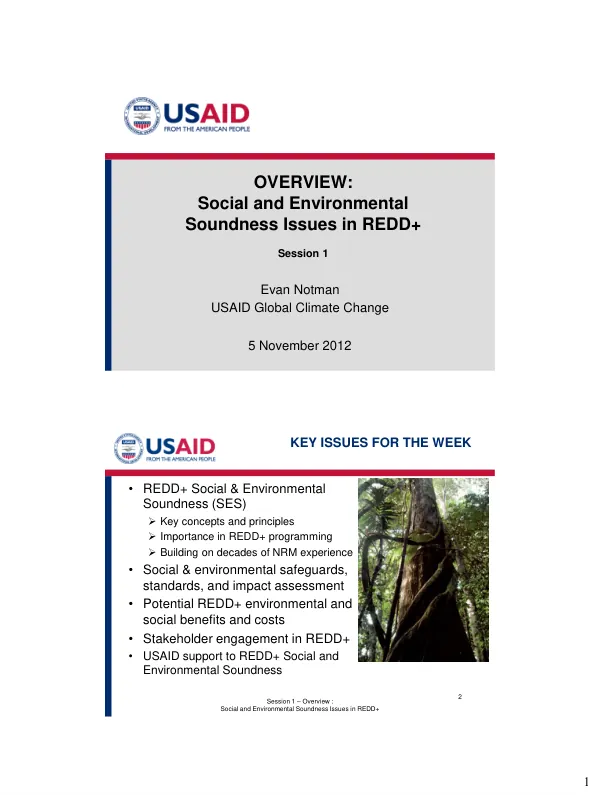
USAID’s REDD+ Program: Land and Resource Tenure and Carbon Rights
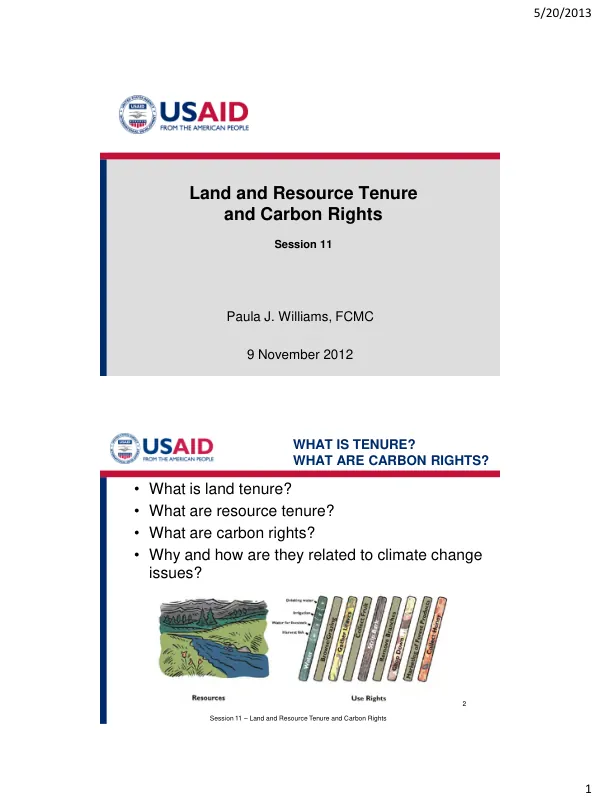
Land and Resource Tenure and Carbon Rights is a critical component of REDD+ (Reducing Emissions from Deforestation and Degradation) implementation.
2013 · 9 pages
Sign in to readA free account is required to download.
Abstract
The concept of tenure refers to the rights and interests individuals or groups have in land and natural resources. In the context of REDD+, tenure is essential for ensuring the full and effective participation of relevant stakeholders, particularly local communities, in forest carbon activities. The Cancun Agreements, a key international framework for REDD+, emphasize the importance of addressing land tenure issues, including gender considerations, to ensure the participation of relevant stakeholders. The Verified Carbon Standard, a widely used certification scheme for carbon credits, requires project participants to define the project boundary, provide geographical coordinates of lands to be included, and maintain land administration and tenure records. Carbon rights, a critical aspect of REDD+, refer to the rights to physical carbon stored in biomass and the benefits that arise from transferring property rights through trading schemes. The concept of carbon rights is complex and has been the subject of debate, with different scenarios proposed for devolution of ownership rights to local communities, co-management, or limited devolution. In Southeast Asia, efforts to address tenure in the context of REDD+ are underway, with community forestry providing some rights to local communities. However, drivers of tenure reform vary among countries, and the costs and benefits of tenure reform implementation are significant. Use rights and benefit sharing efforts are essential but not sufficient to generate political will for tenure reform. Climate change has significant implications for tenure regimes, including dramatic changes in land and natural resource-based asset values, displacement and migration, further marginalization of the disenfranchised, transformation of resource management institutions, and equity and the distribution of carbon payment benefits. Innovations in land administration systems are necessary to address the challenges posed by climate change. These innovations include facilitated access to all, centralization of authority, national spatial planning, simplification of tenure regimes, standardization of land administration policies and practices, and respect for Indigenous rights. In conclusion, tenure is a critical component of REDD+ implementation, and efforts to clarify carbon rights are essential for creating a common understanding. Tenure reform processes are underway, but additional political will is required to drive reform. REDD+ tenure efforts must consider systems impacts and avoid approaches that negatively impact vulnerable populations. A focus on the process of clarifying tenure is necessary to ensure the effective participation of relevant stakeholders in forest carbon activities.
Related documents