TETRA TECH ARD, INC.
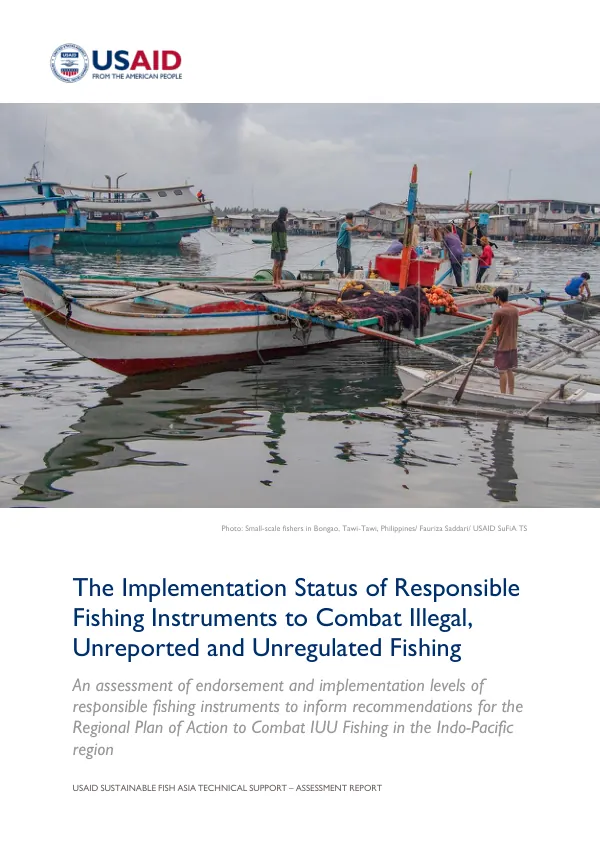
USAID SUSTAINABLE FISH ASIA TECHNICAL SUPPORT – ASSESSMENT REPORT
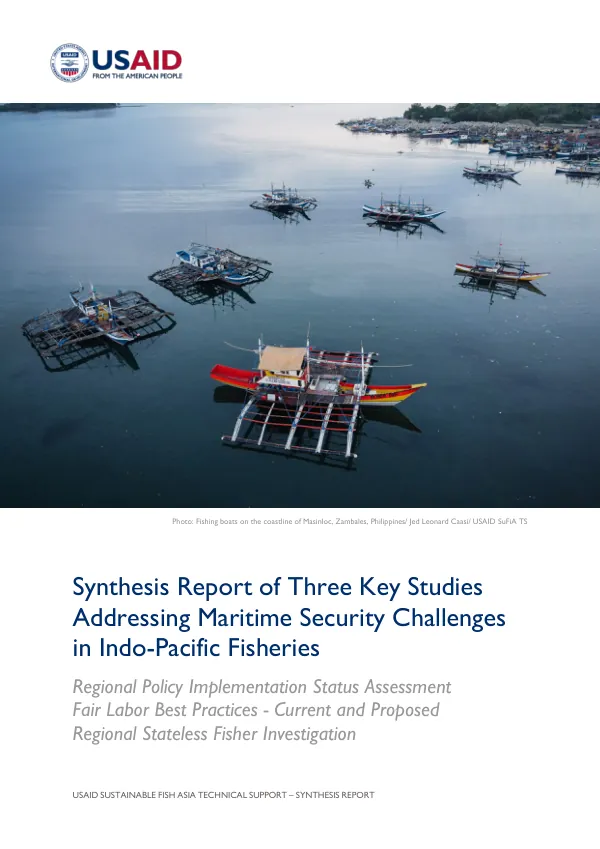
The Regional Plan of Action to Promote Responsible Fishing Practices Including Combating Illegal, Unreported and Unregulated Fishing (RPOA-IUU) and the Coral Triangle Initiative on Coral Reefs, Fisheries, and Food Security's (CTI-CFF) Regional Plan of Action 2.0 are key frameworks for addressing illegal, unreported and unregulated (IUU) fishing in the Indo-Pacific region.
2023 · 65 pages
Sign in to readA free account is required to download.
Abstract
This assessment report focuses on the implementation status of responsible fisheries international instruments (RFIIs) that can effectively combat IUU fishing in the region. The assessment was conducted in partnership with RPOA-IUU and CTI-CFF, and it is a follow-up to RPOA-IUU's 2022 International Workshop on Advancing Regional Standards of Responsible Fisheries to combat IUU fishing. The report aims to inform recommendations for the Regional Plan of Action to Combat IUU Fishing in the Indo-Pacific region. The Indo-Pacific region is characterized by five distinct seascapes: the Andaman Sea, Bismarck Solomon Seas, South China Sea, Sulu Sulawesi Seascape, and Sunda Banda Seascape. Each seascape has unique features and challenges related to IUU fishing. The assessment report examines the implementation status of RFIIs in each of these seascapes, including the endorsement and implementation levels of key instruments. The report identifies commonalities and differences in the implementation status of RFIIs across the five seascapes. Commonalities include the need for technical development and support to enhance the capacity of member countries to implement RFIIs. Differences are observed in the level of endorsement and implementation of RFIIs, with some countries showing higher levels of commitment than others. The assessment report highlights the importance of technical support to address the challenges faced by member countries in implementing RFIIs. Technical support priorities include capacity building, data collection and analysis, and policy development. The report also emphasizes the need for regional partnerships and international governance organizations to provide technical support and guidance to member countries. The report provides recommendations for technical development, technical support, and policy development to enhance the implementation of RFIIs in the Indo-Pacific region. Recommendations include the development of national action plans, the establishment of monitoring and enforcement systems, and the provision of technical assistance to member countries. The assessment report concludes that the implementation of RFIIs is crucial to combating IUU fishing in the Indo-Pacific region. The report emphasizes the need for continued technical support and capacity building to enhance the capacity of member countries to implement RFIIs effectively. The report also highlights the importance of regional partnerships and international governance organizations in providing technical support and guidance to member countries. The report provides a comprehensive overview of the implementation status of RFIIs in the Indo-Pacific region, highlighting the challenges and opportunities for enhancing the implementation of these instruments. The report provides a framework for policymakers, practitioners, and stakeholders to inform their decisions and actions related to IUU fishing in the region. The assessment report is based on a comprehensive analysis of data collected from online surveys, key informant interviews, and focus group discussions with stakeholders from member countries, regional partnerships, and international governance organizations. The report uses a range of indicators to assess the implementation status of RFIIs, including endorsement levels, implementation tiers, and technical support needs. The report highlights the importance of continued technical support and capacity building to enhance the implementation of RFIIs in the Indo-Pacific region. The report emphasizes the need for regional partnerships and international governance organizations to provide technical support and guidance to member countries. The report also highlights the importance of policy development and data collection and analysis in enhancing the implementation of RFIIs.