TETRA TECH ARD, INC.
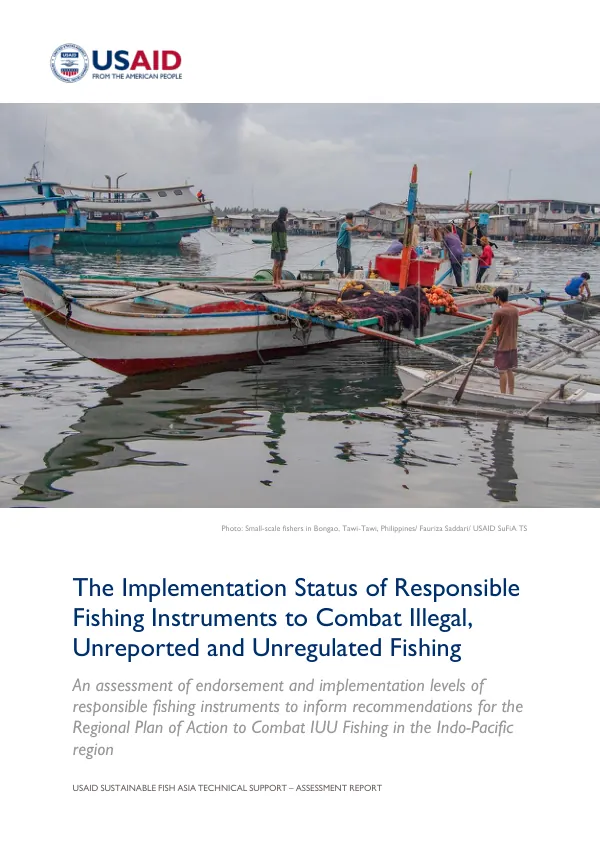
USAID Sustainable Fish Asia Technical Support – Synthesis Report
The Indo-Pacific region relies heavily on its fisheries for livelihoods and food security for an estimated 350 million people.
2023 · 10 pages
Sign in to readA free account is required to download.
Abstract
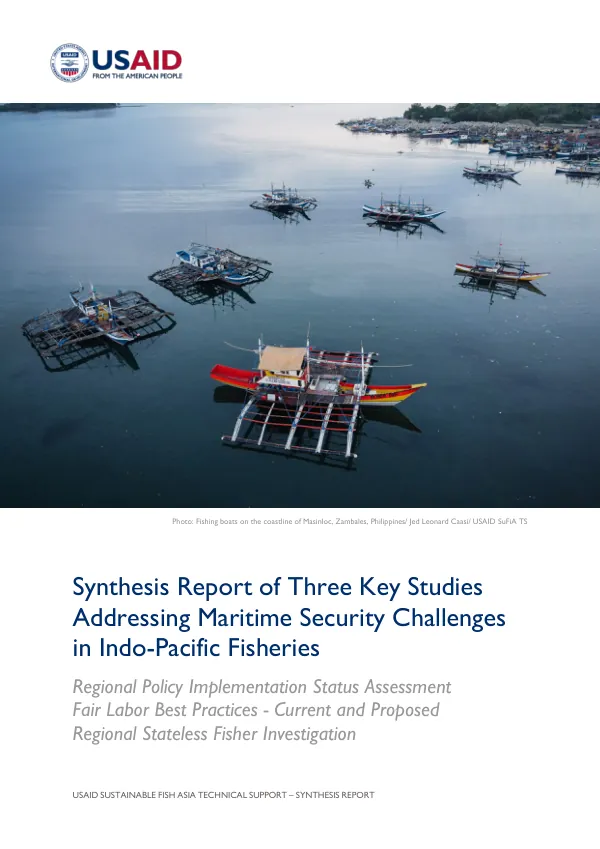
The region faces critical maritime security challenges, including destructive illegal, unreported, and unregulated (IUU) fishing and overfishing, geopolitical tensions over resource scarcity and marine pollution, and climate change. These challenges pose a grave threat to marine conservation and basic food and human security within the region. The U.S. Agency for International Development (USAID) initiated the Sustainable Fish Asia Technical Support (SuFiA TS) Activity to address these interrelated and transboundary challenges. SuFiA TS aims to improve the management of marine biodiversity and fisheries resources by reducing unsustainable fishing and combating IUU fishing activities. The activity's three core components focus on sustainable fisheries policies and regulatory frameworks, fair labor and sustainable fishing practices, and project coordination and technical support. As part of its efforts, SuFiA TS collaborates with regional institutions, including the Coral Triangle Initiative on Coral Reefs, Fisheries, and Food Security (CTI-CFF) Regional Secretariat, the Regional Plan of Action to Promote Responsible Fishing Practices (RPOA-IUU) Coordination Committee, and the ASEAN Secretariat. Through consultative meetings and a gender equity and social inclusion (GESI) analysis, SuFiA TS identified key regional information needs and capacity development gaps and developed a Gender and Inclusive Development Action Plan (GIDAP). The GIDAP led to the prioritization of three crucial technical support areas: 1) assessing member country implementation of regional fisheries management policies and IUU fishing-related international instruments, 2) reviewing seafood supply chain fair labor practices, and 3) conducting applied research on Stateless and socially excluded, indigenous fisher communities operating within the region. These studies were conducted in collaboration with regional partners CTI-CFF, RPOA-IUU, and the ASEAN Secretariat from August 2022 to August 2023. The findings of the studies provide significant insights into policy implications and potential strategies for mitigating maritime threats in the Indo-Pacific. By approaching these multifaceted challenges comprehensively, policymakers can develop holistic solutions that protect the region's marine resources and the livelihoods of coastal communities. The recommendations offered to regional partners and national governments aim to support their initiatives in addressing the diverse challenges confronting the fisheries of the Indo-Pacific and the communities reliant on them. The implementation status of responsible fisheries international instruments (RFIIs) to combat IUU fishing in the Indo-Pacific region is a key focus of the report. The research used mixed methods, including online surveys, key informant interviews, and focus group discussions with experts and practitioners from academia, government agencies, NGOs, and the private sector across the Indo-Pacific region. One key finding of the report is that the main barrier hindering coastal countries in Southeast Asia from endorsing and implementing international instruments is the lack of capacity. Limited awareness among political decision-makers about the importance of sustainable fisheries, coupled with inadequate institutional capacity and lack of resources, hinder the effective implementation of RFIIs. The report identifies gaps in implementation and offers recommendations for technical assistance within the Indo-Pacific waters' transboundary seascapes. The findings of the report aim to support the CTI-CFF's Regional Plan of Action 2.0 and the RPOA-IUU 2022 International Workshop on Advancing Regional Standards of Responsible Fisheries to combat IUU fishing. The report provides a comprehensive assessment of the implementation status of RFIIs and offers recommendations for technical assistance to overcome the challenges in implementing these instruments. The report highlights the importance of addressing the capacity gaps and limited awareness among political decision-makers about the importance of sustainable fisheries. It also emphasizes the need for technical assistance and capacity building to support the effective implementation of RFIIs. The report's findings and recommendations aim to support the efforts of regional partners and national governments in addressing the diverse challenges confronting the fisheries of the Indo-Pacific and the communities reliant on them.