ABT ASSOCIATES
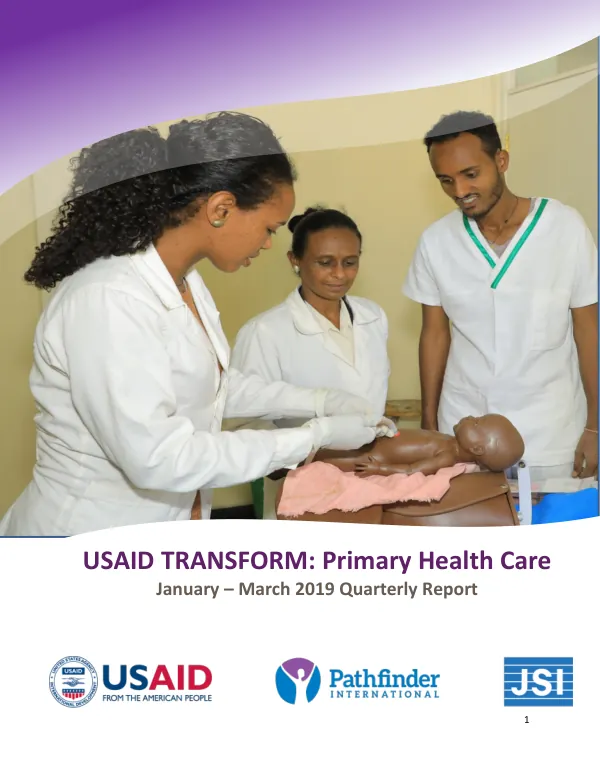
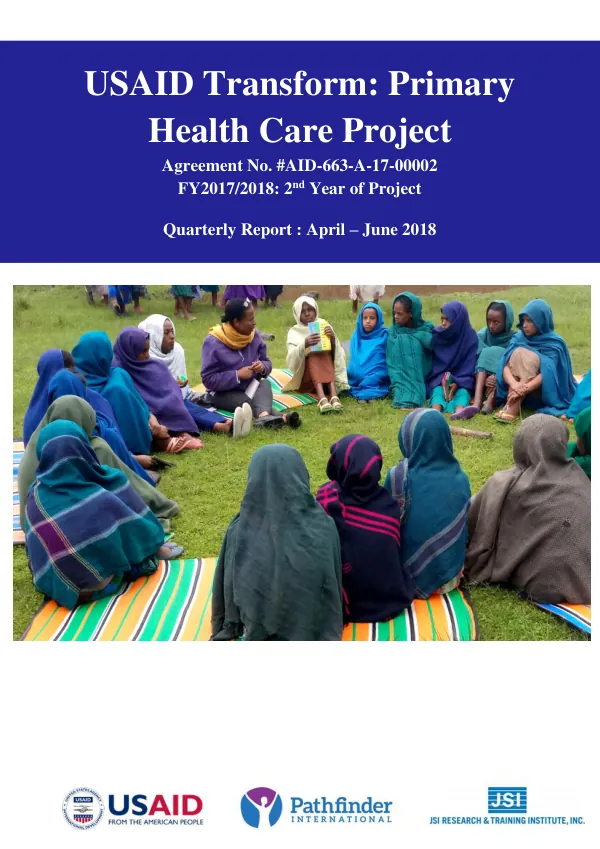
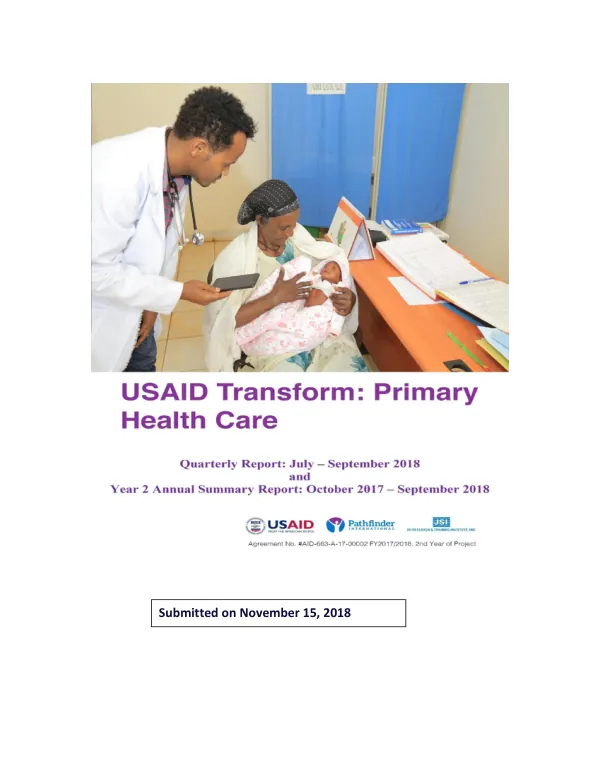
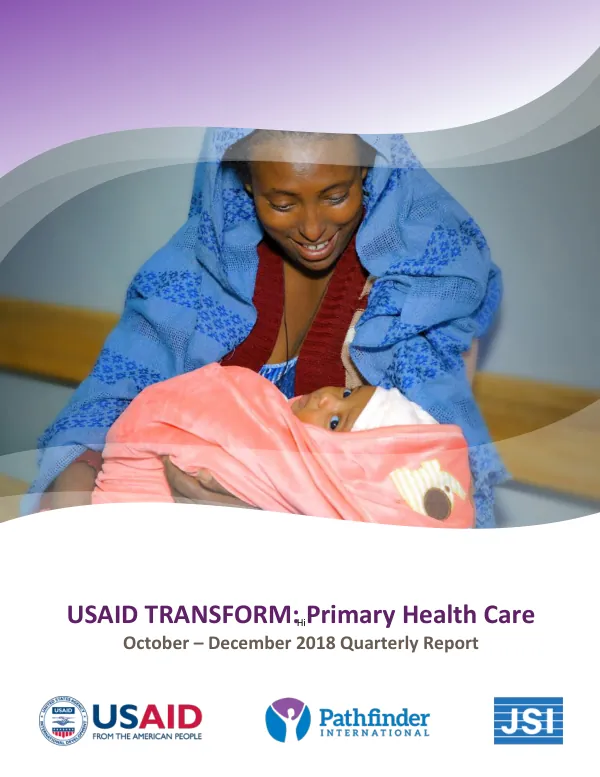
USAID TRANSFORM: Primary Health Care October – December 2018 Quarterly Report
The USAID TRANSFORM: Primary Health Care program is a five-year initiative aimed at strengthening the health system in Ethiopia.
2018 · 88 pages
Sign in to readA free account is required to download.
Abstract
The program focuses on improving the management and performance of the health system, increasing sustainable quality service delivery, and enhancing household and community health practices. The program is implemented by Pathfinder International, with a total estimated USAID amount of $120 million and a cost-sharing amount of $12 million. The program has achieved several key achievements, including the establishment and strengthening of innovative processes to sustainably enhance health system management and performance. This has been achieved through the implementation of performance standards, performance measurements, and performance improvements. The program has also strengthened the functionality of the health system within the context of primary care, including the implementation of health information systems and healthcare financing mechanisms. In addition, the program has strengthened leadership, governance, and management at the woreda and primary health care unit levels. This has been achieved through the implementation of twinning partnerships, integrated PHCU reviews, and EPAQ, which has improved the management of health service delivery and oversight of service quality. The program has also achieved significant results in increasing sustainable quality service delivery across the primary health care continuum of care. This has been achieved through the implementation of sub-results, including strengthened skills for delivery of quality and respectful maternal, newborn, and child health and nutrition services, improved provider behaviors and communication skills, and introduced and scaled service delivery interventions. Furthermore, the program has achieved significant results in improving household and community health practices, including increased individual and household care-seeking behavior and uptake of healthy practices. The program has also strengthened the enabling environment for health-seeking behavior, including community engagement in health service delivery. The program has also achieved significant results in enhancing learning to impact policy and programming related to preventing child and maternal deaths. This has been achieved through the implementation of sub-results, including strengthened health system capacity to generate learning and evidence, evidence of what works in preventing child and maternal deaths informed by results from program learning and iterative adaptation, and evidence utilized to inform programming and policy with local and global stakeholders. The program has also achieved significant results in enhancing partnership and collaboration, including the implementation of partnerships and collaborations with local and international stakeholders. The program has also achieved significant results in project data management and monitoring, including the implementation of performance as measured by reportable PMP indicators. The program has faced several challenges, including major challenges and taken measures to address them. The program has also outlined major activities for the next quarter, including the implementation of performance as measured by reportable PMP indicators, project data management and monitoring, and compliance. The program has also achieved significant results in enhancing technical communications, including the implementation of technical communications with local and international stakeholders. The program has also achieved significant results in major challenges and taken measures to address them, including the implementation of performance as measured by reportable PMP indicators, project data management and monitoring, and compliance. The program has also achieved significant results in enhancing learning to impact policy and programming related to preventing child and maternal deaths, including the implementation of sub-results, including strengthened health system capacity to generate learning and evidence, evidence of what works in preventing child and maternal deaths informed by results