FHI360
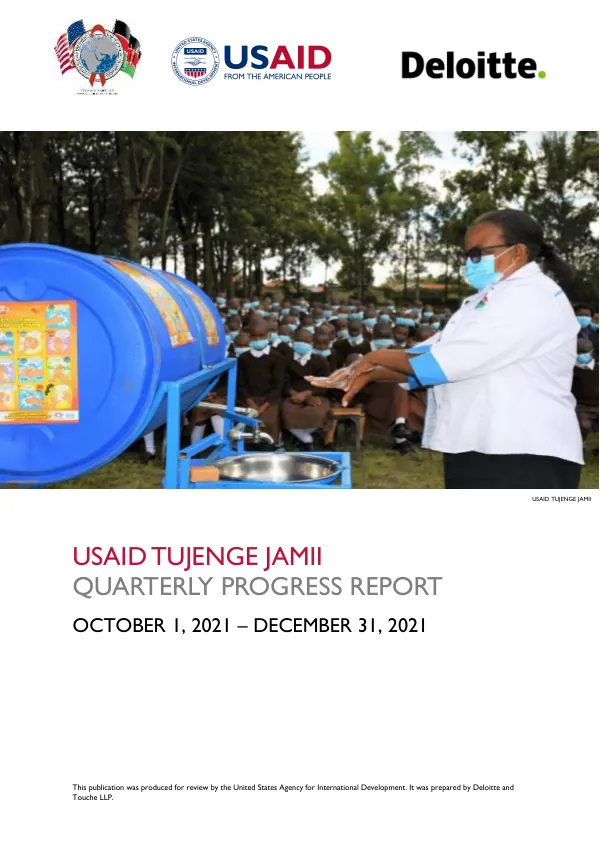
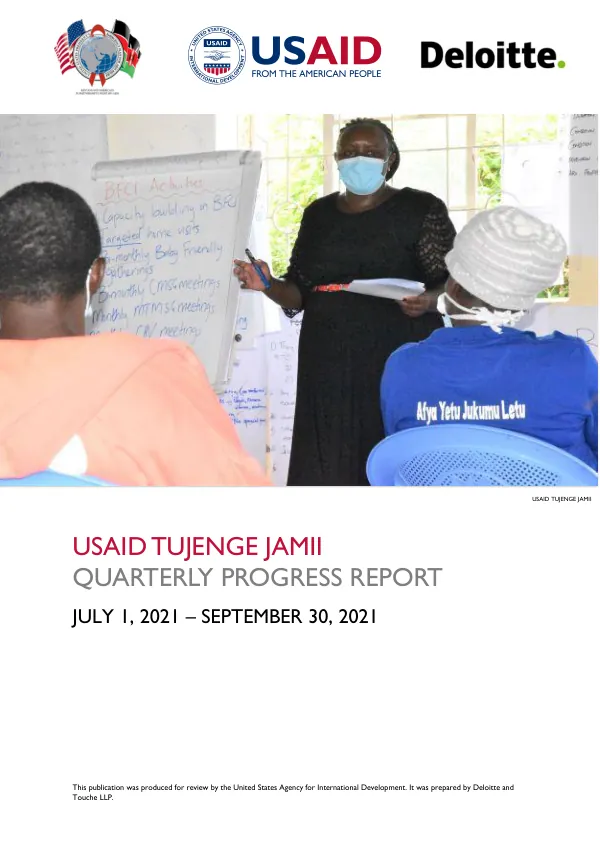
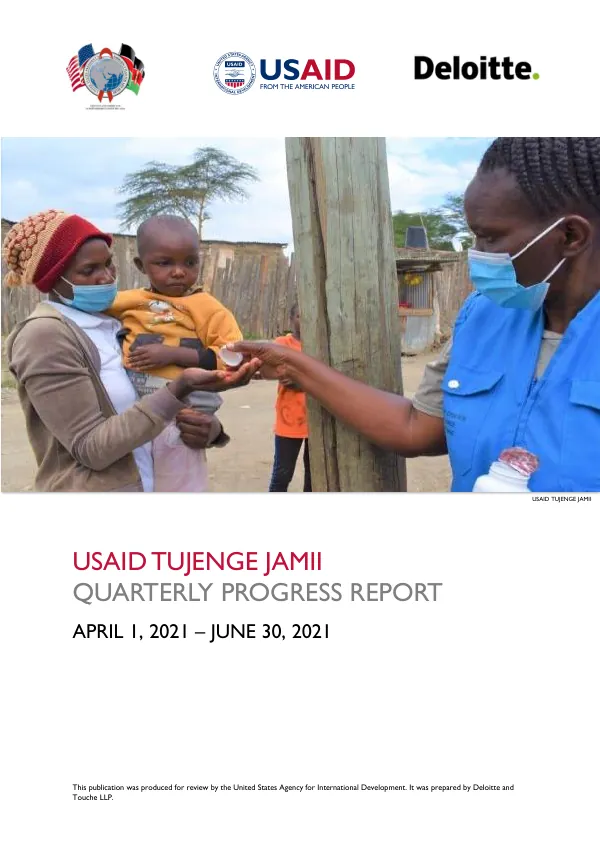
USAID Tujenge Jamii Quarterly Progress Report April 1, 2021 – June 30, 2021
The USAID Tujenge Jamii project is a health initiative aimed at improving HIV and family planning services in Kenya.
2021 · 64 pages
Sign in to readA free account is required to download.
Abstract
The project began on March 12, 2021, and is set to conclude on March 11, 2023. The project has a budget of USD 8,036,047 and is implemented by Deloitte and Touche LLP, with sub-partners Goldstar Kenya and FHI360. The project focuses on increasing access to and demand for quality HIV prevention and treatment services, as well as family planning, reproductive, maternal, newborn, child, and adolescent health (RMNCAH), nutrition, and water, sanitation, and hygiene (WASH) services. The project targets key populations, including males, females, children, pregnant and breastfeeding women, and key populations. The project has achieved several key milestones, including increased access to and demand for targeted HIV prevention services, increased access to and demand for PrEP for discordant couples and populations at high-risk of acquiring HIV infection, and increased uptake of targeted HIV testing services. The project has also made progress in increasing access and demand for quality HIV treatment services, including prevention of mother-to-child transmission (PMTCT) services, antiretroviral therapy (ART) services, and cervical cancer screening and treatment for women living with HIV. In addition, the project has strengthened the capacity of county health systems, local partners, and communities to deliver quality health services. This includes strengthening human resources for health (HRH) systems, capacity for financing and accountability of county health services, coordination and provision of laboratory services, commodity logistics and inventory management, and documentation in MOH data systems. The project has also made progress in monitoring, evaluation, and reporting, including the use of indicators and targets to track progress. The project has collaborated with other USAID-funded mechanisms and has made progress in implementing electronic medical records (EMR) and using data tools to support quality of care. One of the project's success stories is the establishment of a drop-in center to enhance HIV service delivery to key populations. The center provides a safe and confidential space for key populations to access HIV services, including testing, counseling, and treatment. The project's financial information is presented in the appendices, including a summary of expenditures and a success story highlighting the impact of the project's activities.