USAID DEC
Planning for Resilience in East Africa through Policy, Adaptation, Research, and Economic Development (PREPARED): Fifth Annual Work Plan
Sign inUSAID
Planning for Resilience in East Africa through Policy, Adaptation, Research, and Economic Development (PREPARED): Fifth Annual Work Plan
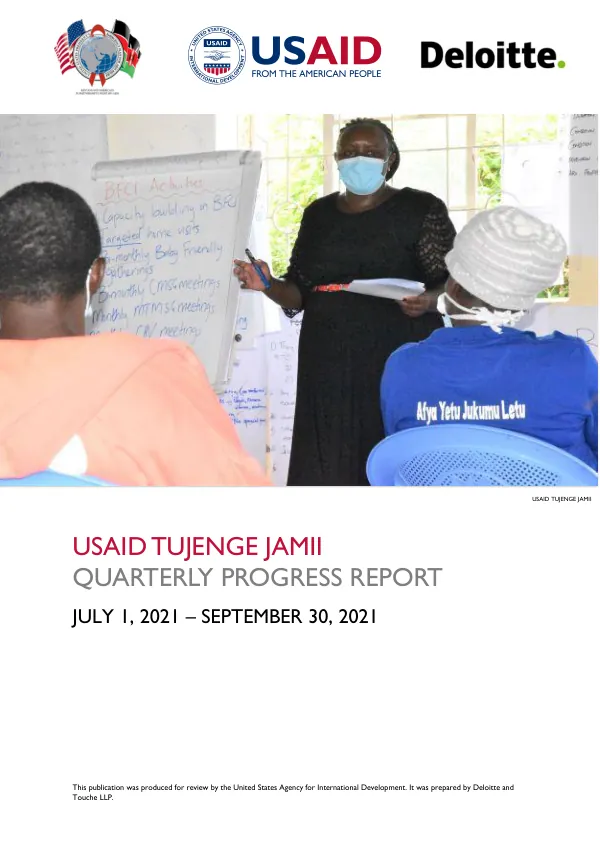
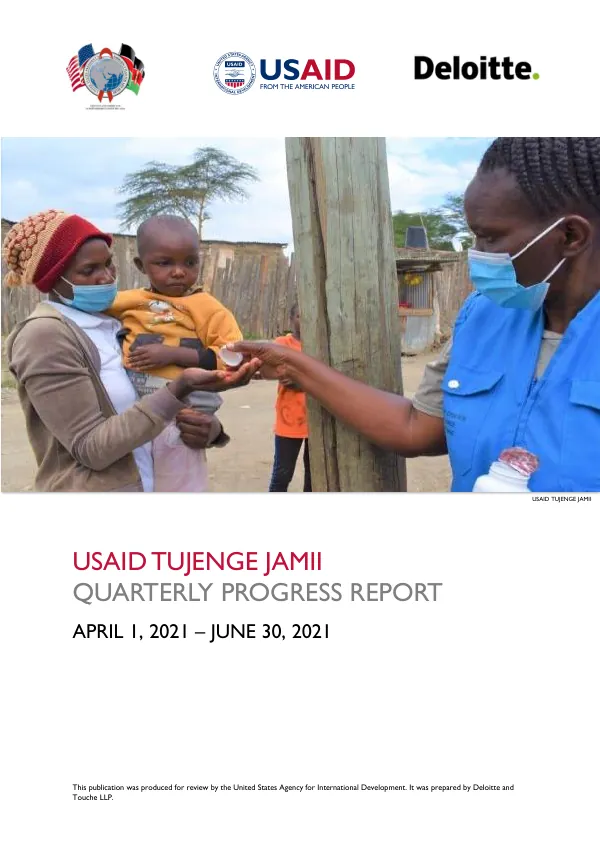
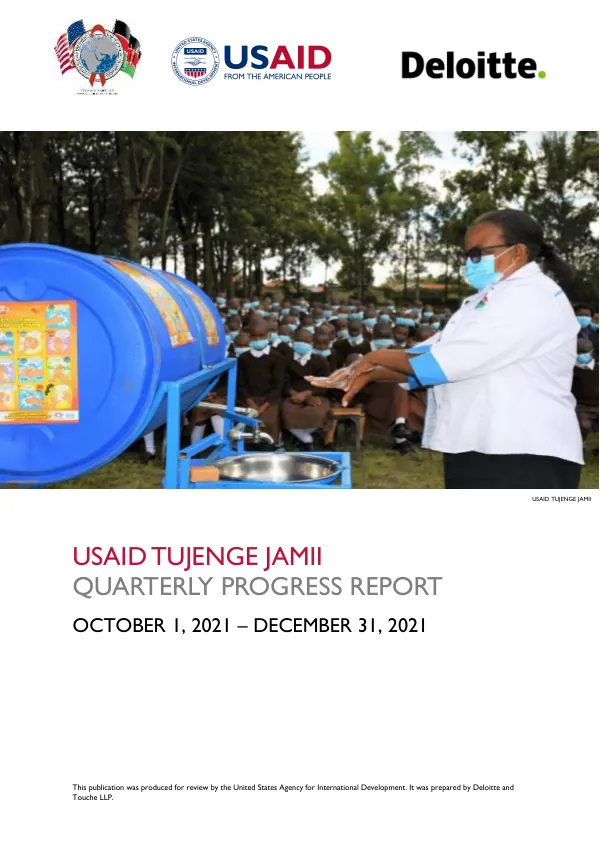
The USAID Tujenge Jamii project is a new award led by Deloitte and Touche Kenya, with the core vision of creating a county-owned, county-led, and county-managed integrated platform for the delivery of HIV, Reproductive, Maternal, Newborn, Child, and Adolescent Health (RMNCAH), Water Sanitation and Hygiene (WASH), and Nutrition services.
2021 · 55 pages
Sign in to readA free account is required to download.
Abstract
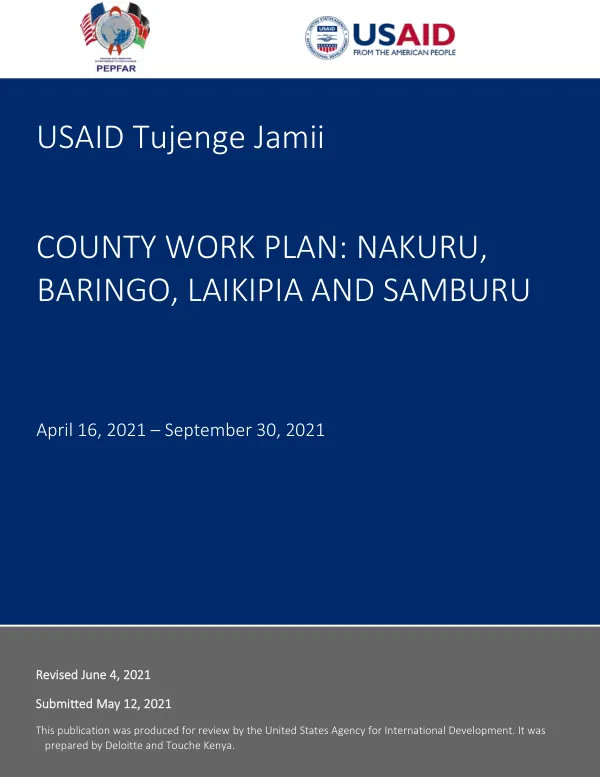
The project will operate in Nakuru, Baringo, Laikipia, and Samburu counties, with a focus on HIV Prevention, Care, and Treatment Services, RMNCAH, WASH, and Nutrition in Nakuru County, and HIV Prevention, Care, and Treatment Services only in Baringo, Laikipia, and Samburu counties. The project's goals, strategic objectives, and expected outcomes are centered around strengthening health and human capacity. The primary goal is to increase the use of quality county-led, county-owned, and county-managed health and social services. This goal is further divided into three sub-purposes: increasing access and demand for quality HIV prevention services, increasing access and demand for quality HIV treatment services, and increasing access and demand for quality FP/RMNCAH, Nutrition, and Water and Sanitation services. The project will work in partnership with county governments, relevant line ministries, and departments, as well as other implementing partners, to leverage resources and increase efficiency and impact. The project's approach is based on lessons learned from the former Afya Nyota ya Bonde (ANyB) and Afya Uzazi implementation, USAID technical guidance, and data review of county gaps. The project will focus on four counties: Nakuru, Baringo, Laikipia, and Samburu. In Nakuru County, the project will implement HIV Prevention, Care, and Treatment Services, RMNCAH, WASH, and Nutrition. In Baringo, Laikipia, and Samburu counties, the project will implement HIV Prevention, Care, and Treatment Services only. The project's work plan is a result of a collaborative process involving county health leaders, county health management teams, and the USAID Tujenge Jamii team. The project's co-creation meeting was held between April 26th and May 6th, 2021, in Nyahururu town, where county health leaders, county health management teams, and the USAID Tujenge Jamii team reviewed critical gaps, county priorities, and developed strategies to enable the counties to bridge the shortfalls reflected in the unmet need for HIV and RMNCAH, WASH, and Nutrition services for the respective counties. The project's approach is based on a county-led, county-owned, and county-managed integrated platform for the delivery of health and social services. The project will work in partnership with county governments, relevant line ministries, and departments, as well as other implementing partners, to leverage resources and increase efficiency and impact. The project will focus on increasing access and demand for quality HIV prevention services, including HIV testing services, counseling, and condom distribution. The project will also focus on increasing access and demand for quality HIV treatment services, including antiretroviral therapy, care and support services, and viral load monitoring. The project will also focus on increasing access and demand for quality FP/RMNCAH, Nutrition, and Water and Sanitation services, including reproductive health services, maternal and child health services, nutrition services, and water and sanitation services. The project will work in partnership with county governments, relevant line ministries, and departments, as well as other implementing partners, to leverage resources and increase efficiency and impact. The project will focus on increasing access and demand for quality HIV prevention services, including HIV testing services