FHI360
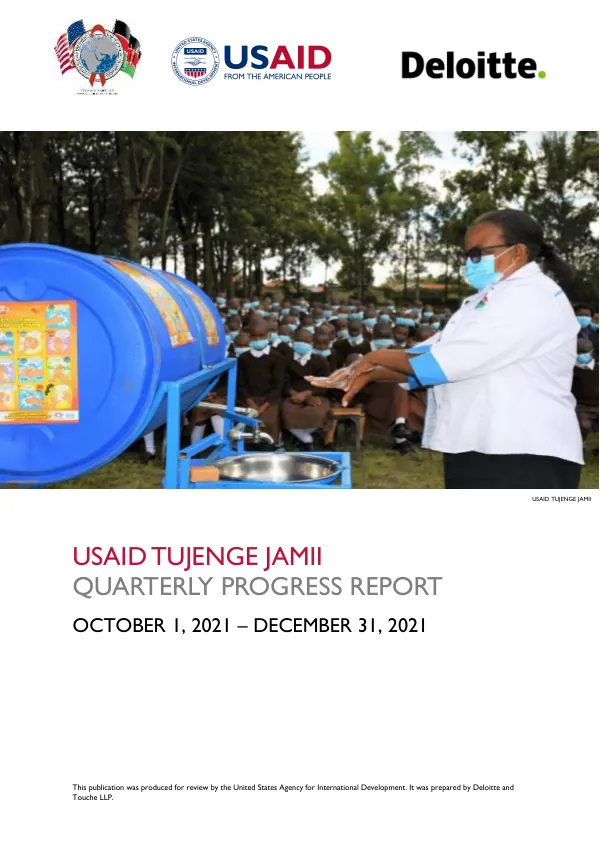
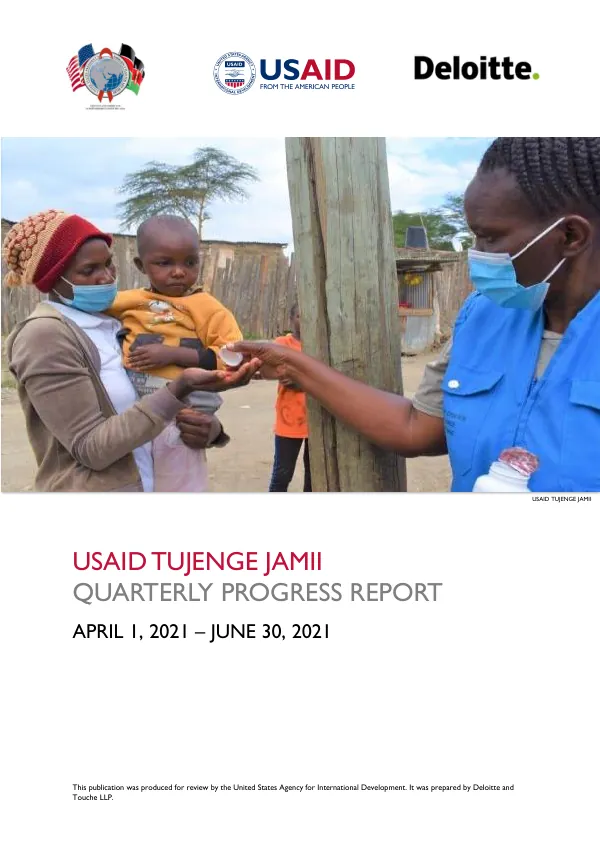
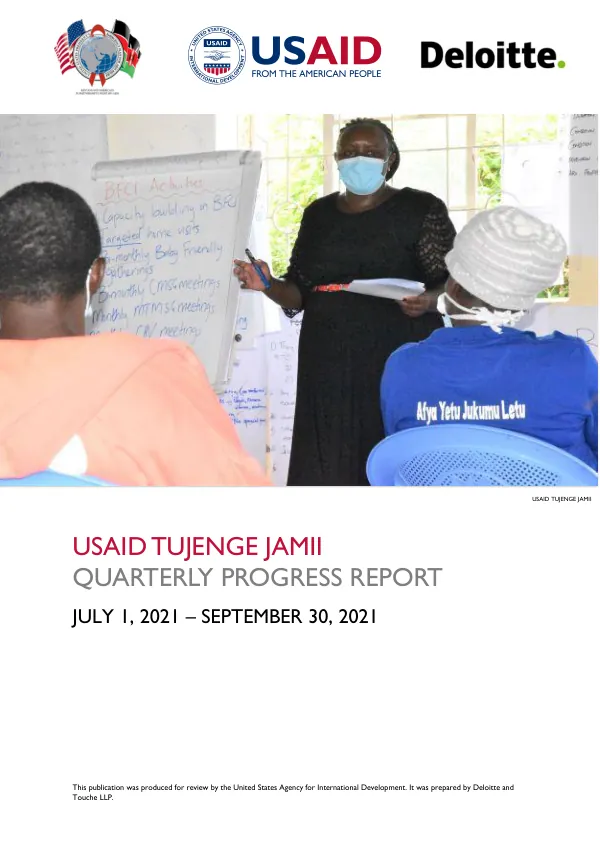
USAID Tujenge Jamii Quarterly Progress Report July 1, 2021 – September 30, 2021
The USAID Tujenge Jamii project is a health initiative aimed at improving access to quality HIV prevention and treatment services, as well as family planning, reproductive, maternal, newborn, child, and adolescent health (RMNCAH), nutrition, and water, sanitation, and hygiene (WASH) services in Kenya.
2021 · 79 pages
Sign in to readA free account is required to download.
Abstract
The project began on March 12, 2021, and is set to end on March 11, 2026, with a budget of USD 8,036,047. The project focuses on five sub-purposes: increased access and demand for quality HIV prevention services, increased access and demand for quality HIV treatment services, increased access and demand for quality FP/RMNCAH, nutrition, and WASH services, strengthened capacity of county health systems, local partners, and communities to deliver quality health services, and strengthened strategic information systems for quality improvement, planning, coordination, monitoring, and learning. Key achievements under the first sub-purpose include increased access to and demand for targeted HIV prevention services among key populations, adolescents, and young women, as well as increased uptake of targeted HIV testing services. The project also reported increased access and demand for quality prevention of mother-to-child transmission (PMTCT) services, quality antiretroviral therapy (ART) services, and differentiated service delivery. Under the second sub-purpose, the project reported increased access and demand for quality ART services, including initiation of treatment and ART optimization, as well as increased viral load coverage and attainment of viral suppression for all patients on treatment. The project also reported increased utilization of TB/HIV collaborative services, effective TB case-finding among people living with HIV, and increased reporting and prevention of sexual and gender-based violence (SGBV). The project also made significant progress in strengthening county health systems, local partners, and communities to deliver quality health services. This included strengthened human resources for health (HRH) systems, strengthened capacity for financing and accountability of county health services, increased coordination and provision of laboratory services to support quality of HIV care, and strengthened commodity logistics and inventory management. In terms of collaboration with other USAID-funded mechanisms, the project reported progress in working with other USAID-funded projects to leverage resources and expertise. The project also reported progress in monitoring, evaluation, and reporting, including the use of indicators and targets to track progress. The project's financial information for the period of July 1, 2021, to September 30, 2021, is reported in the expenditure report. The report shows that the project has made significant progress in achieving its objectives and has a strong foundation for continued success in the coming years.