GOVERNMENT OF JORDAN
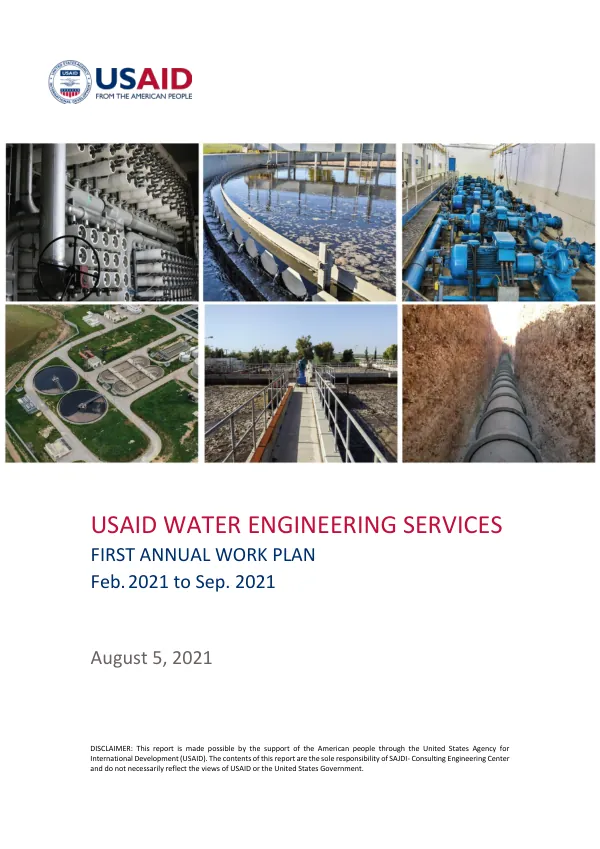
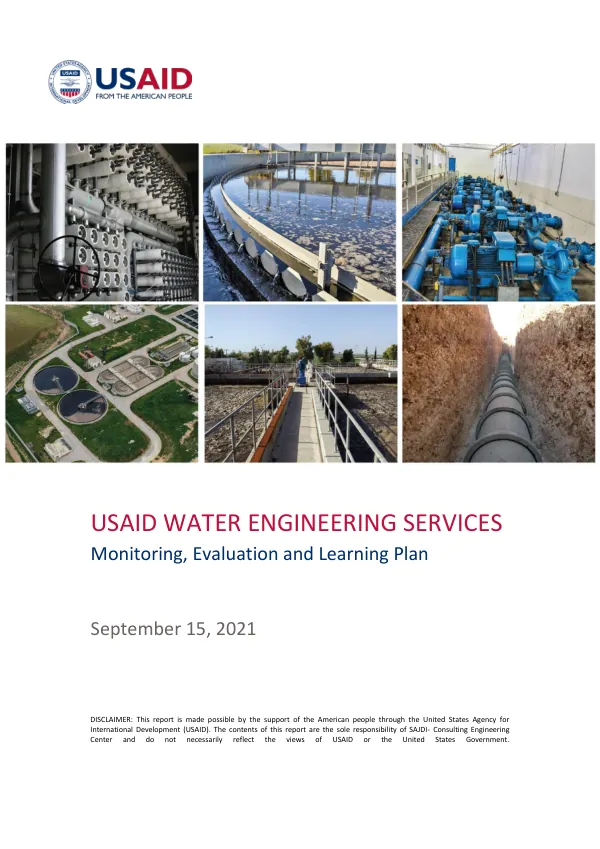
USAID WATER ENGINEERING SERVICES Monitoring, Evaluation and Learning Plan
The Water Engineering Services Activity is a USAID-funded project aimed at improving water and wastewater service delivery in Jordan.
2021 · 61 pages
Sign in to readA free account is required to download.
Abstract
The project is implemented by SAJDI Consulting Engineering Center (SAJDI) and serves as an umbrella Contract for USAID/Jordan to support the Government of Jordan (GoJ). The project's primary objective is to enhance water supply in target areas and expand wastewater treatment, collection, and reuse in Jordan. The project's theory of change is based on the assumption that improved water and wastewater service delivery will lead to increased access to safe drinking water and improved sanitation, ultimately contributing to the reduction of water-borne diseases and improved public health. The project's logical model outlines the expected results, including increased water supply in target areas and expanded wastewater treatment, collection, and reuse. The project's Monitoring, Evaluation, and Learning (MEL) Plan proposes indicators to gauge the achievement of results and the activity's theory of change. The indicators are categorized into two types: Mission indicators and indicators customized by SAJDI. Each indicator has a definition and is described in full detail in a Performance Indicator Reference Sheet (PIRS). The MEL Plan outlines the processes used for monitoring, evaluation, and learning throughout the life of the activity. These processes include performance monitoring, data collection, and evaluation. The plan also describes the roles and responsibilities of the project team, including the Chief of Party, Compliance and Backstopping Officer, and Design Manager. The project's MEL Plan is a dynamic and flexible document that will be updated throughout the implementation process. New targets or approaches will be incorporated based on the activity's performance and results, as well as changes in the Mission's priorities. The plan is designed to ensure timely sharing of accurate data between SAJDI and the Mission, enabling both parties to actively manage the activity. The project's MEL Plan is closely linked to the Mission's Performance Management Plan (PMP) and Development Objective (DO) PMP. The relationship between these plans is clearly outlined in the MEL Plan, ensuring that the project's objectives are aligned with the Mission's overall goals. The project's MEL Plan proposes indicators to gauge the achievement of results, including: * Result No. 1: Water supply in target areas increased * Result No. 2: Wastewater treatment, collection, and reuse in target areas expanded The plan also outlines the data collection methodology, including the use of Performance Indicator Reference Sheets (PIRS) and data quality assurance procedures. The project's MEL Plan is designed to ensure that accurate and timely data is collected and shared between SAJDI and the Mission, enabling both parties to actively manage the activity and make informed decisions. The project's MEL Plan is a critical component of the project's overall management and evaluation framework. It provides a clear and structured approach to monitoring, evaluation, and learning, ensuring that the project's objectives are achieved and its results are measured and reported accurately.