IOM
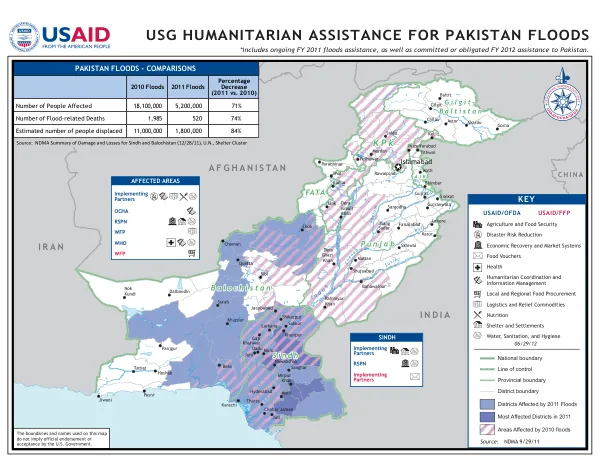
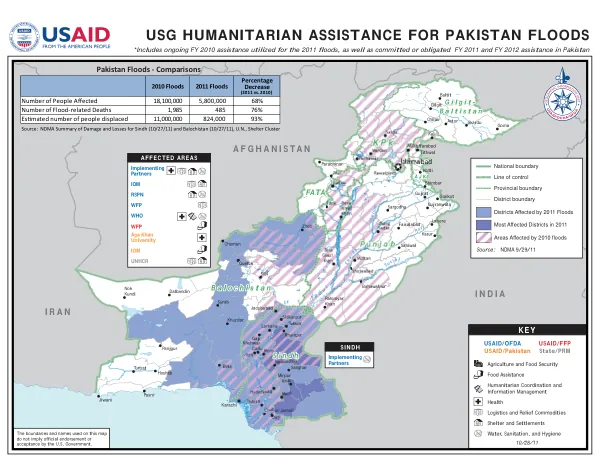
USG HUMANITARIAN ASSISTANCE FOR PAKISTAN FLOODS MAP
Agriculture and Food Security in Pakistan's Flood-Affected Areas began in 2011 with funding from USAID's Office of U.S.
2011 · 1 pages
Sign in to readA free account is required to download.
Abstract
Foreign Disaster Assistance (OFDA). Initial assessments conducted in Sindh and Balochistan provinces identified widespread damage to agricultural infrastructure and limited access to food as primary challenges. Implementation focused on three key interventions: food assistance, humanitarian coordination and information management, and shelter and settlements. More than 18 million people received food assistance during the first year, with a focus on vulnerable populations including women and children. Shelter and settlements programs provided support to over 11 million people displaced by the floods. Community feedback indicated strong demand for agricultural support, including seed and fertilizer distribution, as well as training in sustainable agriculture techniques. The program also supported the recovery of agricultural infrastructure, including irrigation systems and roads. The geographic focus of the program was on the most affected districts in Sindh and Balochistan, including Sukkur, Larkana, and Mirpur Khas. The program also supported the recovery of agricultural infrastructure in other affected areas, including Punjab and Khyber Pakhtunkhwa provinces. The program's timeframes were from 2011 to 2012, with ongoing support from USAID and other implementing partners.
Connected topics