CATHOLIC RELIEF SERVICES ORGANIZATION
USG HUMANITARIAN ASSISTANCE TO CÔTE D’IVOIRE AND LIBERIA
The humanitarian assistance provided by the United States Government (USG) to Côte d'Ivoire and Liberia is a critical component of the international response to the crisis in the region.
2011 · 1 pages
Sign in to readA free account is required to download.
Abstract
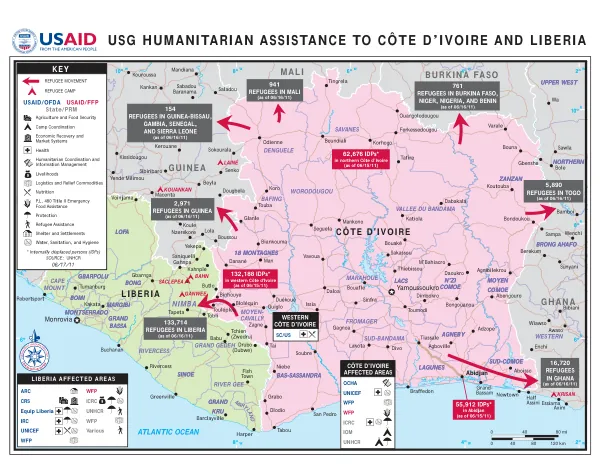
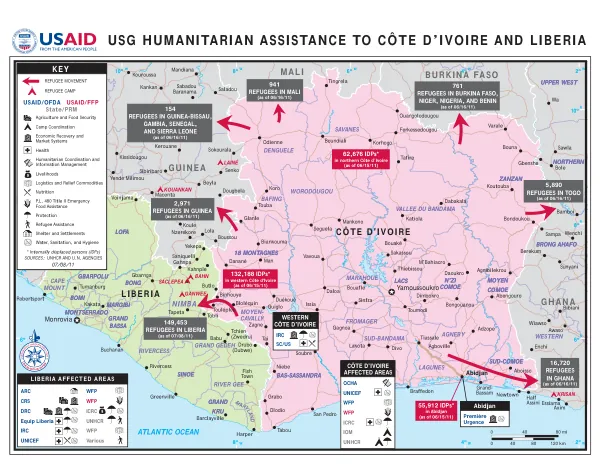
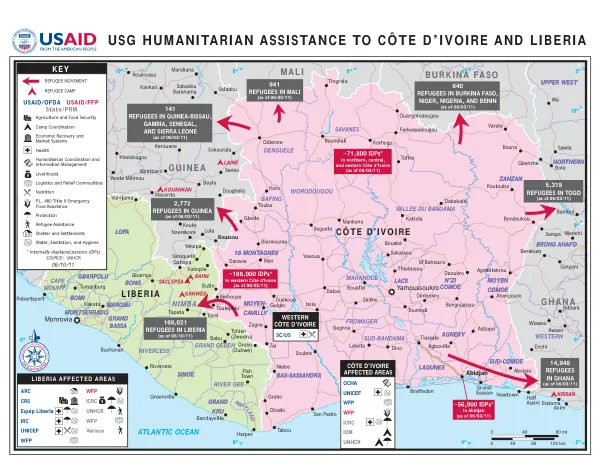
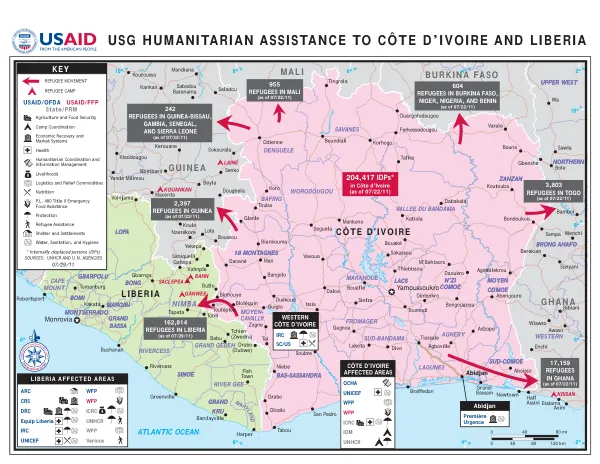
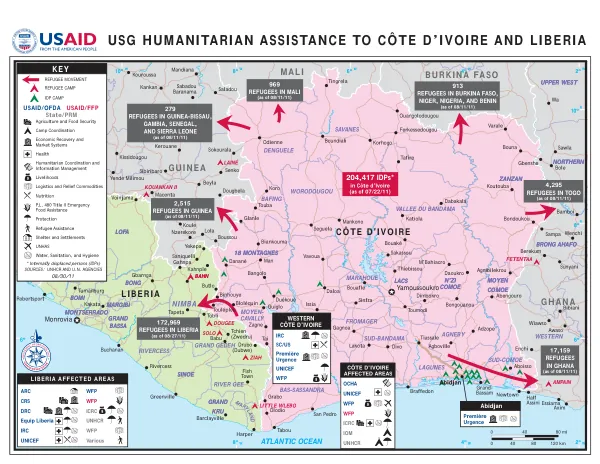
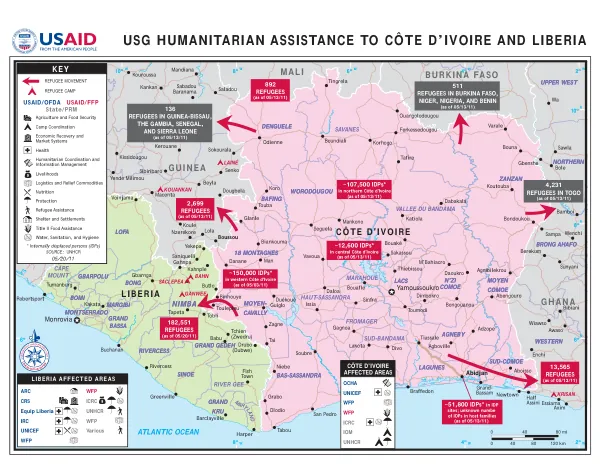
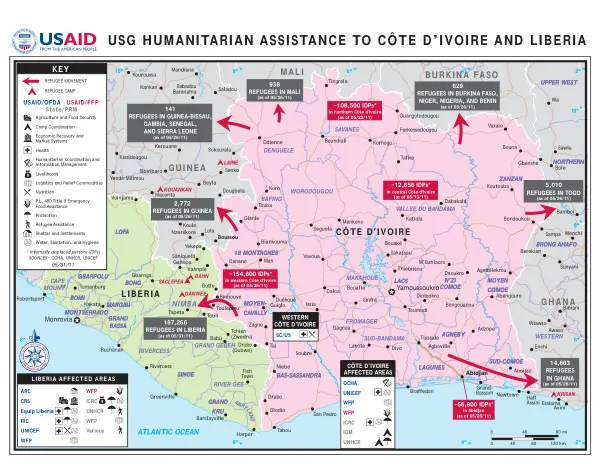
The affected areas in Côte d'Ivoire include the western, central, and northern regions, while in Liberia, the affected areas are primarily in the western part of the country. According to the United Nations High Commissioner for Refugees (UNHCR), as of May 31, 2011, there were 187,266 refugees in Liberia, with the majority residing in the western part of the country. In addition, there were 2,772 refugees in Guinea, 14,603 in Ghana, 5,010 in Togo, and 629 in Burkina Faso, among other countries. The total number of refugees in the region is approximately 56,800 internally displaced persons (IDPs) in Abidjan, 154,600 IDPs in western Côte d'Ivoire, and 108,500 IDPs in northern Côte d'Ivoire. The humanitarian assistance provided by the USG includes support for various sectors, including agriculture and food security, camp coordination, economic recovery and market systems, health, humanitarian coordination and information management, livelihoods, logistics and relief commodities, nutrition, P.L. 480 Title II emergency food assistance, protection, refugee assistance, shelter and settlements, and water, sanitation, and hygiene. The assistance is provided through various implementing partners, including the Office for the Coordination of Humanitarian Affairs (OCHA), the United Nations Children's Fund (UNICEF), the World Food Programme (WFP), the International Committee of the Red Cross (ICRC), the International Organization for Migration (IOM), and the US Agency for International Development (USAID). The affected areas in Côte d'Ivoire and Liberia are located in various regions, including the western, central, and northern regions of Côte d'Ivoire, and the western part of Liberia. The regions are characterized by a mix of urban and rural areas, with a diverse population of various ethnic groups. The humanitarian assistance provided by the USG is critical in addressing the needs of the affected populations, including refugees, IDPs, and host communities. The humanitarian response in the region is coordinated by the OCHA, with support from various implementing partners. The response includes the provision of emergency food assistance, shelter, and non-food items, as well as support for livelihoods, health, and protection. The humanitarian assistance is provided through various channels, including the WFP, UNICEF, ICRC, IOM, and USAID. The assistance is critical in addressing the needs of the affected populations and supporting the recovery and development of the affected areas.
Related documents