USAID DEC
Uzbekistan Introduces a New Funding System for TB Hospitals
Uzbekistan's health financing system is undergoing reform to enhance the efficiency and quality of healthcare services.
2024 · 1 pages
Sign in to readA free account is required to download.
Abstract
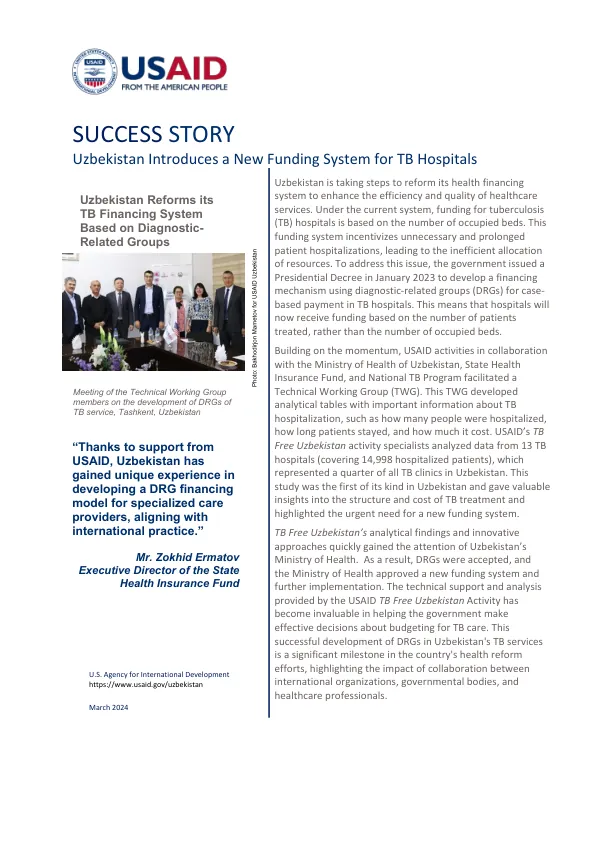
The current system, which funds tuberculosis (TB) hospitals based on the number of occupied beds, incentivizes unnecessary and prolonged patient hospitalizations, leading to inefficient resource allocation. To address this issue, the government issued a Presidential Decree in January 2023 to develop a financing mechanism using diagnostic-related groups (DRGs) for case-based payment in TB hospitals. This means that hospitals will now receive funding based on the number of patients treated, rather than the number of occupied beds. A Technical Working Group (TWG) was established to develop analytical tables with important information about TB hospitalization, including the number of people hospitalized, length of stay, and costs. USAID's TB Free Uzbekistan activity specialists analyzed data from 13 TB hospitals, covering 14,998 hospitalized patients, which represented a quarter of all TB clinics in Uzbekistan. This study provided valuable insights into the structure and cost of TB treatment and highlighted the urgent need for a new funding system. The analytical findings and innovative approaches developed by TB Free Uzbekistan quickly gained the attention of Uzbekistan's Ministry of Health. The Ministry of Health accepted the use of DRGs and approved a new funding system, with further implementation planned. The technical support and analysis provided by the USAID TB Free Uzbekistan Activity have become invaluable in helping the government make effective decisions about budgeting for TB care. This successful development of DRGs in Uzbekistan's TB services is a significant milestone in the country's health reform efforts, highlighting the impact of collaboration between international organizations, governmental bodies, and healthcare professionals. The new funding system is expected to improve the efficiency and quality of healthcare services in Uzbekistan. By funding hospitals based on the number of patients treated, rather than the number of occupied beds, the system will incentivize shorter hospital stays and more efficient use of resources. This change is expected to have a positive impact on TB patients and the overall healthcare system in Uzbekistan. The success of this initiative demonstrates the importance of collaboration between international organizations, governmental bodies, and healthcare professionals in achieving meaningful health reform. The development of DRGs in Uzbekistan's TB services is a significant step towards improving the country's health financing system. The use of DRGs will allow for more accurate and efficient allocation of resources, leading to better health outcomes for TB patients. This initiative is part of a broader effort to reform Uzbekistan's health financing system and improve the quality and efficiency of healthcare services.