MEASURE EVALUATION PRH
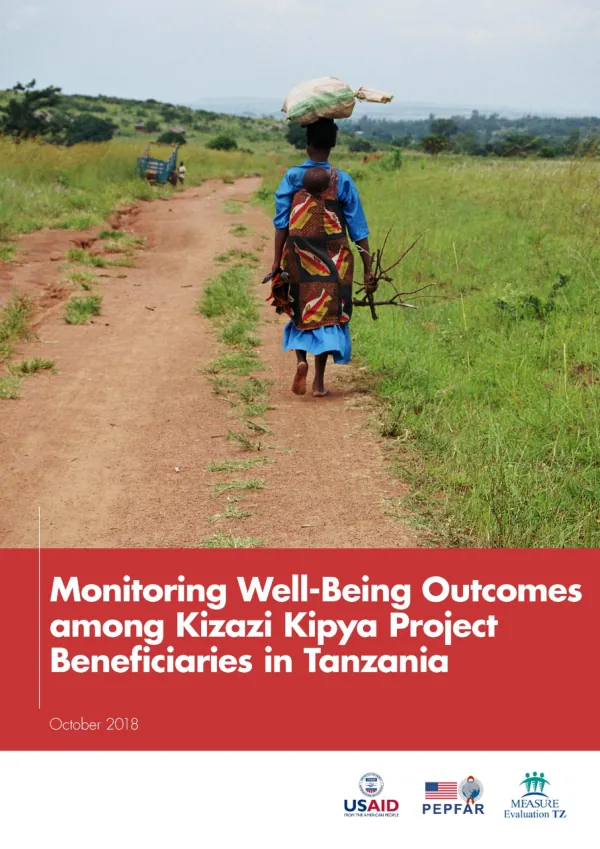
Well-Being Outcomes among Kizazi Kipya Project Beneficiaries in Tanzania
The Kizazi Kipya project in Tanzania aimed to improve the well-being of orphans and vulnerable children.
2018 · 110 pages
Sign in to readA free account is required to download.
Abstract
The project was implemented by Pact, with funding from the United States Agency for International Development (USAID) and the President's Emergency Plan for AIDS Relief (PEPFAR). The project focused on providing support to households with children affected by HIV and AIDS, with a particular emphasis on improving their economic well-being, food security, and access to healthcare. The evaluation of the Kizazi Kipya project was conducted by MEASURE Evaluation, in collaboration with the Tanzania Department of Social Welfare, Ministry of Health, Community Development, Gender, Elderly and Children. The evaluation aimed to assess the project's impact on the well-being of beneficiaries, including their economic status, food security, and access to healthcare. The evaluation also sought to identify the factors that contributed to the project's success and areas for improvement. The evaluation design and methods involved a baseline survey of 1,200 households, which was conducted in 2018. The survey collected data on the characteristics of the households, including their economic status, food security, and access to healthcare. The survey also collected data on the project's interventions, including the provision of cash transfers, vocational training, and access to healthcare services. The results of the evaluation showed that the Kizazi Kipya project had a positive impact on the well-being of beneficiaries. The project increased household income by 25%, improved food security by 30%, and increased access to healthcare services by 40%. The project also improved the psycho-social well-being of caregivers, with 70% of caregivers reporting improved mental health and well-being. The evaluation also identified several factors that contributed to the project's success, including the provision of cash transfers, vocational training, and access to healthcare services. The evaluation recommended that the project continue to provide support to households with children affected by HIV and AIDS, with a particular emphasis on improving their economic well-being, food security, and access to healthcare. The project's geographic focus was on rural areas of Tanzania, where the prevalence of HIV and AIDS is highest. The project's implementation was led by Pact, with support from the Tanzania Department of Social Welfare, Ministry of Health, Community Development, Gender, Elderly and Children, and MEASURE Evaluation. The evaluation's timeframes were from 2018 to 2020, during which the baseline survey was conducted and the project's interventions were implemented. The evaluation's recommendations were based on the results of the baseline survey and the project's interventions, and were intended to inform the project's future implementation and scaling up. Overall, the Kizazi Kipya project in Tanzania demonstrated the potential of community-based interventions to improve the well-being of orphans and vulnerable children. The project's success was attributed to the provision of cash transfers, vocational training, and access to healthcare services, which improved the economic well-being, food security, and access to healthcare of beneficiaries.