GOVERNMENT OF UGANDA
WfWI- Rwanda GBV Mapping and Advocacy Conference Report
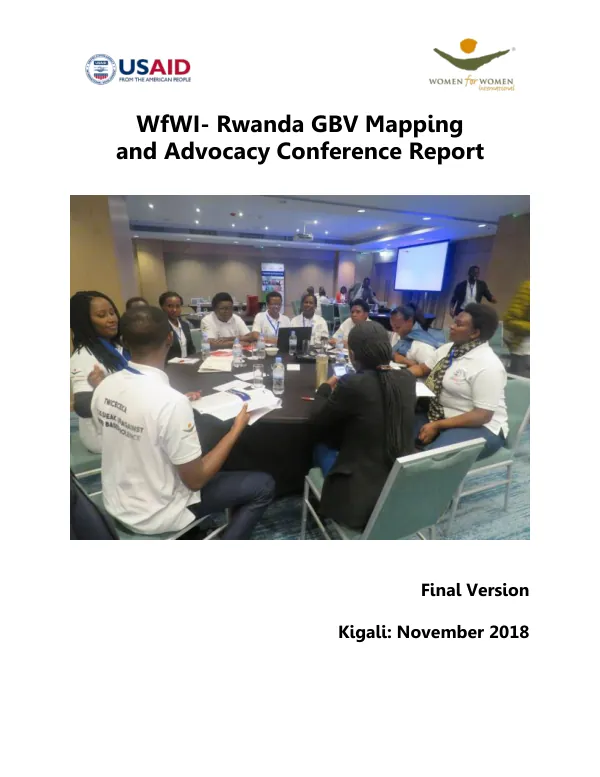
The GBV Mapping and Advocacy Conference was held in Kigali, Rwanda in November 2018.
2018 · 30 pages
Sign in to readA free account is required to download.
Abstract
The conference aimed to provide a platform for civil society organizations (CSOs), government representatives, and other stakeholders to discuss the gender-based violence (GBV) landscape in Rwanda and identify gaps in policy implementation. The conference was facilitated by Women for Women International Rwanda, with technical assistance from Mr. Innocent HITAYEZU. The conference had three main components: a two-day training of a technical team of CSO members, the production of a draft report on GBV policy implementation gaps, and the GBV Mapping and Advocacy Conference itself. The training session, held in Musanze district from October 10-11, 2018, brought together 10 representatives from WfWI Rwanda partner CSOs to review and analyze relevant reports and policies on GBV in Rwanda. The training used participatory approaches, including group discussions, presentations, and plenary debates. Participants reviewed and analyzed reports from various sources, including USAID/Rwanda Gender Assessment, National Police, MIGEPROF, RIB, and NGOs. The training focused on understanding the GBV landscape in Rwanda, identifying gaps in policy implementation, and formulating recommendations. The draft document on GBV policy implementation gaps identified three major outcomes from the training: the identification of key gaps in GBV policy implementation, the identification of major underlying causes of the CECEKA (Silence) culture around GBV cases, and the formulation of recommendations to be presented during the conference. The GBV Mapping and Advocacy Conference brought together over 100 participants, including CSO members, government representatives, and other stakeholders. The conference aimed to provide a platform for constructive discussions and the identification of practical strategies to address GBV in Rwanda. The conference proceedings and outcomes are outlined in the report, including the summary of identified gaps with GBV policy implementation and the summary of major GBV issues identified. The conference also included a keynote address by the USA Embassy in Rwanda, which emphasized the importance of collaborative efforts to end GBV. The conference concluded with a call to action, urging participants to work together to address GBV in Rwanda. The report highlights the importance of continued efforts to address GBV in Rwanda and the need for collaborative action to achieve this goal. The conference was attended by representatives from various institutions, including CSOs, government ministries, and development partners. The report provides a comprehensive overview of the conference proceedings and outcomes, highlighting the key gaps in GBV policy implementation and the major GBV issues identified. The report also includes annexes, which provide additional information on the conference, including a list of institutions represented and some gallery images from the conference. The report is a valuable resource for anyone interested in understanding the GBV landscape in Rwanda and the efforts being made to address this issue.
Related documents