USAID DEC
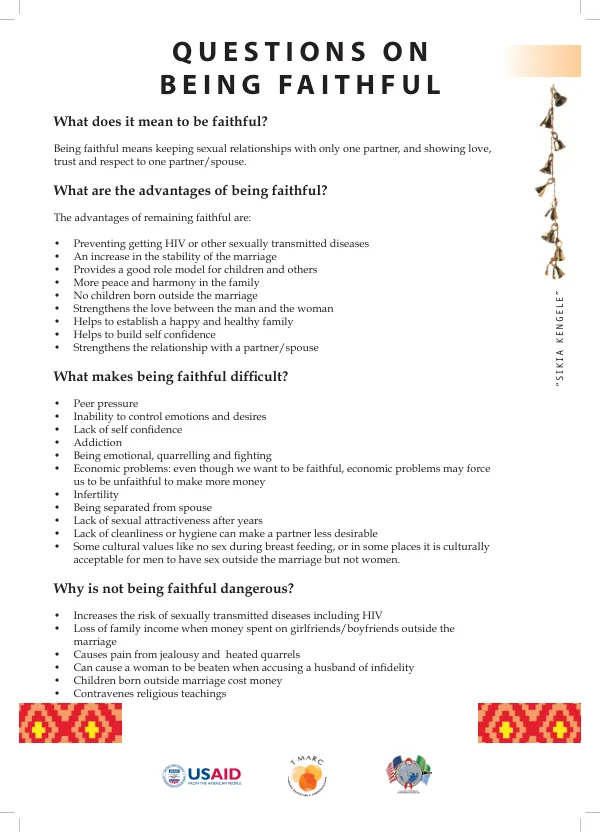
What does it mean to be faithful? and Questions on Being Faithful
Being faithful is a fundamental aspect of many relationships, particularly in marriage.
2 pages
Sign in to readA free account is required to download.
Abstract
It involves maintaining a sexual relationship with only one partner and demonstrating love, trust, and respect towards that partner. Faithfulness is essential for building a strong and healthy relationship, and it has numerous benefits for both individuals and their families. One of the primary advantages of being faithful is the prevention of sexually transmitted diseases, including HIV. This is particularly significant in today's world, where the risk of contracting such diseases is ever-present. Additionally, faithfulness contributes to the stability of a marriage, providing a positive role model for children and others. It also fosters a sense of peace and harmony within the family, leading to a more stable and secure environment. Furthermore, being faithful strengthens the love between partners, helping to establish a happy and healthy family. It also enhances self-confidence, as individuals feel secure in their relationships and are more likely to take risks and pursue their goals. Moreover, faithfulness promotes a stronger relationship between partners, as they work together to overcome challenges and build a life together. However, being faithful can be challenging due to various factors. Peer pressure, inability to control emotions and desires, and lack of self-confidence are some of the common obstacles that individuals may face. Additionally, economic problems, infertility, and being separated from one's spouse can also make it difficult to maintain faithfulness. Cultural values and societal expectations can also play a significant role in determining an individual's level of faithfulness. Not being faithful can have severe consequences, including the risk of contracting sexually transmitted diseases, loss of family income, and pain from jealousy and heated quarrels. It can also lead to a breakdown in relationships, causing emotional distress and financial instability. Furthermore, not being faithful can contravene religious teachings and lead to a sense of guilt and shame. To overcome the challenges of being faithful, individuals can take several steps. Increasing love and commitment by expressing positive feelings and appreciation towards one's partner is essential. Improving one's sex life by learning about one's partner's preferences and taking the time to caress and have foreplay before sex can also help. Reducing the workload of one's partner, so they are less tired, can also contribute to a more fulfilling relationship. Analyzing one's situation and communicating with one's spouse about the challenges of maintaining faithfulness is also crucial. Setting a goal to solve the problem and working towards it can help individuals overcome the obstacles they face. By taking these steps, individuals can build a stronger, more loving relationship with their partner and create a happy and healthy family.