CENTRAL PHILIPPINE UNIVERSITY
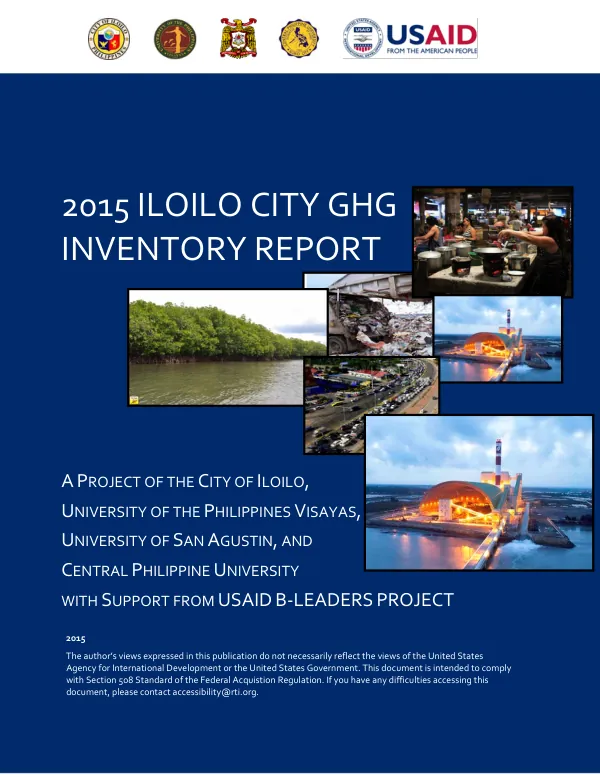
2015 Iloilo City GHG Inventory Report
Iloilo City is a highly urbanized city located in the Western Visayas region of the Philippines.
2015 · 111 pages
Sign in to readA free account is required to download.
Abstract
It is situated on the island of Panay, approximately 435 kilometers south of Manila. The city has a total land area of 78.34 square kilometers and a population of approximately 457,000 people as of 2015. The city's economy is primarily driven by the service sector, with a significant contribution from the manufacturing and tourism industries. Iloilo City is also a major commercial center in the region, with a well-developed transportation network and a growing number of businesses and industries. The 2015 Iloilo City GHG Inventory Report was conducted to assess the city's greenhouse gas emissions and identify areas for reduction. The report was a collaborative effort between the City of Iloilo, the University of the Philippines Visayas, the University of San Agustin, and the Central Philippine University, with support from the USAID B-Leaders Project. The report's objectives were to update the city's greenhouse gas inventory, identify the sources and sectors contributing to emissions, and provide recommendations for reducing emissions. The inventory covered the city's emissions from stationary energy, transportation, waste, agriculture, and forestry sectors. The report found that the city's total greenhouse gas emissions in 2015 were approximately 1.43 million metric tons of CO2 equivalent. The largest contributor to emissions was the transportation sector, accounting for 43% of the city's total emissions. The stationary energy sector was the second-largest contributor, accounting for 26% of emissions. The report also identified several key findings and recommendations for reducing emissions. These included the need to improve energy efficiency in buildings and industries, increase the use of renewable energy sources, and promote sustainable transportation options. Additionally, the report recommended the implementation of waste management practices and the promotion of sustainable agriculture practices. The report's findings and recommendations are intended to inform the city's climate change mitigation and adaptation efforts, and to support the development of a low-carbon economy in Iloilo City. The report provides a comprehensive assessment of the city's greenhouse gas emissions and identifies areas for reduction, and is a valuable resource for policymakers, stakeholders, and the general public. The city's greenhouse gas emissions from stationary energy sources were primarily due to the use of fossil fuels for electricity generation and industrial processes. The report found that the city's electricity consumption was largely dependent on imported fossil fuels, with a significant contribution from coal-fired power plants. The transportation sector was the largest contributor to emissions, with the majority of emissions coming from the use of fossil fuels for land transportation. The report found that the city's transportation network was largely dependent on private vehicles, with a significant contribution from motorcycles and cars. The waste sector was also a significant contributor to emissions, with the majority of emissions coming from the decomposition of organic waste in landfills. The report found that the city's waste management practices were inadequate, with a significant amount of waste being sent to landfills without proper treatment or disposal. The agriculture sector was also a significant contributor to emissions, with the majority of emissions coming from the use of synthetic fertilizers and pesticides. The report found that the city's agricultural practices were largely dependent on intensive farming methods, with a significant contribution from rice and corn production. The forestry sector was a relatively small contributor to emissions, with the majority of emissions coming from the decomposition of organic matter in forests. The report found that the city's forests were largely degraded, with a significant amount of forest cover being lost due to deforestation and land conversion. Overall, the 2015 Iloilo City GHG Inventory Report provides a comprehensive assessment of the city's greenhouse gas emissions and identifies areas for reduction. The report's findings and recommendations are intended to inform the city's climate change mitigation and adaptation efforts, and to support the development of a low-carbon economy in Iloilo City.
Related documents
Documents in this collection
 2018
2018USAID DEC
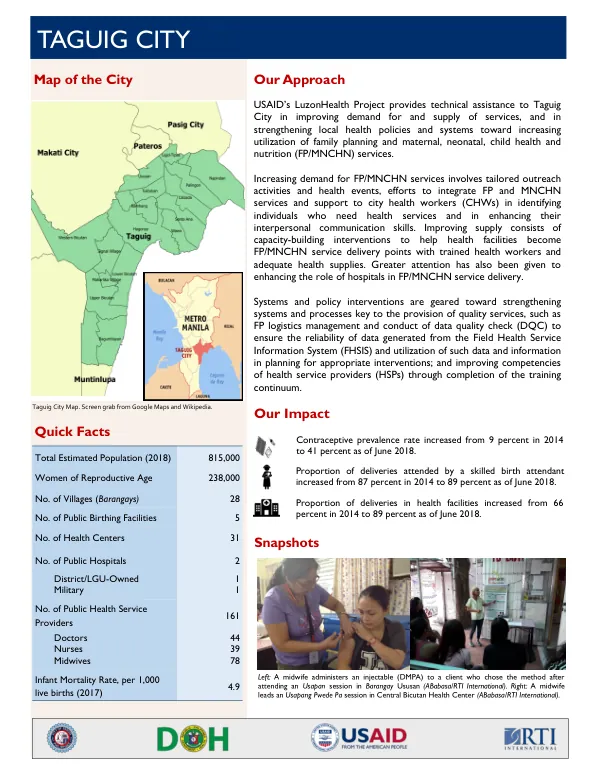
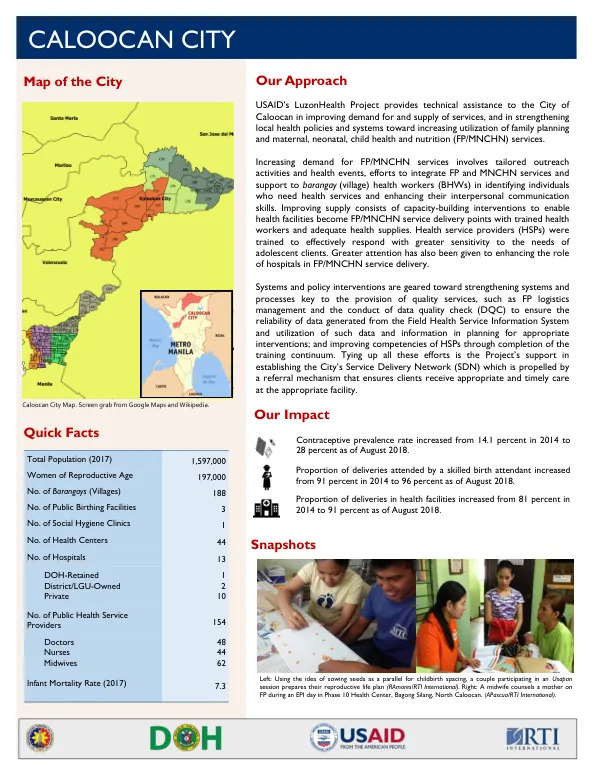
USAID’s LuzonHealth Project: Improving Demand for and Supply of Family Planning and Maternal, Neonatal, Child Health and Nutrition (FP/MNCHN) Services in Caloocan City
Open record 2018
2018USAID DEC