INTERNATIONAL COMMITTEE FOR THE RED CROSS
Afghanistan Complex Emergency Situation Report #3
Afghanistan's complex emergency situation has been marked by the convergence of natural disasters and conflict, undermining progress towards early recovery in many communities.
2009 · 5 pages
Sign in to readA free account is required to download.
Abstract
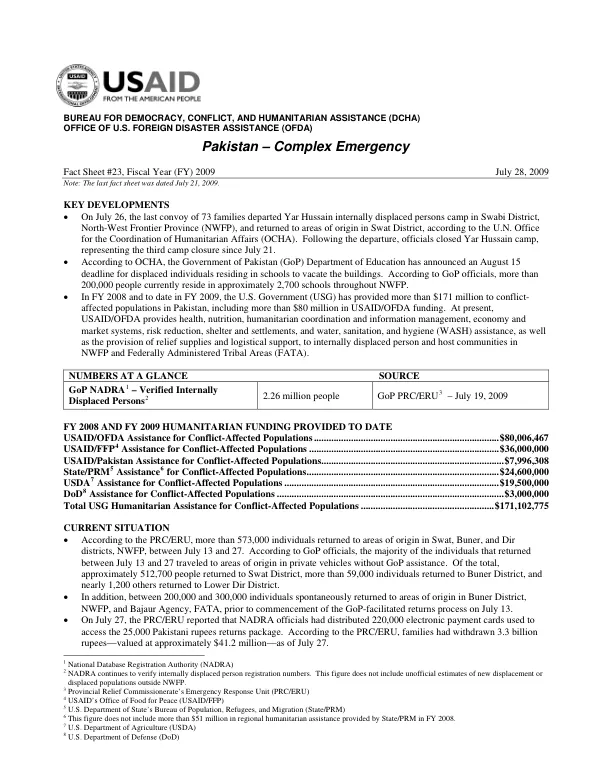
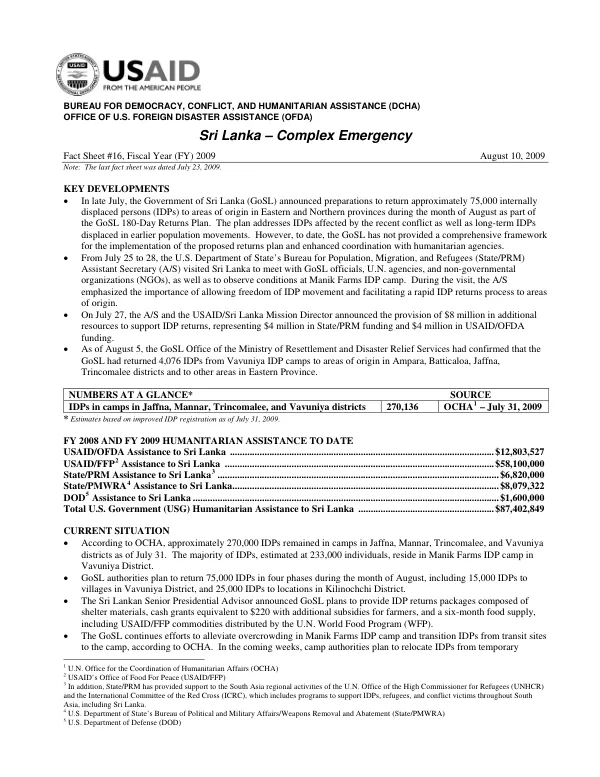
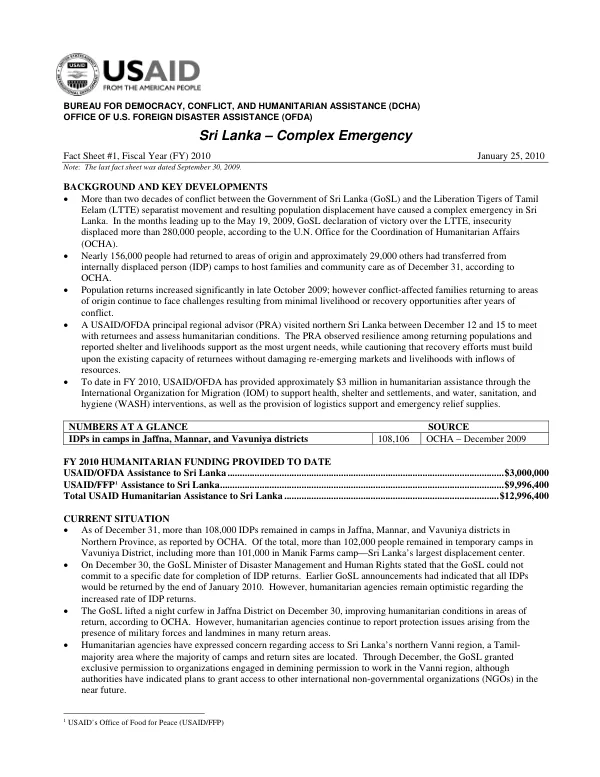
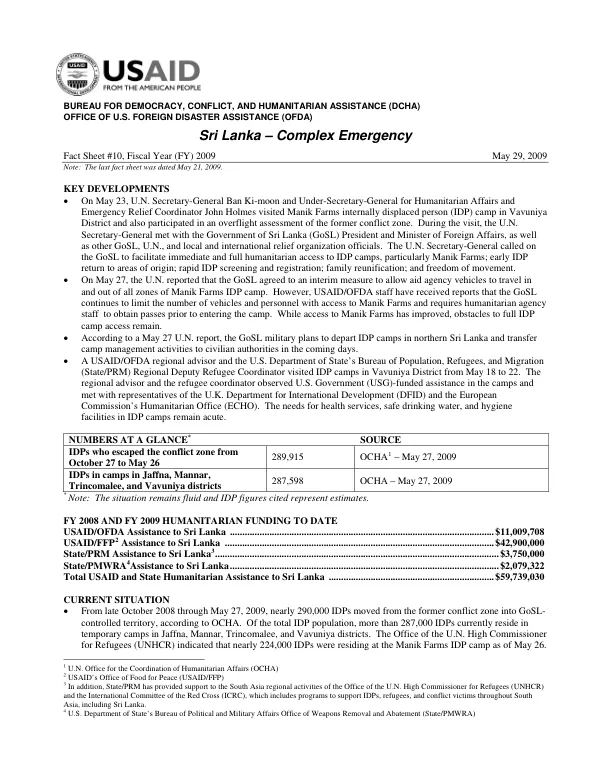
Natural disasters and conflict often result in population movements, which aggravate community vulnerabilities and contribute to instability. According to the Office of the U.N. High Commissioner for Refugees (UNHCR), between 250,000 and 260,000 internally displaced persons reside throughout the country. Growing numbers of displaced individuals are returning to areas of origin in the western and northern regions to encounter limited livelihood opportunities and insufficient basic services. The capacity of the Government of the Islamic Republic of Afghanistan (GIRoA) to provide basic services and infrastructure also remains limited. The U.S. Ambassador to Afghanistan re-declared a disaster due to the effects of armed conflict and natural disasters in Afghanistan on October 20, 2008. To date in FY 2009, USAID/OFDA has provided more than $27 million in humanitarian assistance to Afghanistan, bringing total USAID/OFDA assistance since FY 2002 to more than $187 million. USAID/OFDA assistance includes the provision of emergency relief supplies to natural disaster- and conflict-affected Afghans; disaster risk reduction projects that build resilience to future shocks in rural communities; integrated shelter and settlements projects that address urban growth risks and meet humanitarian needs among a growing and vulnerable urban population; and capacity building efforts within Kabul Municipality. Since August 20 presidential and parliamentary elections, the number of attacks by insurgents on civilian targets decreased. However, the humanitarian community has expressed concern about an increase in violence and concomitant decrease in humanitarian access if results require runoff elections. In the weeks before and after the election, attacks targeting humanitarian organizations remained constant compared to previous months and reporting periods. Security continues to deteriorate in northern and northeastern regions due to increased insurgent and counterinsurgency activities. In August, the U.N. Afghanistan Complex Emergency Office for the Coordination of Humanitarian Affairs (OCHA) reported small-scale displacements in the area due to conflict but insufficient access to respond to resulting humanitarian needs. Displacement and return trends indicate that conflict spread from southern Afghanistan to areas in eastern and northern Afghanistan, further impeding humanitarian access and resulting in small-scale population displacements. OCHA received reports of insurgent activity in Bargi Matal, Nuristan Province, that displaced approximately 160 families, or 960 individuals. Insurgents control the area and denied access to humanitarian organizations. In response, U.N. agencies developed a rapid assessment questionnaire for NGO staff and International Security Assistance Force (ISAF) members who may gain access to the area. The security situation in historically stable northeastern Afghanistan also continues to deteriorate. On August 5, counterinsurgency operations by Afghan security forces resulted in the displacement of 200 families, or 1,200 individuals, in an area of Baghlan Province, according to OCHA. Repatriation assistance continues for Afghan refugees arriving from Iran and Pakistan. In recent weeks, UNHCR has focused on erecting transit camps and providing services in desolate areas of northern Afghanistan. In August and September, more than 1,500 Afghans previously residing in Iran arrived in Sari Pul Province, but the prevalence of damaged and destroyed houses in villages of origin prevented returns and precipitated needs for temporary solutions. UNHCR expects approximately 220,000 Afghan refugees to return to Afghanistan by the end of 2009. The recent conflict in Pakistan and resulting UNHCR program suspensions contributed to low return rates in the first half of 2009 compared to the same period in 2008. In FY 2009, USAID/OFDA supported conflict contingency planning, participating in the Kabul-based Internally Displaced Persons Task Force and providing support to the International Organization for Migration (IOM) to preposition emergency relief supplies in Kandahar Province for distribution to displaced persons. In addition, with a $300,000 grant from USAID/OFDA, one NGO partner will conduct internal displacement protection trainings for relevant GIRoA ministries in support of nascent government efforts to improve identification of and assistance to internally displaced individuals. In FY 2009, State/PRM has provided more than $38.4 million to UNHCR and the International Committee of the Red Cross (ICRC) to assist Afghan refugees in Pakistan and conflict-affected and displaced populations in Afghanistan. State/PRM programmed an additional $3.1 million to support NGO-run returnee reintegration interventions, as well as basic service provision for refugees and host communities in Pakistan.
Related documents