MANAGEMENT SYSTEMS INTERNATIONAL
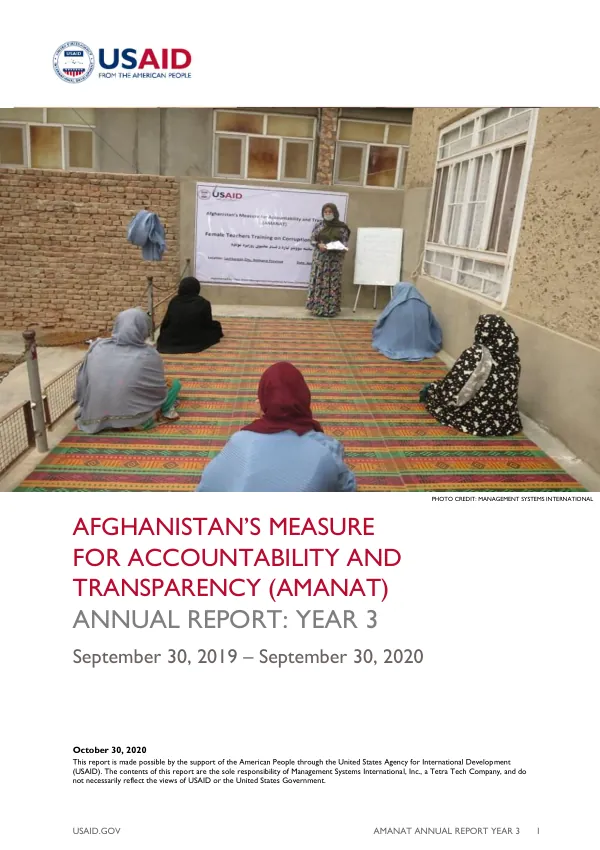
AMANAT ANNUAL REPORT YEAR 3
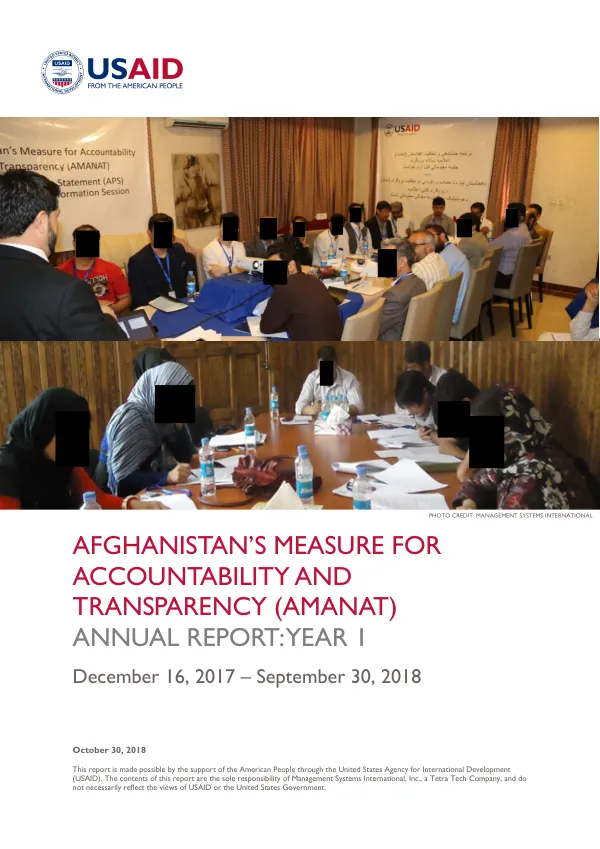
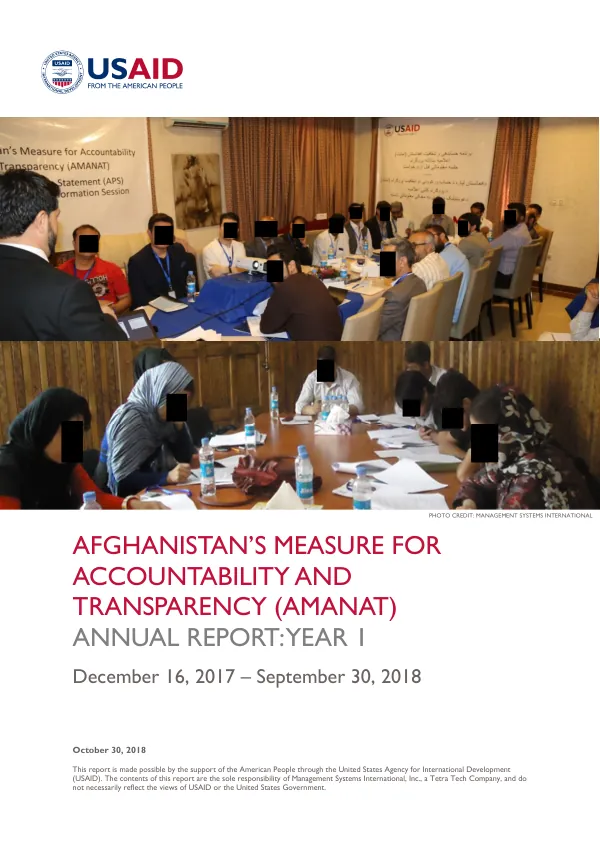
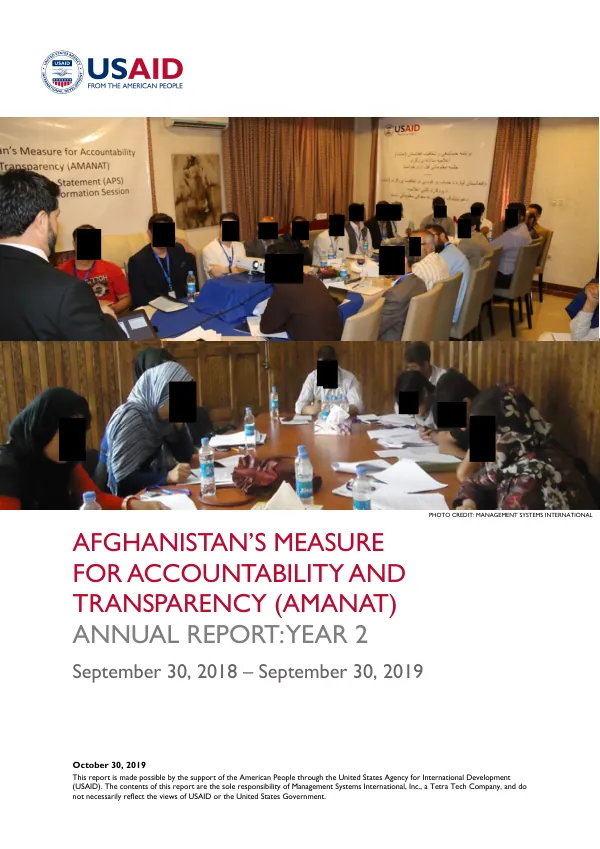
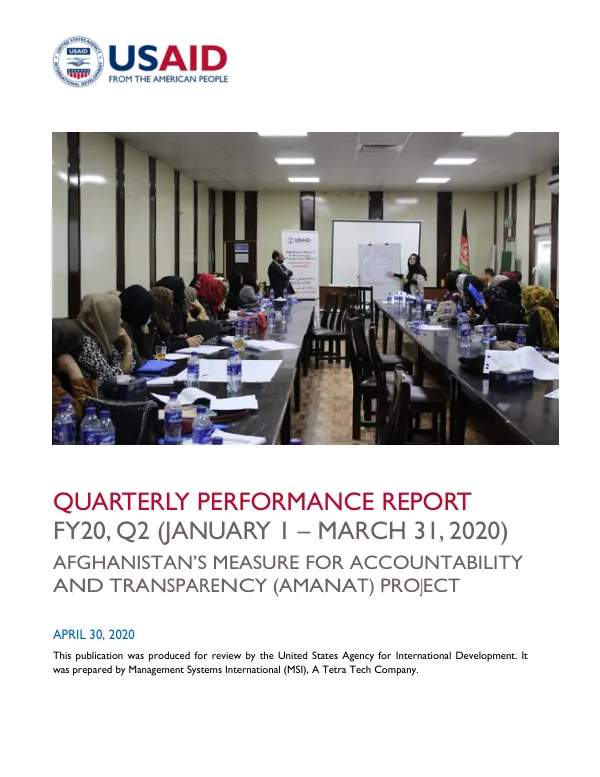
The Afghanistan's Measure for Accountability and Transparency (AMANAT) project is a five-year initiative to support the Afghan government's efforts to reduce and prevent corruption in government public services.
2020 · 97 pages
Sign in to readA free account is required to download.
Abstract
The project engages with both government and nongovernmental organizations to strengthen transparency and accountability mechanisms and build civil society's ability to advocate for reform. The project conducts activities in two components, with Component 1 focusing on enhancing government institutions' capacity to identify vulnerabilities to corruption and strengthen their capacity to implement anti-corruption reforms, and Component 2 serving as a special programming mechanism to address tasks not covered in Component 1. In Year 3 of AMANAT's implementation, the project continued to move forward operationally and began implementing tasks effectively in close coordination with government and civil society beneficiaries, as well as with other implementing partners and donors. The project provided substantive and customized technical support to five selected ministries through vulnerability-to-corruption assessments, internal audit capacity building, and business process reengineering support at the national level, as well as subnational support to district-level school management shuras. In addition, AMANAT began efforts on a new Component 2 task order by strengthening Asan Khedmat, the Afghan agency that supports simplified and streamlined business processes in government. AMANAT's civil society organization (CSO) team and grants team began working more closely with CSOs, developing and conducting training workshops on social auditing, watchdog activities, and the legislative process to build CSO capacity. The project continued its significant cooperation and collaboration with local and regional CSOs, with the grants team redoubling its efforts to develop new ways to put forward grant concepts and strengthen potential grantees' capacity. AMANAT received 267 proposals in response to two active annual program statements, and the project put out five requests for application to help direct grant programming in targeted areas. The COVID-19 pandemic had a significant impact on AMANAT's programming, with the project's physical offices closed, all expatriate staff evacuated, and the Government of Afghanistan locking down the country. As a result, AMANAT had to pivot its approaches to supporting the government, grantees, and CSOs by providing mainly remote training and very limited and controlled in-person training. Despite these challenges, the project continued to make progress in implementing its activities and achieving its objectives. The project's efforts to strengthen government institutions' capacity to identify vulnerabilities to corruption and implement anti-corruption reforms have been ongoing, with a focus on five selected ministries. AMANAT has provided technical support to these ministries through vulnerability-to-corruption assessments, internal audit capacity building, and business process reengineering support. The project has also provided subnational support to district-level school management shuras, with the goal of improving transparency and accountability in these institutions. In addition to its work with government institutions, AMANAT has been working closely with civil society organizations to build their capacity to advocate for reform and improve transparency and accountability in government. The project has developed and conducted training workshops on social auditing, watchdog activities, and the legislative process, and has continued its significant cooperation and collaboration with local and regional CSOs. The grants team has also been working to develop new ways to put forward grant concepts and strengthen potential grantees' capacity, with a focus on CSOs working in provinces outside Kabul.