GOVERNMENT OF THE ISLAMIC REPUBLIC OF AFGHANISTAN
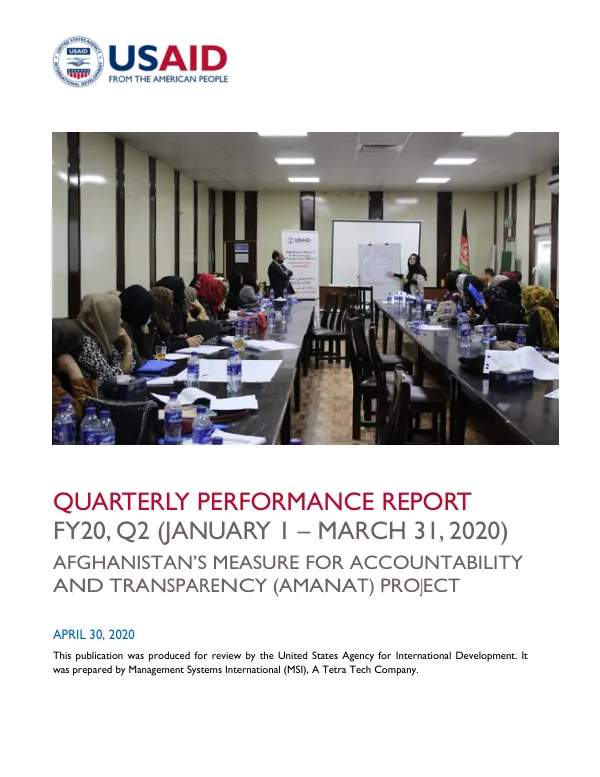
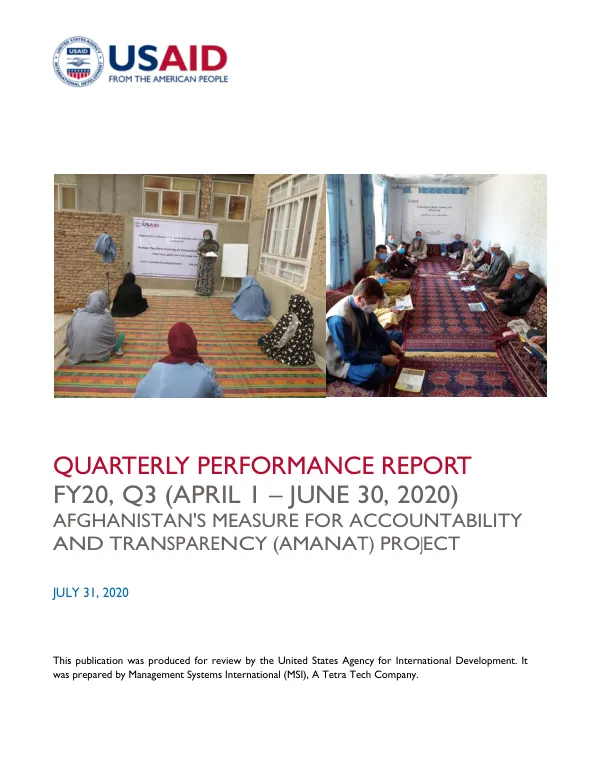
Quarterly Performance Report FY20, Q3 (April 1 – June 30, 2020)
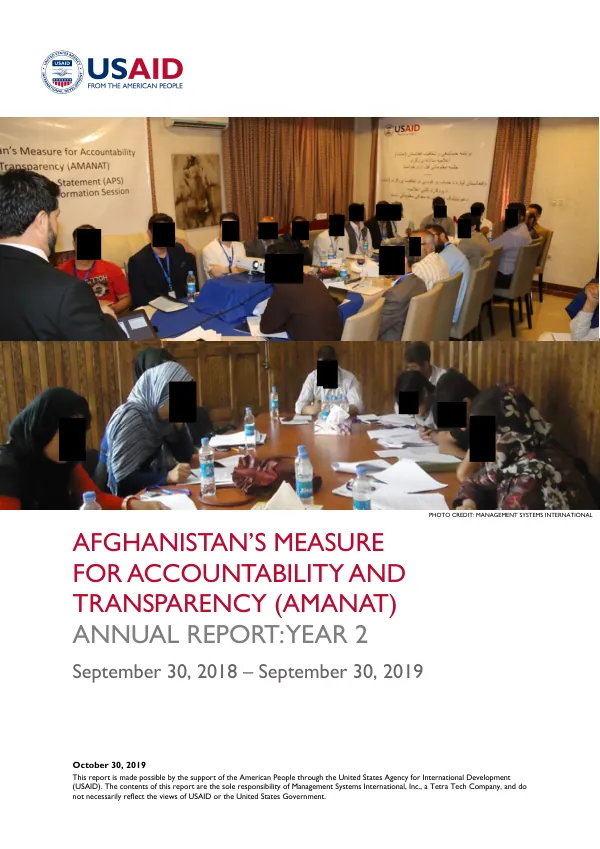
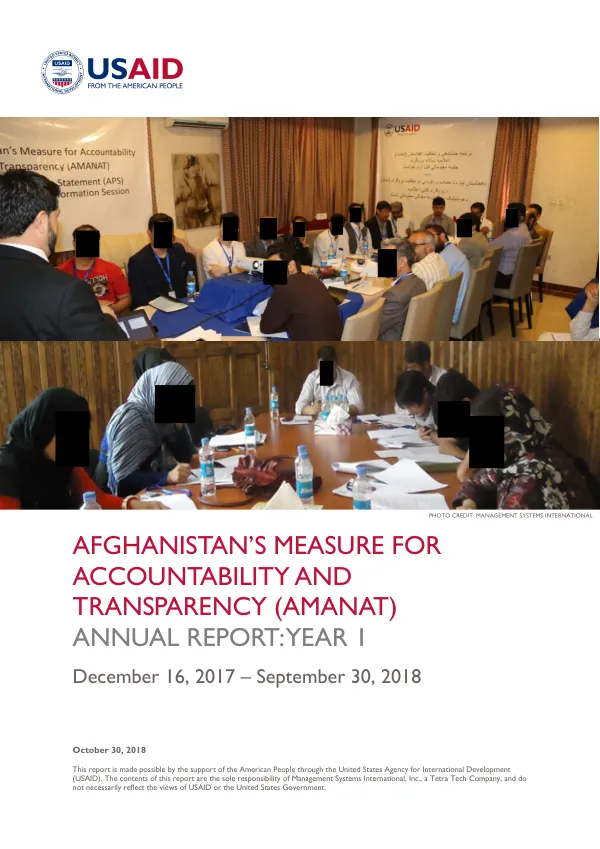
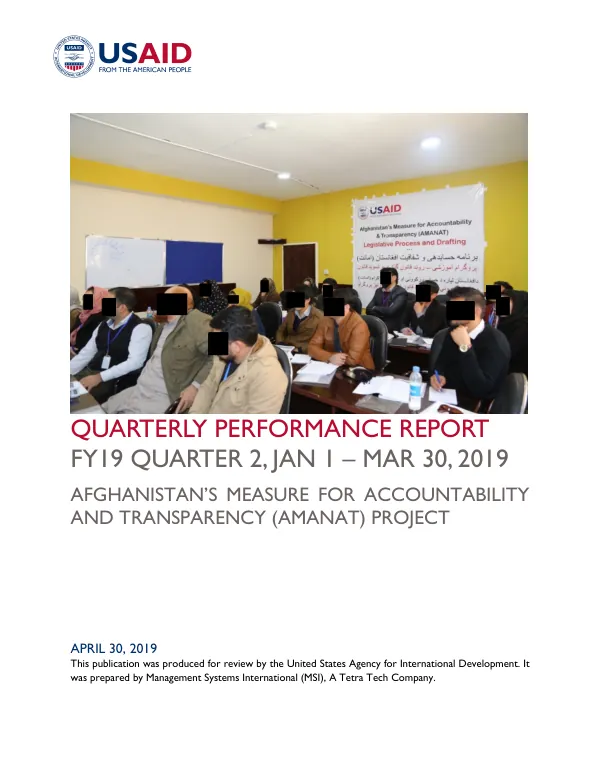
The Afghanistan's Measure for Accountability and Transparency (AMANAT) project is a USAID-funded initiative aimed at reducing and preventing corruption in government public services.
2020 · 43 pages
Sign in to readA free account is required to download.
Abstract
The project was awarded to Management Systems International (MSI) on August 23, 2017, and work began on December 16, 2017. The project has two key objectives: to strengthen transparency and accountability mechanisms and to strengthen civil society's ability to advocate for reform. To achieve the first objective, AMANAT will enhance government initiatives to identify vulnerabilities to corruption and implement anti-corruption reforms. This includes selecting and assisting government institutions to conduct facilitated self-assessments, strengthening internal audit functions, and strengthening the capacity of government institutions to implement anti-corruption reforms. The project will also work closely with central government agencies to develop tailored corruption risk mitigation plans and provide support to selected subnational government institutions. To achieve the second objective, AMANAT will strengthen civil society capabilities to assess government anti-corruption efforts. This includes mobilizing civil society groups, training civil society organizations (CSOs) to perform watchdog functions, strengthening the capacity of CSOs to analyze anti-corruption shortcomings in legislation, and building the capacity of CSOs in social auditing and citizen monitoring. During the third quarter of FY20, AMANAT launched a COVID-19 anti-corruption communications campaign in support of the Ministry of Public Health's urgent request to raise awareness of COVID-19 responses and anti-corruption. The project also created and developed 35 internal audit policies, tools, and documents in a consultative process with various government ministries, strengthening each sector's framework for carrying out internal auditing. Additionally, AMANAT drafted a background paper on complaints handling related to land distribution by the Ministry of Refugees and Repatriation, to inform the ministry's decision-making and AMANAT's technical support. The project also began developing training packages to help CSOs address legislative advocacy weaknesses and delivering watchdog initiatives, with the goal of engaging citizen groups more actively in the provinces. Despite the challenges posed by the pandemic, AMANAT continued to implement programmed activities with some changes in methodology. The project focused on COVID-19 support to the Ministry of Public Health and smaller group programming due to health and safety directives from the government. The expectation is that these trends will continue through the next quarter. The project's special programming mechanism, Contract Line Item Number (CLIN) 0002, allows USAID and the project to react quickly to changing circumstances through special task orders for activities that could not have been anticipated at the time AMANAT commenced operations. This mechanism enables the project to adapt to emerging needs and respond to new challenges. Overall, AMANAT continues to make progress in its efforts to strengthen transparency and accountability mechanisms and to strengthen civil society's ability to advocate for reform. The project's work has a significant impact on reducing corruption in government public services and promoting good governance in Afghanistan.