USAID DEC
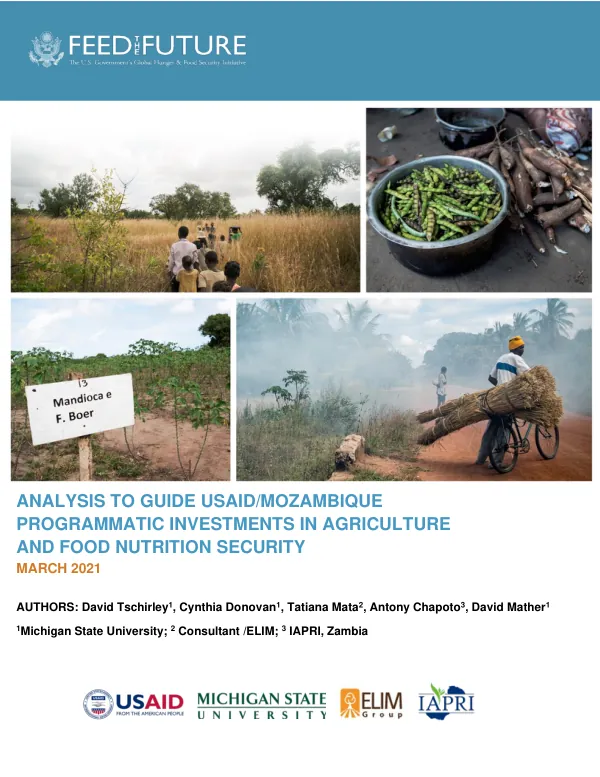
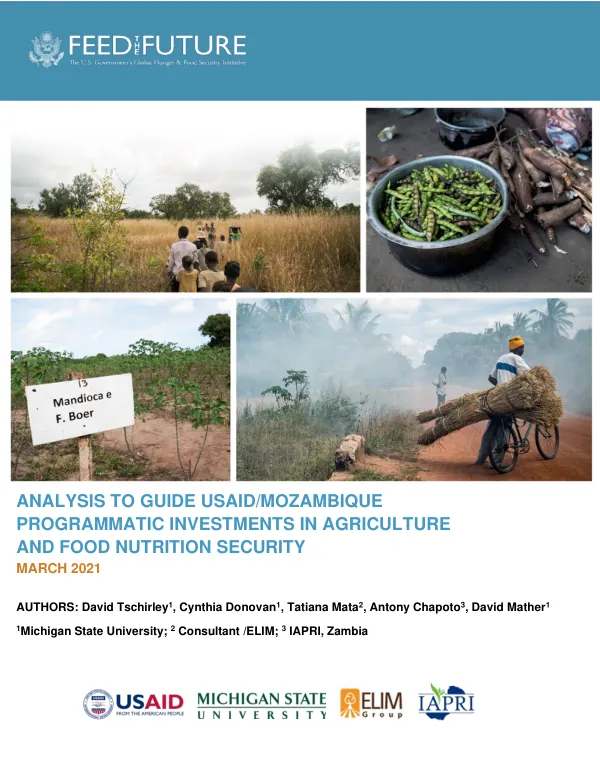
ANALYSIS TO GUIDE USAID/MOZAMBIQUE PROGRAMMATIC INVESTMENTS IN AGRICULTURE AND FOOD NUTRITION SECURITY
Sign inCORNELL UNIVARSITY INTERNATIONAL
ANALYSIS TO GUIDE USAID/MOZAMBIQUE PROGRAMMATIC INVESTMENTS IN AGRICULTURE AND FOOD NUTRITION SECURITY
The agricultural development initiative in Mozambique is guided by the USAID Mission, with a focus on promoting rural structural transformation and improving food security.
2021 · 74 pages
Sign in to readA free account is required to download.
Abstract
The program's design is informed by a comprehensive review of existing programs in Mozambique and the region, as well as a thorough analysis of the country's agricultural sector. Mozambique's rural areas face significant challenges, including slow progress on the farm and limited opportunities for growth and transformation. However, emerging success stories not evident in the IAI data suggest that there are promising opportunities for agricultural development in the country. The program aims to address these challenges by targeting support to farming households and promoting rural structural transformation. A key component of the program is the theory of change, which outlines the expected outcomes and pathways for achieving rural structural transformation. The theory of change is based on a comprehensive review of existing programs and a thorough analysis of the country's agricultural sector. The program's design is guided by a set of principles, including the need to target support to farming households, promote rural structural transformation, and support agricultural processing. The program's investment options are categorized into several broad areas, including governance and the supply side of seed and other input markets, direct support to rural households, support to agricultural processing, and support for women and youth. The program's approach is designed to be flexible and adaptable, with a focus on supporting a range of interventions and activities that can be tailored to the specific needs of different households and communities. The program's geographic focus is on the provinces of Nampula and Zambézia, which are among the poorest and most food insecure regions in the country. The program's implementation will be guided by a set of key indicators, including the percentage of smallholder and "medio" households, the percentage of rural households growing selected cash crops, and the percentage of households with access to improved agricultural technologies. The program's timeframes are not explicitly stated, but the report suggests that the program will be implemented over a period of several years. The program's recommendations are based on a thorough analysis of the country's agricultural sector and a comprehensive review of existing programs. The program's approach is designed to be sustainable and scalable, with a focus on supporting a range of interventions and activities that can be replicated and expanded over time. The program's methodology is based on a comprehensive review of existing programs and a thorough analysis of the country's agricultural sector. The program's data collection and analysis are guided by a set of principles, including the need to collect high-quality data, analyze data in a rigorous and transparent manner, and use data to inform program design and implementation. The program's literature review is based on a comprehensive search of existing literature, including academic studies, policy reports, and program evaluations. The program's background and context are informed by a thorough analysis of the country's agricultural sector and a comprehensive review of existing programs. The program's major global, continental, and national challenges are identified as including poverty, inequality, and food insecurity. The program's opportunities for agricultural growth and transformation are identified as including the potential for increased agricultural productivity, improved market access, and enhanced rural livelihoods. The program's theory of change is based on a comprehensive review of existing programs and a thorough analysis of the country's agricultural sector. The program's theory of change outlines the expected outcomes and pathways for achieving rural structural transformation, including the need to target support to farming households, promote rural structural transformation, and support agricultural processing. The program's structure and logic are outlined in Figure 8, which shows the proposed approach to spur rural structural transformation.