USAID DEC
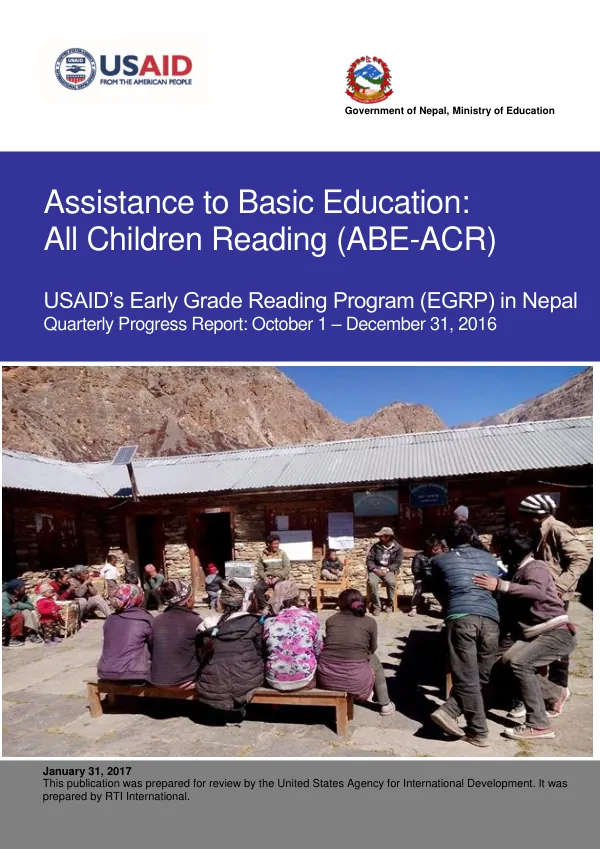
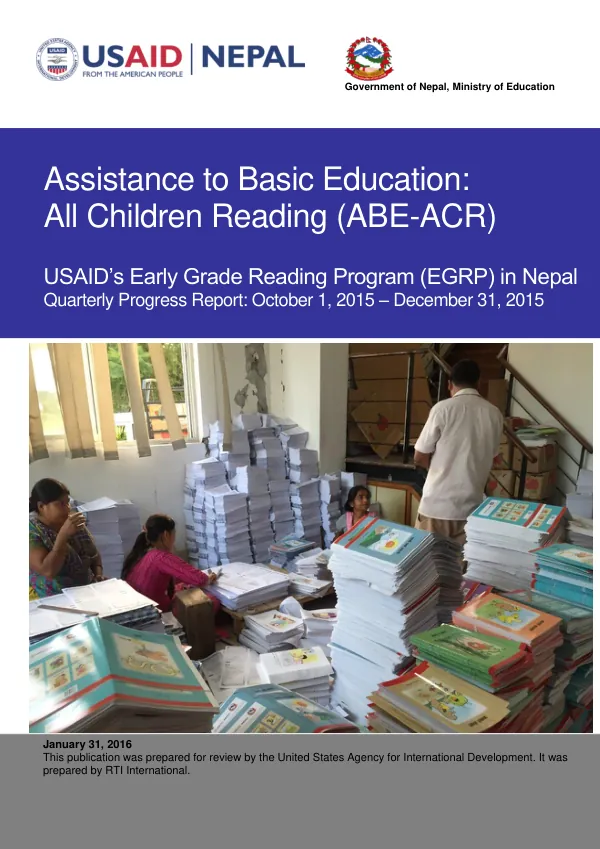
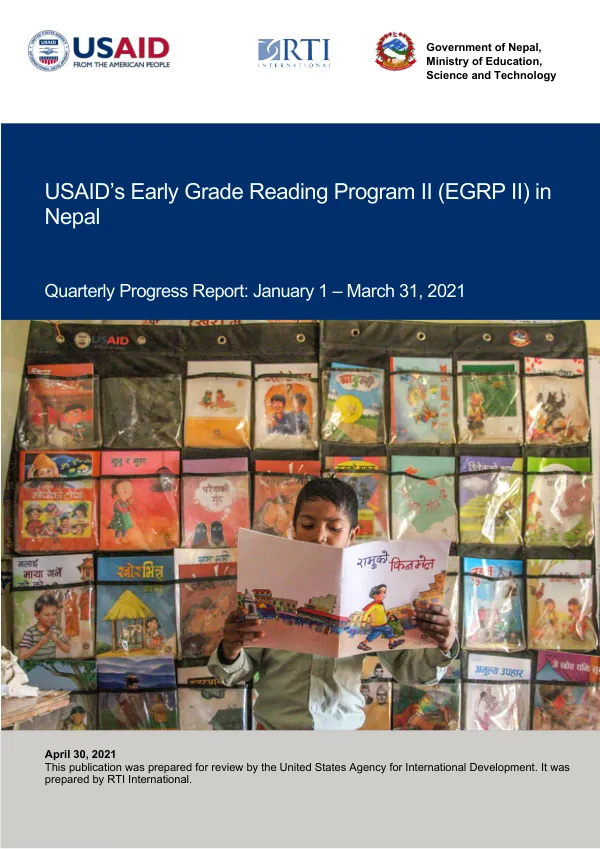
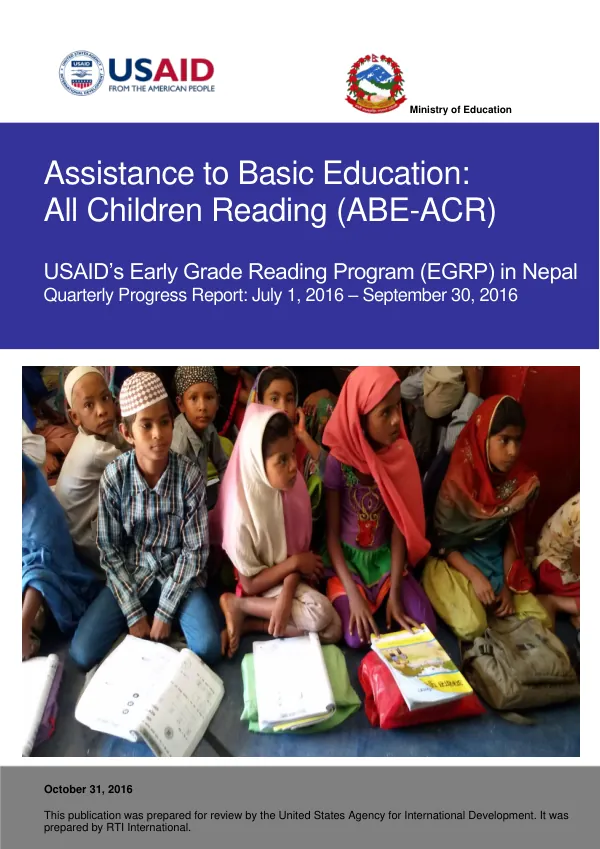
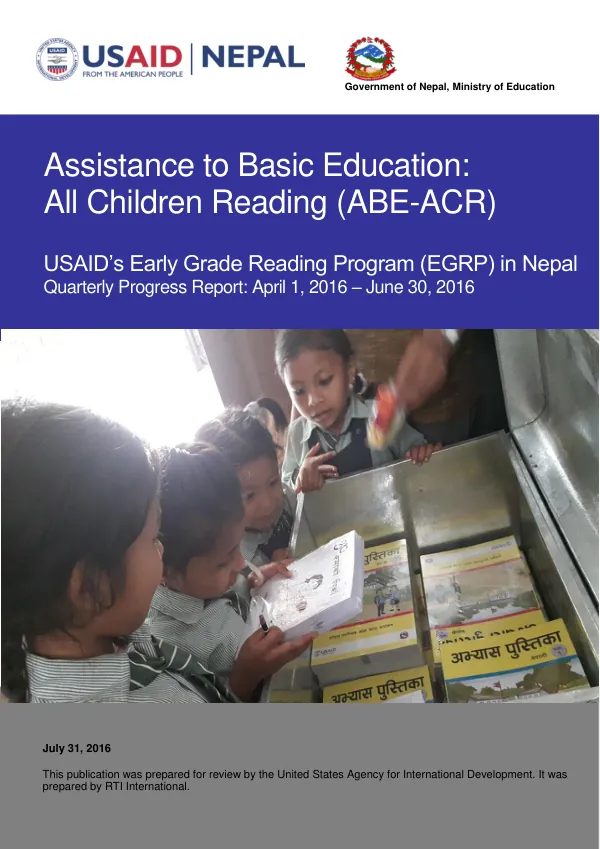
USAID's Early Grade Reading Program in Nepal, Quarterly Progress Report, April - June 2016
Sign inGOVERNMENT OF SENEGAL
USAID's Early Grade Reading Program in Nepal, Quarterly Progress Report, April - June 2016
The USAID's Early Grade Reading Program (EGRP) in Nepal is a task order aimed at improving early grade reading instruction in the country.
2016 · 80 pages
Sign in to readA free account is required to download.
Abstract
The program began on March 2, 2015, and is set to conclude on March 1, 2020. RTI International serves as the prime implementing partner, while several subcontractors, including Another Option, blueTree Group, New ERA, Plan Nepal, Room to Read, and SIL LEAD, are also involved in the project. The program focuses on three key intermediate results: improved early grade reading instruction, improved national and district early grade reading service delivery, and increased family and community support for early grade reading. To achieve these results, the program has implemented various activities, including training for teachers, development of teaching and learning materials, and community mobilization. As of April 1, 2016, the program has made significant progress in achieving its intermediate results. In terms of improved early grade reading instruction, the program has trained over 1,000 teachers in the use of the Classroom-Based Early Grade Reading Assessment (CB-EGRA) tool. This tool is designed to assess the reading skills of students in grades 1-3 and provide teachers with feedback on their instruction. The program has also made progress in improving national and district early grade reading service delivery. The Department of Education (DOE) has established a district core team in each of the 75 districts to oversee the implementation of the program. These teams are responsible for coordinating the activities of the program and ensuring that the necessary resources are available to support the implementation of the program. In terms of increased family and community support for early grade reading, the program has established partnerships with local non-governmental organizations (NGOs) to mobilize communities and promote the importance of early grade reading. The program has also developed a range of materials, including posters, stickers, and bookmarks, to promote early grade reading and encourage parents and caregivers to support their children's reading development. The program has also made progress in terms of monitoring and evaluation. The program has established a monitoring and evaluation plan that includes a range of indicators to track progress towards the program's intermediate results. The program has also established a data quality assessment process to ensure that the data collected is accurate and reliable. In terms of constraints and opportunities, the program has identified several challenges, including limited resources, inadequate infrastructure, and a lack of awareness about the importance of early grade reading. However, the program has also identified several opportunities, including the establishment of a national early grade reading program and the development of a range of teaching and learning materials. The program has planned several activities for the next quarter, including the training of additional teachers, the development of new teaching and learning materials, and the establishment of partnerships with local NGOs to promote early grade reading. The program has also identified several lessons learned, including the importance of building strong partnerships with local stakeholders and the need for ongoing monitoring and evaluation to ensure that the program is meeting its objectives. Overall, the USAID's Early Grade Reading Program in Nepal has made significant progress in improving early grade reading instruction, improving national and district early grade reading service delivery, and increasing family and community support for early grade reading. The program continues to face several challenges, but it has also identified several opportunities to build on its progress and achieve its objectives.
Related documents