USAID DEC
Capacity Building for a Responsible Minerals Trade (CBRMT): Increasing Gold Recovery While Reducing Environmental Harm
Sign inTETRA TECH
Capacity Building for a Responsible Minerals Trade (CBRMT): Increasing Gold Recovery While Reducing Environmental Harm
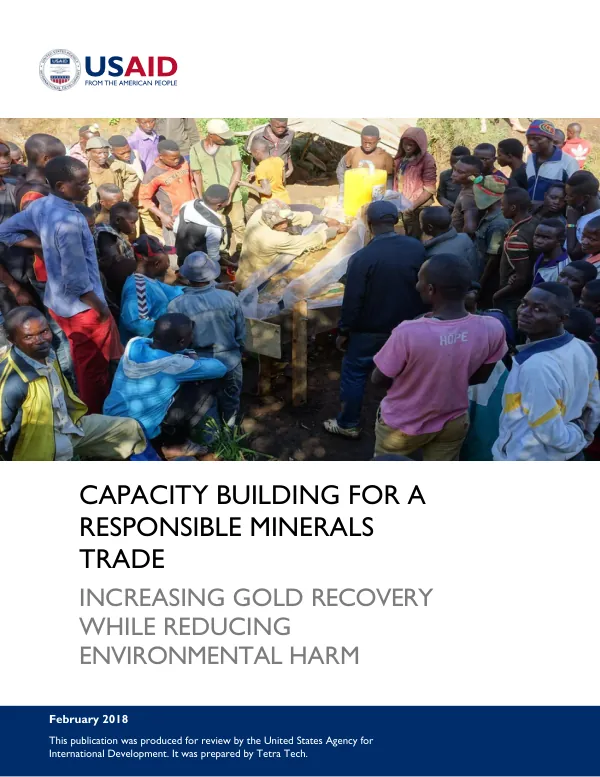
The CBRMT initiative aims to increase gold recovery while reducing environmental harm in the Nyamurhale Mine and processing sites.
2018 · 68 pages
Sign in to readA free account is required to download.
Abstract
The mine is located in a region with significant gold deposits, and the local population relies heavily on artisanal and small-scale mining (ASM) activities. However, these activities often result in environmental degradation and health risks for miners. The geology and mineralogy of the area are characterized by saprolite, a type of weathered rock that contains gold deposits. The ore processing deficiencies in the area are attributed to the use of outdated and inefficient methods, including hand crushing and panning. These methods result in low gold recovery rates and significant environmental impacts. The principal actors and beneficiaries of the CBRMT initiative include the local mining community, the government, and international organizations. The initiative aims to improve the livelihoods of miners and their families while reducing the environmental and health impacts of ASM activities. The methods used in the CBRMT initiative include daily activities such as washing trommels, Z-slucing, and jigging. These methods are designed to improve gold recovery rates and reduce environmental harm. The initiative also involves the use of equipment such as portable sluices, flow regulators, and metal mortars and pestles. The results of the CBRMT initiative are presented in the report, which includes sieve tests, Keene portable sluice tests, Z-sluce tests, and jig tests. The tests show significant improvements in gold recovery rates and reductions in environmental harm. The report also discusses the use of mercury and the negociant, a middleman who buys gold from miners and sells it to refineries. The conclusions and recommendations of the report highlight the importance of implementing best practices in gold recovery and environmental management. The report recommends the use of new methods and equipment, such as Z-slucing and jigging, and the implementation of protocols for best practices in ore preparation, mill optimization, and liberation testing. The report also discusses the importance of reorganizing labor for efficiency and equity, and the need for effective tailings management and ore extraction. The report concludes by emphasizing the need for further protocols and best practices in gold recovery and environmental management. The equipment schematics presented in the report include washing trommels, Z-slucing, rocker screens, and metal mortars and pestles. These schematics provide a detailed description of the equipment used in the CBRMT initiative and highlight the importance of proper equipment design and maintenance. The report also presents further protocols for best practices in gold recovery and environmental management, including ore preparation, mill optimization, and liberation testing. These protocols provide a framework for implementing best practices in gold recovery and environmental management and highlight the importance of ongoing monitoring and evaluation. Overall, the CBRMT initiative aims to improve the livelihoods of miners and their families while reducing the environmental and health impacts of ASM activities. The report presents a comprehensive overview of the initiative and highlights the importance of implementing best practices in gold recovery and environmental management.