USAID DEC
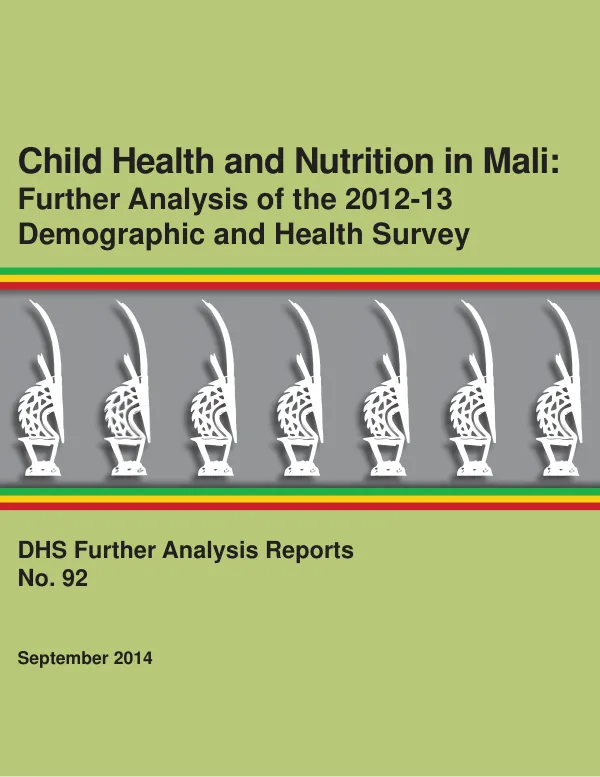
Child Health and Nutrition in Mali: Further Analysis of the 2012-13 Demographic and Health Survey
Sign inICF
Child Health and Nutrition in Mali: Further Analysis of the 2012-13 Demographic and Health Survey
Child health and nutrition indicators in Mali are examined in this report, which utilizes data from the 2012-13 Demographic and Health Survey (DHS).
2014 · 92 pages
Sign in to readA free account is required to download.
Abstract
The study investigates 19 child health indicators, including antenatal care, assistance at birth, immunization, and nutritional status among children under age five. The report reveals that the proportion of children under age five receiving full immunization coverage is 83%, with significant disparities observed across different socioeconomic characteristics. Children from urban areas and those with higher-educated mothers are more likely to receive full immunization coverage. Antenatal care is also found to be a critical factor in child health outcomes. The study shows that the number of antenatal visits varies significantly by place of residence, with urban residents receiving more visits than their rural counterparts. Furthermore, the proportion of women receiving four or more antenatal visits is higher among those with higher levels of education and household wealth. Assistance at birth by a skilled birth attendant is another critical factor in child health outcomes. The study reveals that the proportion of births attended by a skilled birth attendant is significantly lower in rural areas compared to urban areas. Additionally, the proportion of births attended by a skilled birth attendant is higher among women with higher levels of education. The report also examines the use of insecticide-treated nets, exclusive breastfeeding, and nutritional status among children under age five. The study finds that the proportion of children sleeping under a bed net is significantly lower in rural areas compared to urban areas. Exclusive breastfeeding is found to be more common among children of higher-educated mothers. Nutritional status among children under age five is a significant concern in Mali. The study reveals that the proportion of children experiencing anemia is significantly higher in rural areas compared to urban areas. Furthermore, the proportion of children experiencing anemia is higher among those with lower levels of education and household wealth. The report also examines inequalities in child health in Mali, highlighting significant disparities across different socioeconomic characteristics. The study finds that child health indicators are significantly worse in rural areas compared to urban areas. Furthermore, child health indicators are worse among children of lower-educated mothers and those from households with lower wealth. The programmatic context of child health in Mali is also examined in the report. The study highlights the importance of antenatal and delivery care, immunization, vitamin A supplementation, treatment of acute respiratory infections and diarrhea, and the use of insecticide-treated bed nets in improving child health outcomes. The report concludes that child health and nutrition indicators in Mali are a significant concern, with significant disparities observed across different socioeconomic characteristics. The study highlights the importance of addressing these disparities through targeted interventions and programs aimed at improving child health outcomes.