USAID DEC
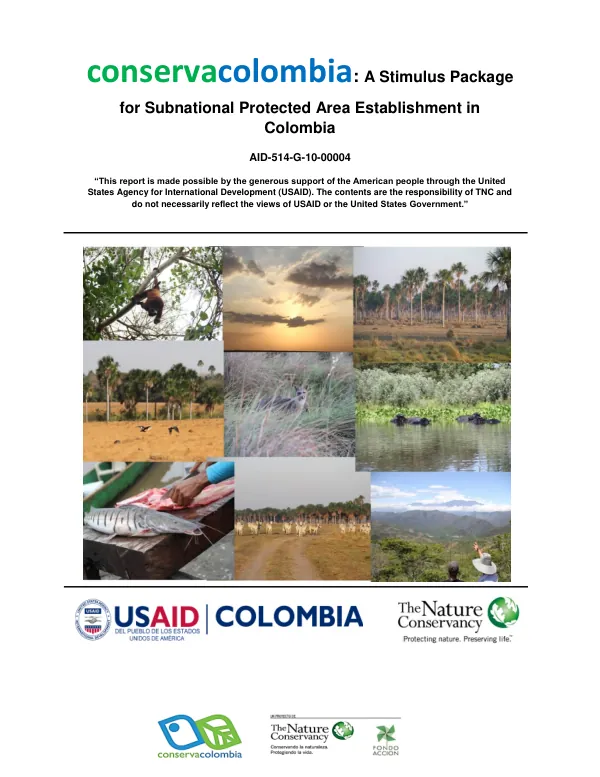
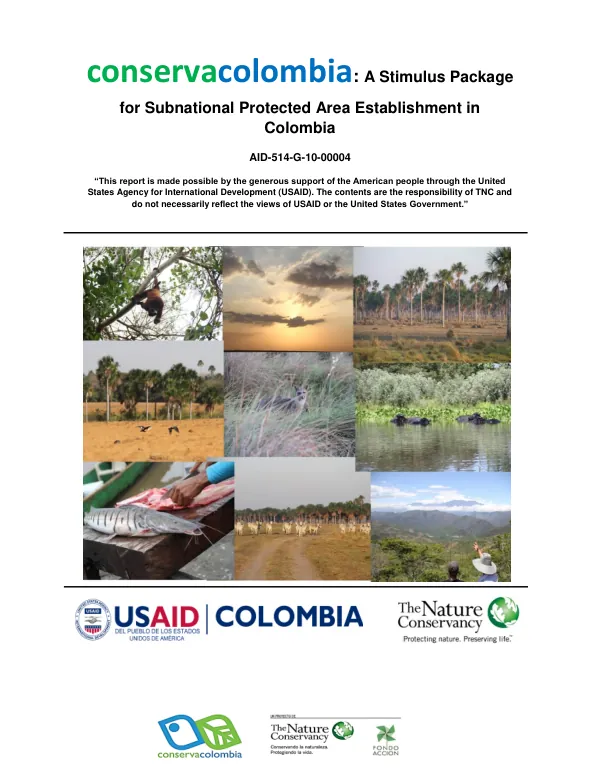
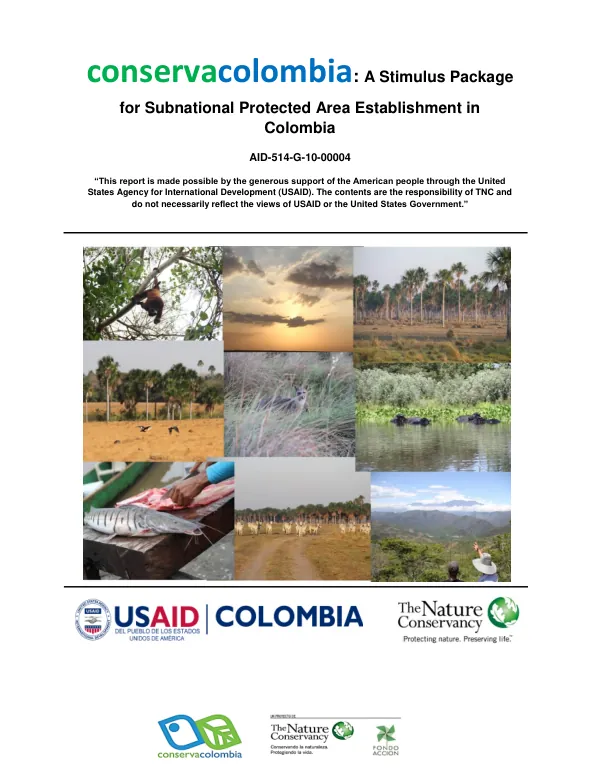
Conservacolombia: A Stimulus Package for Subnational Protected Area Establishment in Colombia
Sign inTNC
Conservacolombia: A Stimulus Package for Subnational Protected Area Establishment in Colombia
In Colombia, the Fundación CIPAV implemented a project to restore a degraded area affected by erosion in the Dagua municipality, Valle del Cauca.
2011 · 11 pages
Sign in to readA free account is required to download.
Abstract
The area, known as Chicharronal, was a 7,500 square meter deep gorge that posed a significant threat to the local population. The project aimed to stabilize the area and reduce sedimentation and flooding. The project employed a bioengineering approach, using structures made from guadua plants to act as filters and hydraulic drains. The roots and stems of the plants provided mechanical reinforcement to the structures, which over time became stronger. The project also involved community participation and education on soil management. The site characteristics and diagnostic findings included an altitude of 865 meters above sea level, a volcanic rock formation, and a geomorphology of crested ridges formed by fluvial-erosional processes. The soils were clayey, with no organic horizon, and were highly susceptible to erosion. The terrain had a steep slope, with no capa organic, and experienced prolonged dry periods with intense rainfall. The project's methodology involved socializing the project with the affected community, conducting a diagnosis of the erosive problem, and implementing a bioengineering approach to stabilize the area. The project was successful in reducing sedimentation and flooding, and the community was able to adopt sustainable soil management practices.
Connected topics