USAID DEC
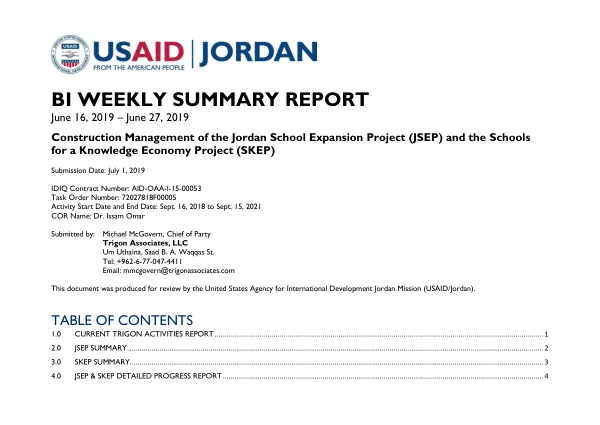
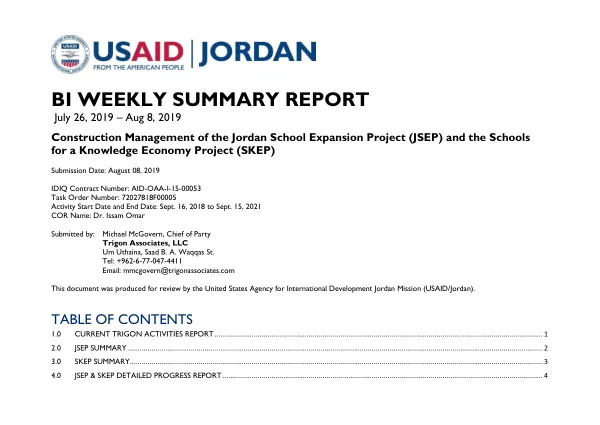
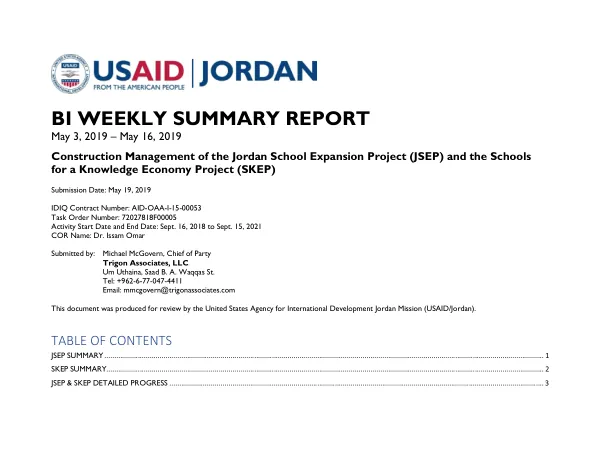
Construction Management of the Jordan School Expansion Project (JSEP) and the Schools for a Knowledge Economy Project (SKEP)
Sign inMOE
Construction Management of the Jordan School Expansion Project (JSEP) and the Schools for a Knowledge Economy Project (SKEP)
The Jordan School Expansion Project (JSEP) and the Schools for a Knowledge Economy Project (SKEP) are two initiatives aimed at improving education infrastructure in Jordan.
2019 · 14 pages
Sign in to readA free account is required to download.
Abstract
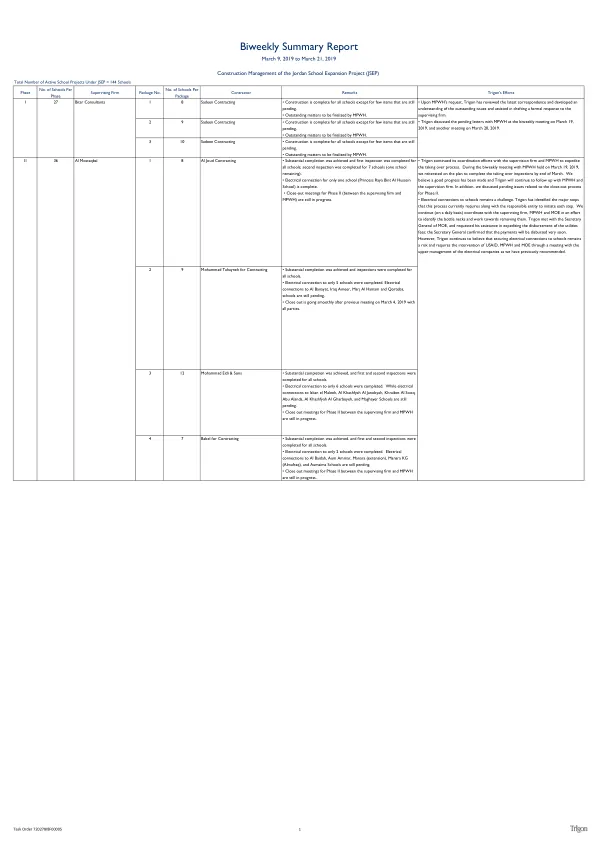
The projects are being implemented by Trigon Associates, LLC, under an IDIQ contract with the United States Agency for International Development (USAID) Jordan Mission. The JSEP is a comprehensive project that involves the expansion and renovation of 144 schools across Jordan. The project is divided into four phases, with each phase comprising multiple packages. As of the bi-weekly report dated July 14, 2019, Phase I of the JSEP has been completed, with all packages successfully closed out. However, Phase IV is experiencing delays, with only 37-50% of the kindergarten and general school buildings completed, and 40-45% of the expansions completed. The SKEP is a separate project that focuses on the construction of new schools and the renovation of existing ones. The project is also divided into two phases, with Phase I nearing completion. As of the bi-weekly report, Phase I has achieved an estimated physical completion of 99-100%, with utilities connections still in progress. Phase II is currently underway, with construction progressing at a rate of 65-67% completion. The bi-weekly report highlights several challenges facing the projects, including delays in utility connections, incomplete punch list items, and obstacles in work progress. Trigon Associates is working closely with the Ministry of Public Works and Housing (MPWH) and the Ministry of Education (MOE) to address these challenges and ensure the successful completion of the projects. The report also notes that the projects have made significant progress in terms of participation and engagement. The MOE has provided Trigon with summary sheets for final payments, and meetings have been held to review utilities and finalize the status of the projects. Overall, the bi-weekly report provides an update on the progress of the JSEP and SKEP projects, highlighting the challenges and successes of the initiatives. The report demonstrates Trigon's commitment to ensuring the successful completion of the projects and meeting the requirements of the USAID contract. The report highlights the importance of coordination and communication between the various stakeholders involved in the projects. Trigon's efforts to follow up with MPWH, MOE, and supervising firms have been instrumental in addressing the challenges facing the projects. The bi-weekly report also notes that the projects have made significant progress in terms of physical completion. As of the report date, Phase I of the JSEP has been completed, and Phase I of the SKEP has achieved an estimated physical completion of 99-100%. The report concludes by noting that the projects are on track to meet the requirements of the USAID contract. However, the challenges facing the projects, including delays in utility connections and incomplete punch list items, must be addressed to ensure the successful completion of the initiatives. The bi-weekly report is a critical component of the project management process, providing stakeholders with a comprehensive update on the progress of the JSEP and SKEP projects. The report highlights the importance of coordination and communication between the various stakeholders involved in the projects and demonstrates Trigon's commitment to ensuring the successful completion of the initiatives. The bi-weekly report is a critical component of the project management process, providing stakeholders with a comprehensive update on the progress of the JSEP and SKEP projects. The report demonstrates Trigon's commitment to ensuring the successful completion of
Related documents
Documents in this collection
 2019
2019USAID DEC
Biweekly Report No. 12: Construction Management of the Jordan School Expansion Project (JSEP) and the Schools for a Knowledge Economy Project (SKEP)
Open record 2019
2019USAID DEC