USAID DEC
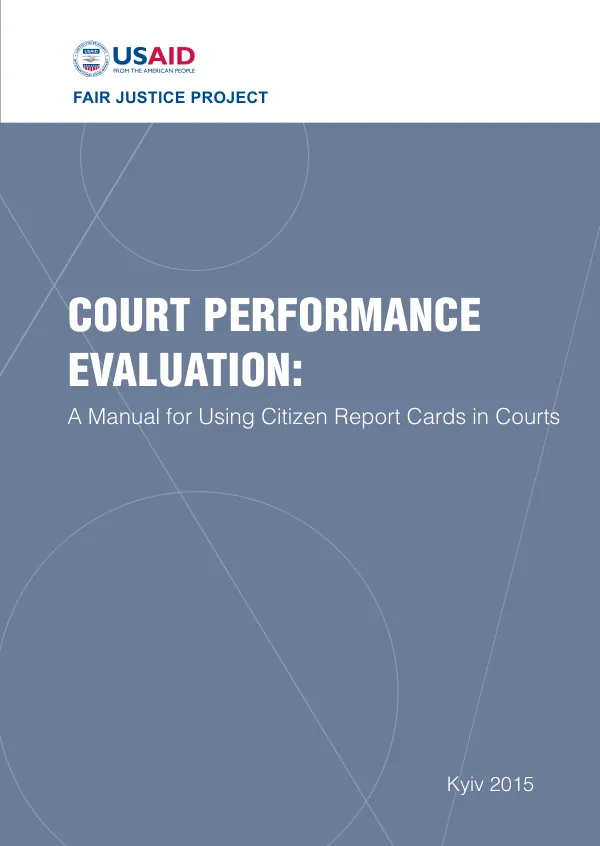
Court Performance Evaluation: A Manual for Using Citizen Report Cards in Courts
The Citizen Report Card (CRC) methodology is a tool for constructive engagement between courts and the communities they serve.
2015 · 126 pages
Sign in to readA free account is required to download.
Abstract
This methodology provides a simple and powerful tool for collecting systematic feedback from court users to improve the delivery of court services. The CRC methodology has proven its effectiveness in providing a platform for active interaction between courts and court users, facilitating open and proactive discussions on court performance, empowering civil society organizations in monitoring courts, and enabling policymakers and courts to plan and set priorities. The CRC methodology is designed to bridge the gap between public opinion polls and actual court performance. In Ukraine, national public opinion surveys are regularly conducted, but they mostly focus on general public perception of the judiciary. In contrast, the CRC methodology is based on the first-hand experience of court users, providing a more accurate and reliable measure of court performance. This approach enables courts to identify areas for improvement and implement targeted interventions to enhance the quality of court services. The CRC methodology involves several key steps, including the preparation and implementation of court user satisfaction surveys. These surveys are designed to collect feedback from court users on various aspects of court performance, including the quality of court services, the behavior of court staff, and the overall satisfaction with the court experience. The data collected from these surveys is then analyzed and used to identify areas for improvement and develop recommendations for court reform. The CRC methodology has been successfully implemented in various courts in Ukraine, with positive results. For example, the methodology has been used to identify areas for improvement in court services, such as the need for more efficient and transparent court procedures. The methodology has also been used to develop targeted interventions to enhance the quality of court services, such as training programs for court staff and the implementation of new court procedures. The CRC methodology is a valuable tool for promoting judicial reform and improving the quality of court services in Ukraine. By providing a platform for active interaction between courts and court users, the methodology enables courts to identify areas for improvement and implement targeted interventions to enhance the quality of court services. The methodology also empowers civil society organizations in monitoring courts and enables policymakers and courts to plan and set priorities. The CRC methodology has been developed and implemented by the U.S. Agency for International Development (USAID) FAIR Justice Project (FAIR) in collaboration with various stakeholders, including civil society organizations, courts, and policymakers. The methodology is designed to be flexible and adaptable to the needs of different courts and communities, making it a valuable tool for promoting judicial reform and improving the quality of court services in Ukraine. The CRC methodology is based on a number of key principles, including the importance of transparency, accountability, and participation in the court reform process. The methodology also emphasizes the need for courts to be responsive to the needs of court users and to provide high-quality court services that meet the needs of the community. By promoting these principles, the CRC methodology provides a valuable framework for promoting judicial reform and improving the quality of court services in Ukraine.