ME&A, INC.
Desk Review Assessment Report: CDCS 1.0
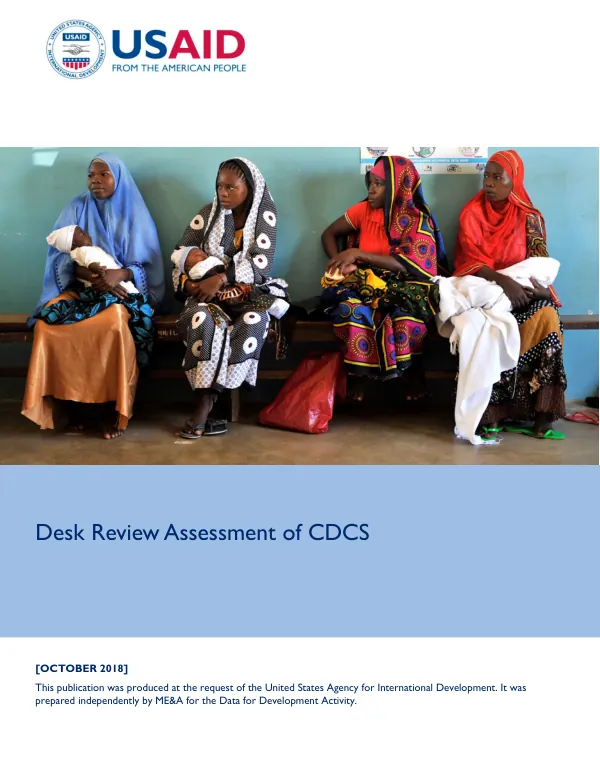
The Country Development Cooperation Strategy (CDCS) 1.0 was launched by USAID/Tanzania in October 2014, with a focus on women and youth empowerment, sustainable economic growth, and democratic governance.
2018 · 84 pages
Sign in to readA free account is required to download.
Abstract
The strategy aimed to achieve three development objectives: DO 1, DO 2, and DO 3. DO 1 focused on empowering Tanzanian women and youth, while DO 2 aimed to sustain inclusive broad-based economic growth, and DO 3 sought to make democratic governance more effective. The CDCS 1.0 was implemented through a redesigned portfolio of projects and activities, which included instruments to achieve the strategy's results. The Mission also rigorously and innovatively monitored and evaluated progress. The CDCS 1.0 Development Objectives and Intermediate Results (IRs) provided a framework for the assessment. The assessment team reviewed 61 documents directly and indirectly related to CDCS 1.0, analyzing their findings, conclusions, and recommendations. The team drew lessons learned and developed recommendations and questions for further learning. The report synthesizes information from the 61 documents, organized by theme for each IR. The assessment found that DO 1, which focused on empowering Tanzanian women and youth, had made significant progress. IR 1.1, which aimed to increase gender equality and youth empowerment, showed a notable increase in the number of women and youth participating in economic activities. IR 1.2, which focused on improving health status, revealed a significant reduction in maternal and child mortality rates. IR 1.3, which aimed to improve lifelong learning skills, showed a notable increase in the number of children enrolled in school. DO 2, which aimed to sustain inclusive broad-based economic growth, also made significant progress. IR 2.1, which focused on reducing binding constraints to private sector investment, showed a notable reduction in regulatory barriers to investment. IR 2.2, which aimed to increase agricultural productivity and profitability in targeted value chains, revealed a significant increase in crop yields and farmer incomes. IR 2.3, which focused on improving stewardship of natural resources, showed a notable increase in the number of communities adopting sustainable land management practices. DO 3, which aimed to make democratic governance more effective, also made significant progress. IR 3.1, which focused on increasing citizen demand and inclusive voice, showed a notable increase in the number of citizens participating in local governance. IR 3.2, which aimed to improve government delivery of services, revealed a significant increase in the number of communities receiving improved services. The assessment team recommends that the Mission explore an inclusive Learning Agenda as it continues CDCS 2.0 development. The team is ready to support the successful identification of Tanzania's evolving needs and ambitions and how USAID proposes to integrate its results and resources to achieve its goals.
Related documents