CATHOLIC RELIEF SERVICES ORGANIZATION
Empowering Rwanda Youth Through Savings-Led Microfinance
Over 2,500 farmers received training in sustainable agriculture practices during the first year, with demonstration plots showing yield improvements of 60% when applying the practices.
2009 · 14 pages
Sign in to readA free account is required to download.
Abstract
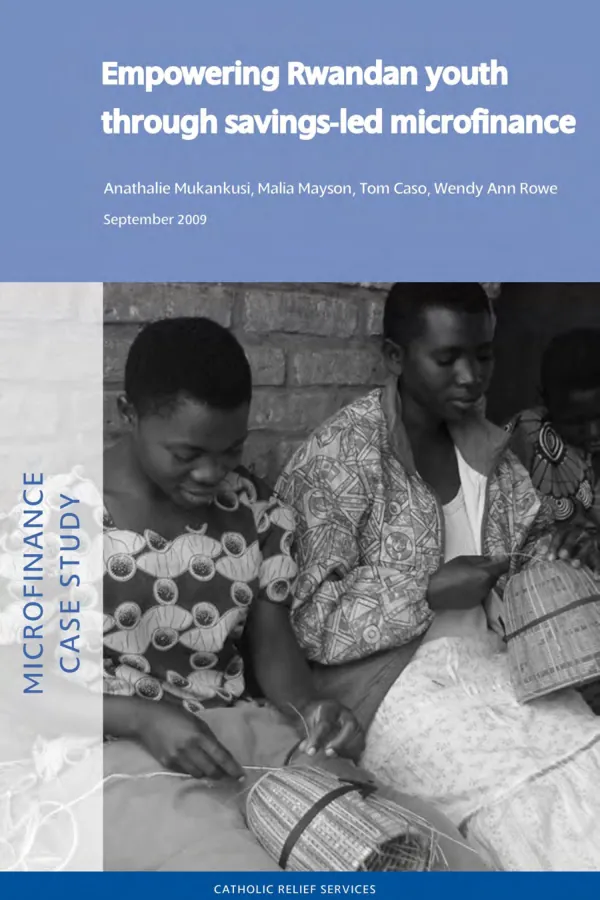
The project's comprehensive package of services included education, health care, and psychosocial support. Vocational training showed promising trends in building sustainable skills for child-headed households. Many children were unable or unwilling to participate in formal schooling, so vocational training was offered in a range of skills, including tailoring, mechanics, and business skills development. The Savings and Internal Lending Communities (SILC) methodology was introduced to the program, allowing youth to save small sums and offer loans to individual group members. The SILC groups operated for 8-12 months, with the savings and internal loans distributed in proportion to their contributions at a share-out or graduation ceremony. The integration of vocational training and SILC in the OVC program proved to be a winning combination, with youth learning practical skills and gaining financial skills through simultaneous participation in SILC groups. The project linked them with apprenticeship opportunities and provided startup kits and training in business skills development and basic accounting. Alexis Habimana, a 16-year-old boy, was left to care for his mother, siblings, and two siblings after his father's passing. He dropped out of school and joined a professional training program that taught him carpentry skills. In six months, he learned the basics of his trade and completed a three-month internship, putting his new skills into practice in a proper work environment. Alexis is now earning more than $52 a month, a dramatic improvement from his previous situation. The project's comprehensive package of services, including vocational training, SILC, and startup kits, has helped him build a sustainable future.