USAID DEC
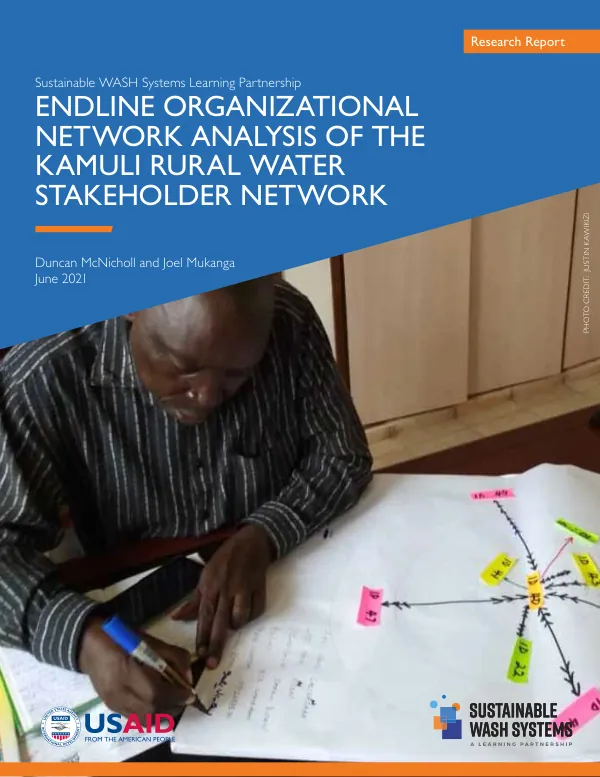
Endline Organizational Network Analysis of the Kamuli Rural Water Stakeholder Network
Sign inENVIRONMENTAL INCENTIVES, LLC
Endline Organizational Network Analysis of the Kamuli Rural Water Stakeholder Network
The Sustainable WASH Systems Learning Partnership is a global United States Agency for International Development (USAID) cooperative agreement with the University of Colorado Boulder (UCB) to identify locally driven solutions to the challenge of developing robust local systems capable of sustaining water, sanitation, and hygiene (WASH) service delivery.
2021 · 25 pages
Sign in to readA free account is required to download.
Abstract
A consortium of partners—Environmental Incentives, IRC, LINC, Oxford University, Tetra Tech, WaterSHED, Whave, and UCB—are demonstrating, learning about, and sharing evidence on systems-based approaches for improving the sustainability of WASH services in four countries. This report is an endline organizational network analysis of the Kamuli rural water stakeholder network, conducted in June 2021. The analysis aimed to understand the relationships between stakeholders involved in rural WASH service delivery in Kamuli District. The study used Organizational Network Analysis (ONA) to examine the network properties, centrality, and changes in the network over time. The network analysis revealed that the Kamuli rural water stakeholder network has undergone significant changes since 2018. The network density and diameter increased, indicating a more connected and cohesive network. The number of network ties also increased, with a higher frequency of interaction among stakeholders. The betweenness centrality of information ties increased, indicating that certain stakeholders played a more critical role in facilitating information exchange. The analysis identified several key findings, including stronger community involvement, improved stakeholder coordination, and increased development partner involvement. The COVID-19 pandemic had a significant impact on the network, with some stakeholders experiencing disruptions in their activities. However, the network showed resilience, with stakeholders adapting to the challenges and continuing to work together. The study also highlighted the importance of clarity of roles between stakeholders, with some stakeholders reporting improved understanding of their roles and responsibilities. The network analysis provided valuable insights into the dynamics of the Kamuli rural water stakeholder network, informing strategies for improving WASH service delivery in the district. The Kamuli WASH network stakeholders include a range of organizations, including the District Water Office, Hand Pump Mechanics Association, Non-Governmental Organizations, National Water and Sewerage Corporation, and Water Source Committee. The network analysis identified key stakeholders, including the District Water Office, which played a central role in facilitating information exchange and coordination among stakeholders. The study used a range of network metrics, including degree, betweenness centrality, and connected components, to analyze the network properties. The analysis revealed that the network had a high degree of centrality, with certain stakeholders playing a critical role in facilitating information exchange. The study also identified isolated network components, which highlighted the need for further engagement and coordination among stakeholders. The network analysis provided valuable insights into the dynamics of the Kamuli rural water stakeholder network, informing strategies for improving WASH service delivery in the district. The study highlighted the importance of continued support for the network, including capacity building, coordination, and communication among stakeholders.
Related documents