ENVIRONMENTAL INCENTIVES, LLC
Sustainable WASH Systems Learning Partnership Semiannual Progress Report
The Sustainable WASH Systems Learning Partnership (SWS) is a global U.S.
2018 · 57 pages
Sign in to readA free account is required to download.
Abstract
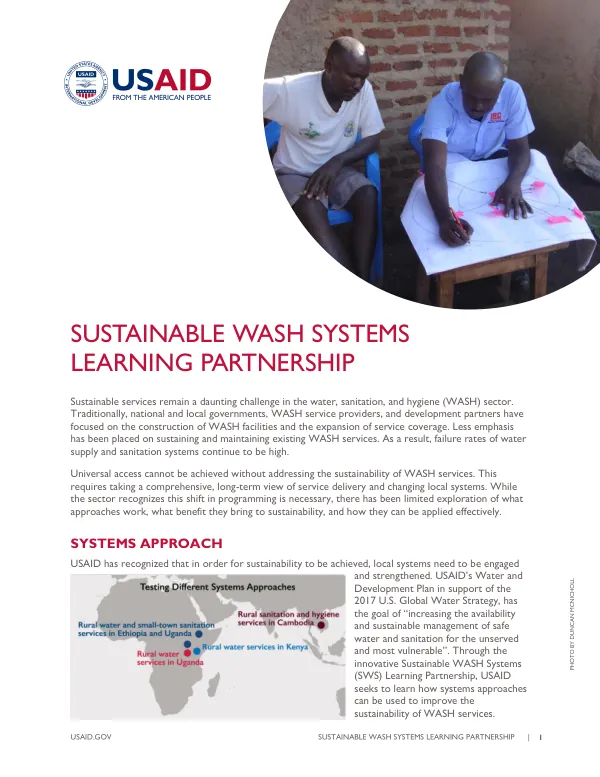
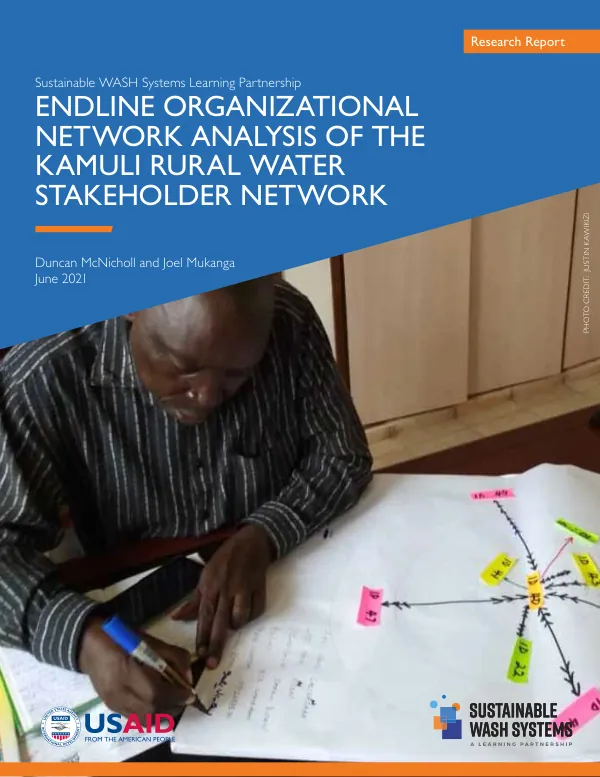
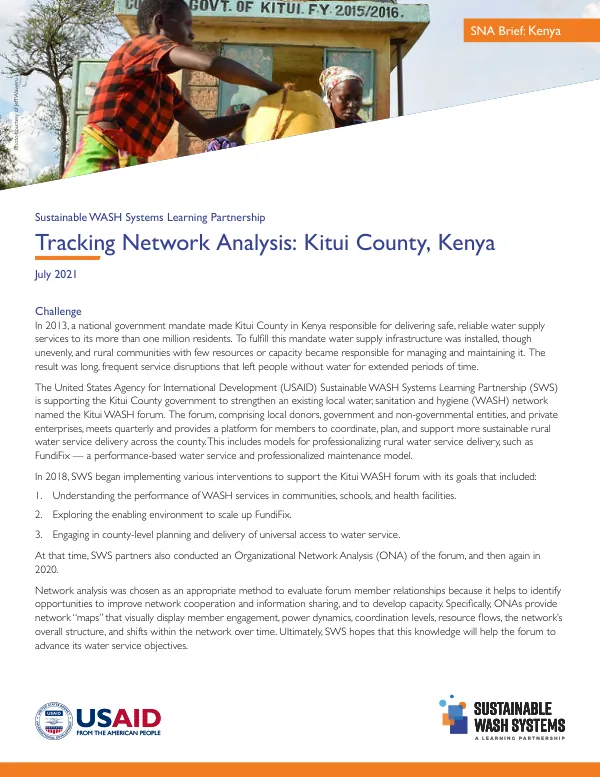
Agency for International Development (USAID) cooperative agreement aimed at developing, demonstrating, learning about, and sharing evidence on systems-based approaches to improve the sustainability of WASH services. The ultimate goal of SWS is to demonstrate the ways in which systems-based approaches can be incorporated effectively into future activities in the WASH sector. The partnership targets two primary outcomes: (1) improve the sustainability of future USAID WASH programs, and (2) catalyze national and international uptake of successful systems-based approaches. To achieve this, the SWS partnership is concurrently testing four concepts, as well as undertaking systematic and rigorous evidence-based learning at the concept-, country-, and consortium- levels. The SWS consortium is comprised of eight partners, who will implement four complementary concepts, co-created with USAID and linked to a common overarching theory of change. Concept Team One, led by IRC, Tetra Tech, and LINC, is working with USAID and local actors in Ethiopia and Uganda to develop and test a structured and replicable approach for engaging with, understanding, and strengthening decentralized district-level systems responsible for water and sanitation service delivery. This approach involves systems mapping and diagnostic tools with district-level stakeholders involved in delivering water and sanitation services in rural areas and small towns. Concept Team Two, led by WaterSHED and LINC, is drawing upon the principles of collective impact and systems thinking to facilitate locally-led and locally-owned efforts to strengthen the rural sanitation and hygiene service delivery system. This project brings together a diverse set of stakeholders – including government, private sector, NGOs, and donors – around a shared vision for universal sanitation and hygienic environments. Concept Team Three, led by Whave, is developing and scaling model district public-private partnerships that sustain reliable rural water supply. These models are developed collaboratively by Whave and national, district, and sub-district governments in Uganda. Whave works both as a benchmark rural water utility service provider and as an advisory and capacity-building body for improved rural WASH regulatory framework and enabling environment. Concept Team Four, led by Oxford and UNICEF/Kenya, is adopting a risk-based approach to rural water supply sustainability in Kenya. The sustainability of rural water systems is influenced by the interaction of institutional, operational, and financial risks. A key challenge for achieving and maintaining the ambitious SDG target for universal and reliable water services requires a fundamental shift in the maintenance models of existing and new water supply infrastructure. The reporting period for this semiannual progress report is Q3-Q4 of FY 2018, covering the period from April 1, 2018 to September 30, 2018. The report provides an update on the progress made by the SWS partnership during this period, including the implementation of the four concepts, lessons learned, and planned activities for the upcoming period.