FEWS NET
Ethiopia Food Security Alert
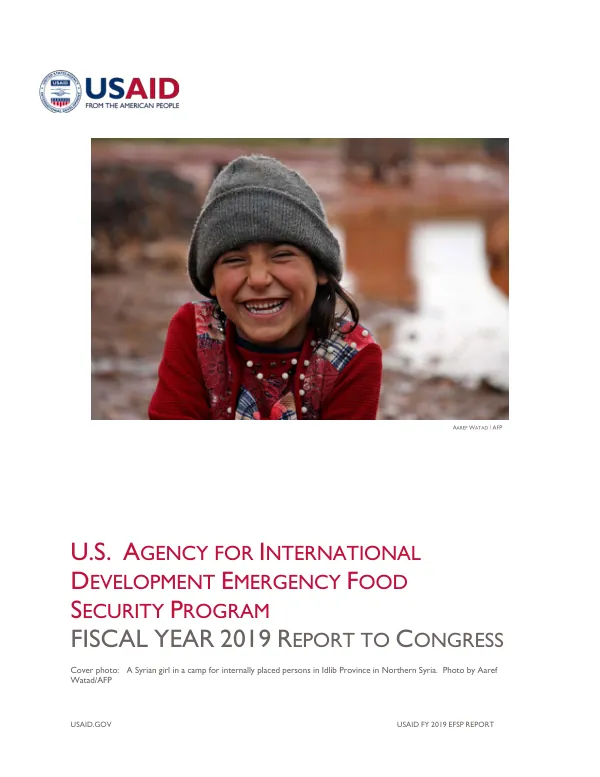
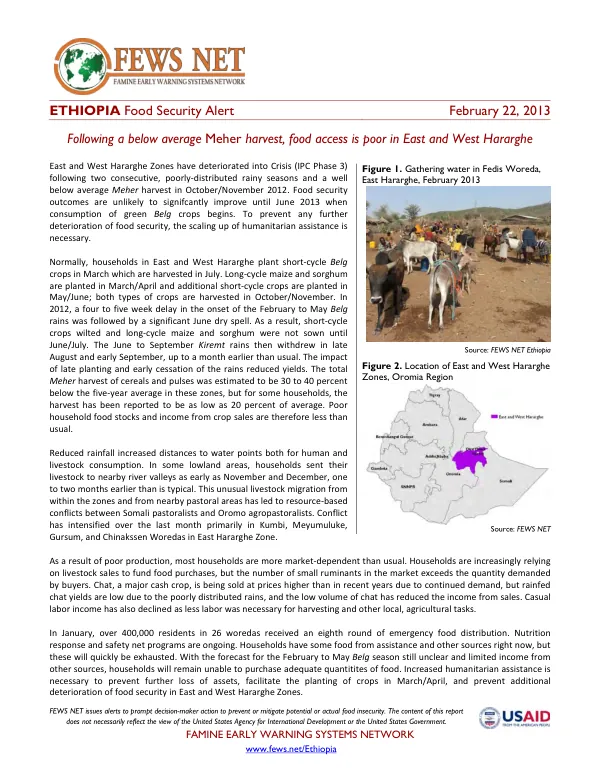
The agricultural situation in East and West Hararghe Zones of Ethiopia has deteriorated significantly following two consecutive, poorly-distributed rainy seasons and a well below average Meher harvest in October/November 2012.
2013 · 1 pages
Sign in to readA free account is required to download.
Abstract
The Meher harvest, which typically occurs in October/November, was severely impacted by a four to five week delay in the onset of the February to May Belg rains and a significant June dry spell. As a result, short-cycle crops wilted and long-cycle maize and sorghum were not sown until June/July, leading to reduced yields. The total Meher harvest of cereals and pulses was estimated to be 30 to 40 percent below the five-year average in these zones, with some households reporting harvests as low as 20 percent of average. Poor household food stocks and income from crop sales are therefore less than usual. Reduced rainfall has also increased distances to water points for both human and livestock consumption, leading to resource-based conflicts between Somali pastoralists and Oromo agropastoralists in some lowland areas. Households in East and West Hararghe are more market-dependent than usual, relying on livestock sales to fund food purchases. However, the number of small ruminants in the market exceeds the quantity demanded by buyers, and chat, a major cash crop, is being sold at prices higher than in recent years due to continued demand. Rainfed chat yields are low due to the poorly distributed rains, and the low volume of chat has reduced the income from sales. Casual labor income has also declined as less labor was necessary for harvesting and other local, agricultural tasks. In response to the crisis, over 400,000 residents in 26 woredas received an eighth round of emergency food distribution in January. Nutrition response and safety net programs are ongoing, but households have some food from assistance and other sources right now, which will quickly be exhausted. With the forecast for the February to May Belg season still unclear and limited income from other sources, households will remain unable to purchase adequate quantities of food. Increased humanitarian assistance is necessary to prevent further loss of assets, facilitate the planting of crops in March/April, and prevent additional deterioration of food security in East and West Hararghe Zones. The situation in East and West Hararghe Zones is expected to remain critical until June 2013, when consumption of green Belg crops begins. To prevent any further deterioration of food security, the scaling up of humanitarian assistance is necessary. This will involve providing emergency food assistance, nutrition response, and safety net programs to support households in meeting their basic food needs.
Related documents