CATHOLIC RELIEF SERVICES ORGANIZATION
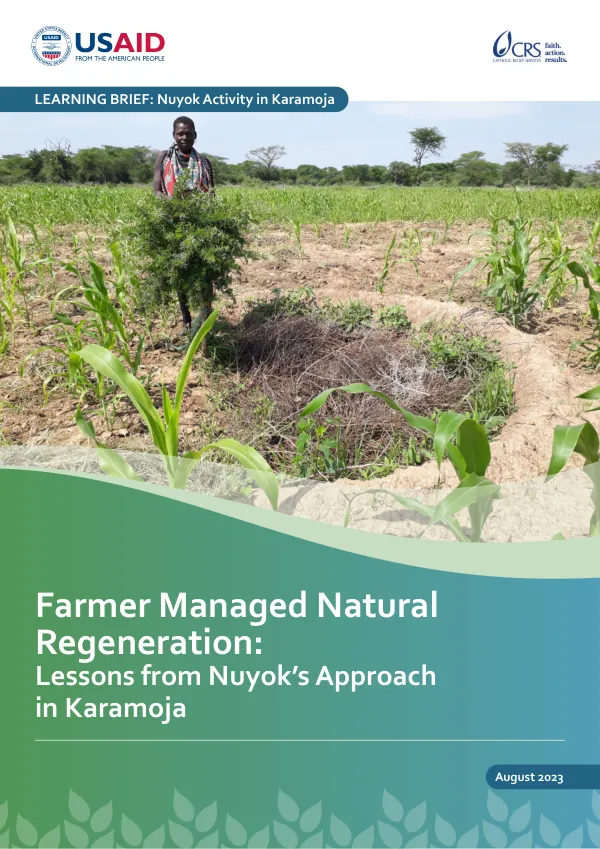
Farmer Managed Natural Regeneration: Lessons from Nuyok’s Approach in Karamoja
The Nuyok Resilience Food Security Activity (RFSA) was a six-year project that aimed to build resilience to shocks and enhance livelihoods in the Karamoja subregion of Northeastern Uganda.
2023 · 11 pages
Sign in to readA free account is required to download.
Abstract
The project was funded by the United States Agency for International Development (USAID) and operated from 2017 to 2023. The project's focus was on strengthening governance, gender equity, community capacity to manage shocks and stresses, and traditional and diversified livelihood opportunities. The project's approach to building resilience was centered around community-led disaster risk management (CLDRM). This approach involved engaging communities through village disaster management committees (VDMCs) to identify and prioritize risks and develop action plans to mitigate them. The project also focused on promoting Farmer Managed Natural Regeneration (FMNR) as a technique to reverse land degradation and improve ecosystem services. FMNR involves protecting and allowing native tree stumps, sprouting roots, and seedlings to grow into bigger trees and shrubs. The project trained VDMCs and community resilience facilitators on FMNR and natural resource management practices, including tree pruning and thinning, as well as soil water harvesting practices such as mulching, semicircular bunds, and contour trenches. The project followed a sequence of steps for rolling out FMNR practices, including site identification, verification, and measurements. Seventeen FMNR sites totaling 116 hectares were designated as learning sites for restoration practices. The project also targeted the roll out of FMNR and natural resource management (NRM) at both the community and farm levels. The project's impact was based on community perception and observations of FMNR practices. The project's findings highlighted the importance of FMNR in reversing land degradation and improving ecosystem services. The project also identified the need for further research on the factors that influence the sustainability of FMNR and its adoption by communities. The project's geographic focus was on the Karamoja subregion of Northeastern Uganda, which has the highest levels of poverty in the country. The project's timeframes were from 2017 to 2023, during which it reached more than 269,000 at-risk people across 524 villages in four Karamoja districts. The project's recommendations for scaling up FMNR practices included targeting the roll out of FMNR and NRM at both the community and farm levels. The project also recommended further research on the factors that influence the sustainability of FMNR and its adoption by communities.
Related documents
Documents in this collection
 2023
2023USAID DEC
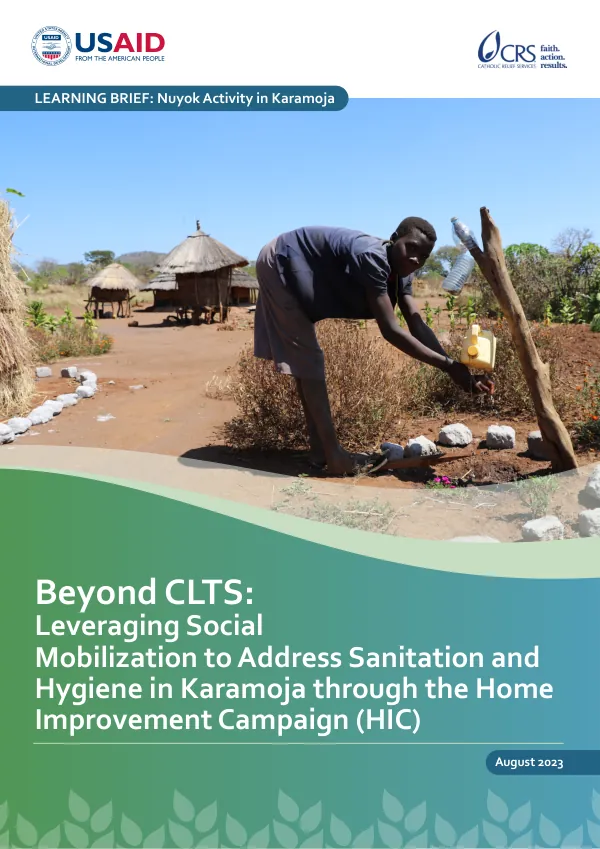
Beyond CLTS: Leveraging Social Mobilization to Address Sanitation and Hygiene in Karamoja through the Home Improvement Campaign (HIC)
Open record 2023
2023USAID DEC