USAID/FFP
Food Assistance to Refugees in Ethiopia
The refugee population in Ethiopia, primarily from South Sudan, Eritrea, and Somalia, has been a significant concern for the international community.
2016 · 1 pages
Sign in to readA free account is required to download.
Abstract
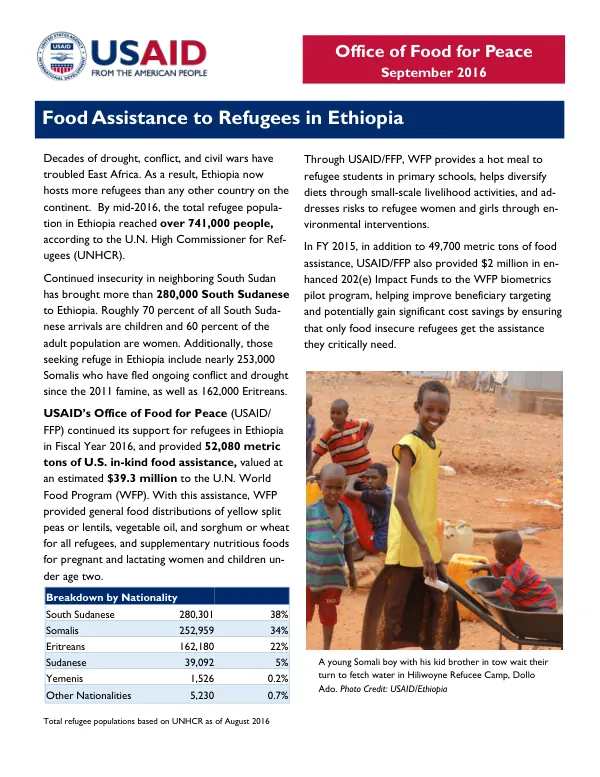
By mid-2016, the total refugee population in Ethiopia exceeded 741,000, with the majority arriving from South Sudan, accounting for 38% of the total. The South Sudanese refugees, mostly women and children, were the largest group, followed by Eritreans and Somalis. The Office of Food for Peace (USAID/FFP) continued its support for refugees in Ethiopia in Fiscal Year 2016, providing 52,080 metric tons of U.S. in-kind food assistance to the World Food Program (WFP). This assistance included yellow split peas or lentils, vegetable oil, and sorghum or wheat for general food distributions. Additionally, WFP provided supplementary nutritious food for pregnant and lactating women and children under the age of two. The WFP, with support from USAID/FFP, implemented various programs to address the needs of refugees in Ethiopia. These programs included providing hot meals to refugee students in primary schools, helping to diversify diets through small-scale livelihood activities, and addressing risks to refugee women and girls through environmental interventions. In Fiscal Year 2015, USAID/FFP also provided enhanced 202(e) Impact Funds to the WFP biometrics pilot program, which aimed to improve targeting and potentially reduce costs by ensuring that only food-insecure refugees received assistance. The breakdown of the refugee population in Ethiopia by nationality, as of August 2016, showed that South Sudanese refugees accounted for 38%, followed by Eritreans (22%), and Somalis (14%). The remaining 26% consisted of refugees from other countries, including Yemenis and individuals from other nationalities. The refugee crisis in Ethiopia has been a pressing issue, with the international community working together to provide assistance to those in need. The Office of Food for Peace (USAID/FFP) has played a crucial role in supporting refugees in Ethiopia, providing food assistance and implementing programs to address their needs.
Related documents