THE WORLD FOOD PROGRAMME
Food for Peace Fact Sheet: Sri Lanka
The Food for Peace program in Sri Lanka is a critical initiative aimed at addressing the country's food security challenges.
2009 · 1 pages
Sign in to readA free account is required to download.
Abstract
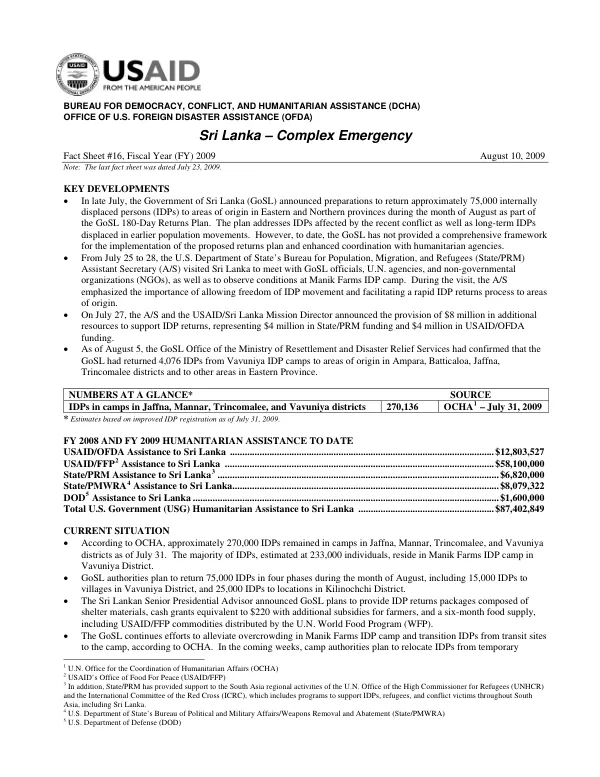
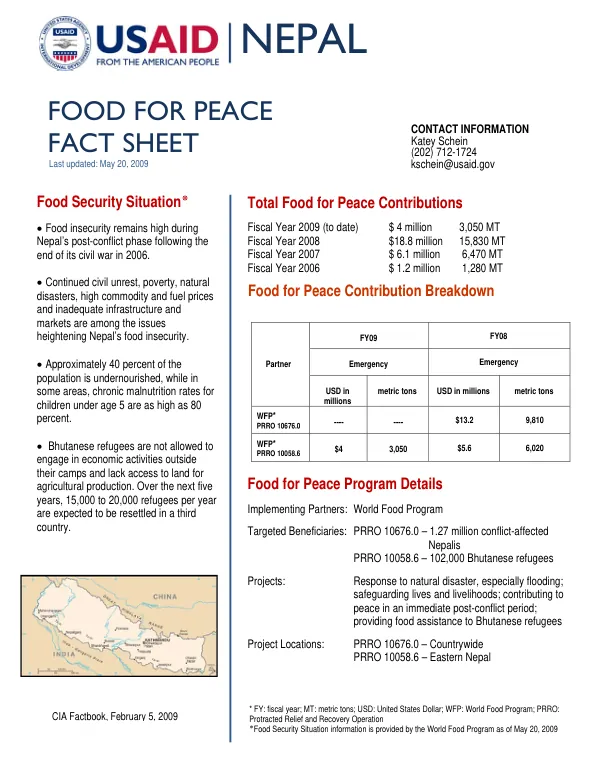
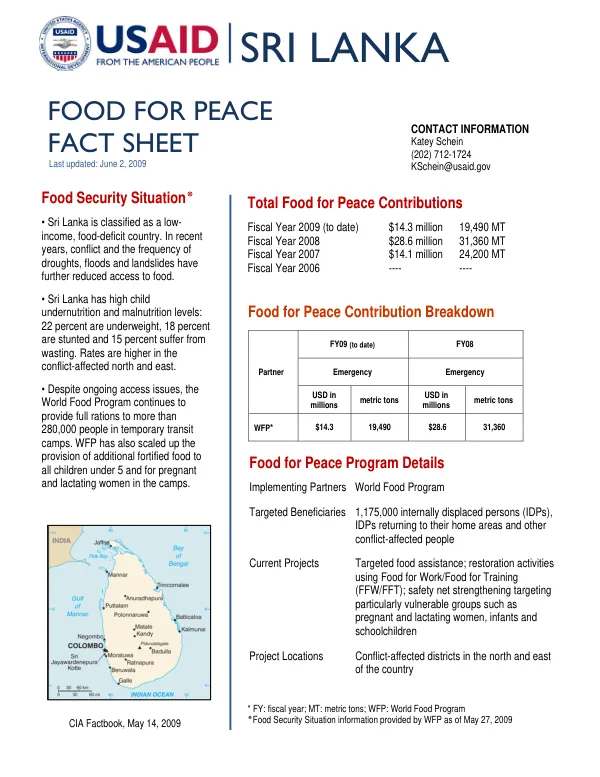
Sri Lanka is classified as a low-income, food-deficit country, with recent conflicts and natural disasters exacerbating access to food. The country's child undernutrition and malnutrition levels are high, with 22 percent of children underweight, 18 percent stunted, and 15 percent suffering from wasting. These rates are particularly concerning in the conflict-affected north and east. The World Food Program (WFP) continues to provide full rations to over 280,000 people in temporary transit camps, while also scaling up the provision of additional fortified food to all children under 5 and pregnant and lactating women in the camps. The Food for Peace program targets 1,175,000 internally displaced persons (IDPs), IDPs returning to their home areas, and other conflict-affected people. The program's implementing partner is the World Food Program. The program's current projects focus on targeted food assistance, restoration activities using Food for Work/Food for Training (FFW/FFT), and safety net strengthening targeting particularly vulnerable groups such as pregnant and lactating women, infants, and schoolchildren. The project locations are conflict-affected districts in the north and east of the country. The program's goal is to improve food security and alleviate the suffering of conflict-affected populations. In terms of funding, the Food for Peace program has received $14.3 million in contributions for Fiscal Year 2009, which has enabled the provision of 19,490 metric tons of food assistance. In comparison, the program received $28.6 million in contributions for Fiscal Year 2008, which enabled the provision of 31,360 metric tons of food assistance. The program's contributions have been instrumental in supporting the WFP's efforts to provide food assistance to vulnerable populations in Sri Lanka. The program's impact is evident in the significant increase in food assistance provided to conflict-affected populations. The WFP's efforts have been crucial in addressing the food security challenges faced by Sri Lanka, particularly in the conflict-affected north and east. The Food for Peace program's continued support is essential in ensuring that vulnerable populations have access to food and other essential services.