USAID DEC
Fundamentals of Climate Change Adaptation
Climate change adaptation is a critical component of addressing the impacts of global warming.
2011 · 2 pages
Sign in to readA free account is required to download.
Abstract
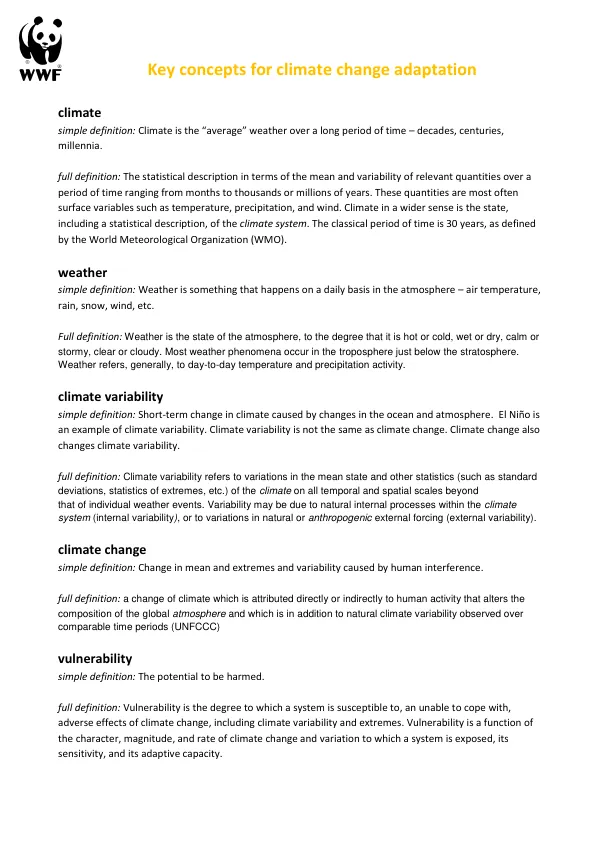
The concept of climate variability is distinct from climate change, with the former referring to natural fluctuations in the climate system. Climate variability can be used as a proxy for understanding the impacts of climate change, as events like El Niño can provide insights into the potential effects of climate change on ecosystems and human populations. Adaptation is a complex concept that involves understanding the differences between coping, building resilience, and adaptation. Coping refers to short-term measures to mitigate the effects of climate change, while building resilience involves long-term strategies to enhance the ability of ecosystems and human populations to withstand climate-related stressors. Adaptation, on the other hand, involves changing or modifying existing practices to reduce vulnerability to climate change. The development of adaptation solutions requires a range of strategies, including the use of new and innovative approaches, as well as the adaptation of existing practices. The cost of adaptation can vary widely, depending on the specific context and the type of adaptation strategy employed. Examples of adaptation options being tested around the world include the use of climate-resilient agriculture, the implementation of early warning systems for climate-related disasters, and the development of climate-resilient infrastructure. Integrated adaptation solutions that consider both ecosystem and human well-being are critical for addressing the impacts of climate change. This approach involves working together across sectors, including conservation and development, to develop adaptation strategies that are holistic and effective. Maladaptation, which occurs when adaptation strategies exacerbate existing problems, is a significant concern, and efforts to avoid maladaptation are essential. Vulnerability assessments are a critical component of adaptation planning, as they provide a framework for understanding and measuring the degree to which communities, resources, and ecosystems are vulnerable to climate-related stressors. These assessments can be conducted at the landscape or community level, and involve the use of a range of methodologies, including the use of indicators and the analysis of climate-related data. The Happy Village exercise, which involves working in small groups to evaluate adaptation options for a small coastal community, provides a practical example of the importance of developing adaptation options that consider the vulnerabilities of both ecosystems and human well-being. This exercise highlights the need for a holistic and integrated approach to adaptation, one that considers the complex interactions between ecosystems and human populations. The conservation and development fields have long recognized the advantages of working together for mutual benefit, and success in adapting to climate change demands that these two sectors work together in a holistic and integrated manner. Integrated adaptation approaches have been successful in a range of contexts, including the use of ecosystem-based adaptation and the development of climate-resilient infrastructure. However, barriers to integrated adaptation, including the lack of coordination and the absence of clear guidelines, must be overcome in order to achieve effective adaptation outcomes. Disaster risk reduction and links to adaptation are critical components of climate change adaptation planning. Understanding and assessing vulnerability is the first step in adapting to the impacts of climate change, and vulnerability assessments provide a framework for understanding and measuring the degree to which communities, resources, and ecosystems are vulnerable to climate-related stressors.
Related documents