USAID DEC
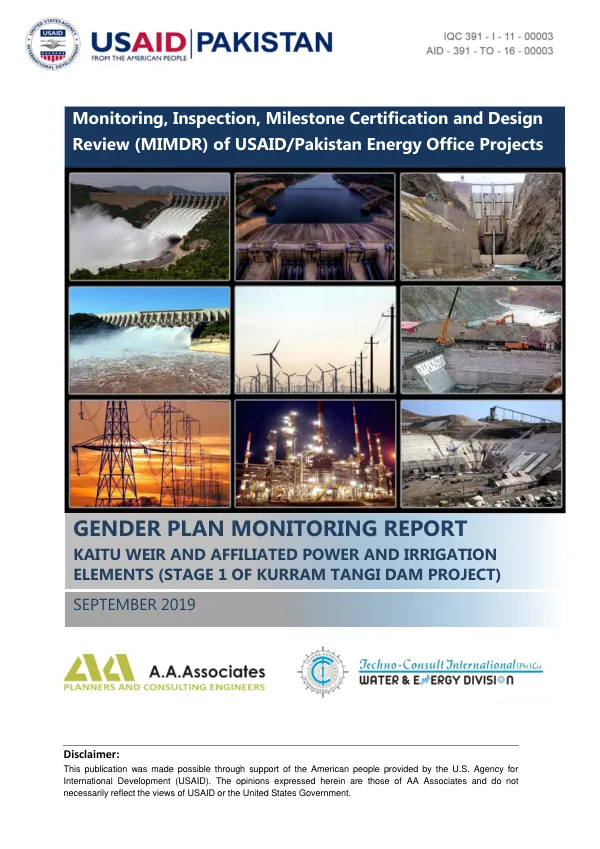
Gender Plan Monitoring Report Kaitu Weir and Affiliated Power and Irrigation Elements Stage 1 of Kurram Tangi Dam Project
Sign inABT ASSOCIATES
Gender Plan Monitoring Report Kaitu Weir and Affiliated Power and Irrigation Elements Stage 1 of Kurram Tangi Dam Project
The Kaitu Weir and Affiliated Power and Irrigation Elements project, stage 1 of the Kurram Tangi Dam Project, is a construction phase initiative aimed at promoting gender equality and addressing social and environmental concerns.
2019 · 17 pages
Sign in to readA free account is required to download.
Abstract
The project is being implemented in the Khyber Pakhtunkhwa province of Pakistan, with a focus on the local communities affected by the project. The project's gender plan involves several key parameters, including staff capacity-building, awareness-raising, and community-based gender teams. The project has made significant progress in these areas, with training sessions conducted for project staff on gender concerns and awareness-raising sessions held with local communities, including meetings with Maliks and local NGOs. The project has also identified key entry points to reach women for project benefits, including provision of sewing machines, vocational centers, kitchen gardening, and solar water supply schemes. The project has engaged local staff, including a Social Organizer who is fluent in the local language of Pushto, to disseminate project information verbally and with pictures to overcome language and illiteracy barriers. The project has also established Public Information Centers (PICs) in project offices, where all project-related information is available to the public. Additionally, the project has provided schools with furniture and solar-powered water schemes, and has launched an advocacy campaign promoting the value of education and motivating parents to send their children to school. The project's monitoring and evaluation team has conducted regular meetings with project staff, local NGOs, and community members to assess progress and identify areas for improvement. The team has also reviewed project documents and records to ensure compliance with the gender action plan. Overall, the project has made significant progress in promoting gender equality and addressing social and environmental concerns, and is expected to continue its efforts in the coming quarters. The project's implementation is being monitored and evaluated by the MIMDR project office, which is responsible for ensuring compliance with the gender action plan and reporting progress to the USAID MEO, COR, Activity Manager, and Project Director. The project's reporting period is from July to September 2019, and the monitoring team consists of Dr. Sardar Ahsan Younus and Romana Sajid. The project's focus on gender equality and social and environmental concerns is in line with the USAID's goals and objectives, which aim to promote economic growth, reduce poverty, and improve living standards in Pakistan. The project's success will depend on its ability to engage local communities, promote gender equality, and address social and environmental concerns, and it is expected to continue its efforts in the coming quarters to achieve its objectives.