KWAME NKRUMAH UNIVERSITY OF SCIENCE AND TECHNOLOGY
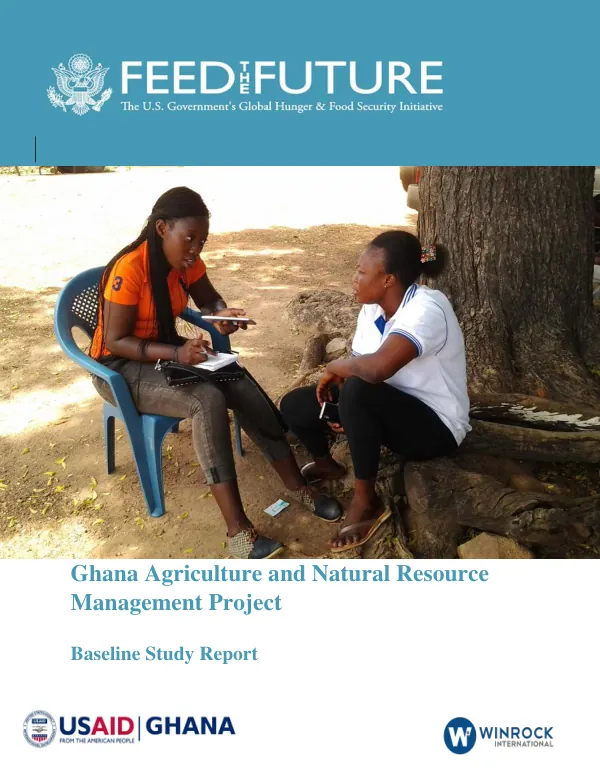
Ghana Agriculture and Natural Resource Management Project Baseline Study Report
The Ghana Agriculture and Natural Resource Management Project Baseline Study Report was prepared by the Bureau of Integrated Rural Development, in collaboration with the Kwame Nkrumah University of Science and Technology, and submitted to the USAID Agreement Officer's Representative, Gloria Odoom.
2018 · 93 pages
Sign in to readA free account is required to download.
Abstract
The report was made possible through the generous support of the American people through the U.S. Agency for International Development (USAID) under the Feed the Future initiative. The project aims to improve agricultural productivity and natural resource management in Ghana, with a focus on the country's rural areas. The baseline study report provides a comprehensive overview of the demographic and socio-economic characteristics of the respondents, as well as their access to land and natural resources, household income, food and nutritional security, climate change perception, and access to public services. The report highlights that the majority of the respondents are farmers, with a significant proportion of them being women. The average household size is 5.3 persons, with an average of 2.3 persons per household engaged in farming activities. The majority of the households have access to land, with an average size of 2.5 acres per household. However, the report notes that the mode of securing access to land varies by household type, with women-headed households being more likely to secure land through inheritance or purchase. The report also highlights the importance of natural resource products (NRPs) in the livelihoods of the respondents. The majority of the households have access to NRPs, with an average of 2.5 NRPs per household. The most common NRPs accessed by the households include firewood, charcoal, and medicinal plants. The report notes that the average household income from NRPs is GHS 1,500 (approximately USD 300) per year. In terms of food and nutritional security, the report highlights that the majority of the households have a moderate level of dietary diversity, with an average household dietary diversity score of 5.5. However, the report notes that the households with higher dietary diversity scores are more likely to have access to NRPs and have a higher level of resilience. The report also highlights the importance of climate change perception and information in the livelihoods of the respondents. The majority of the households perceive climate change as a significant threat to their livelihoods, with an average of 70% of the households indicating that they have experienced changes in rainfall and temperature in the past 10 years. The report notes that the households with higher levels of climate change perception are more likely to have a higher level of resilience. In terms of access to public services, the report highlights that the majority of the households have access to basic health care, with an average of 80% of the households indicating that they have access to a health facility within a 5-kilometer radius. However, the report notes that the households with higher levels of access to public services are more likely to have a higher level of resilience. The report concludes that the baseline study provides a comprehensive overview of the demographic and socio-economic characteristics of the respondents, as well as their access to land and natural resources, household income, food and nutritional security, climate change perception, and access to public services. The report highlights the importance of addressing the challenges faced by the respondents, including limited access to land and natural resources, low household income, and limited access to public services. The report recommends that the project should focus on improving access to land and natural resources, increasing household income, and improving access to public services, particularly in the areas of health care and education.