FOOD AND AGRICULTURE ORGANIZATION OF THE UNITED NATIONS IN GEORGIA
Greenhouse Gas Emissions in Liberia
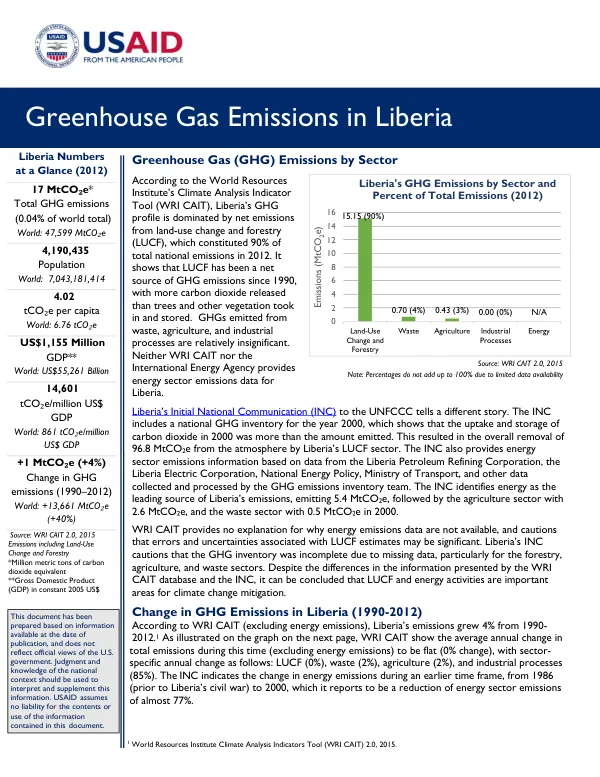
Liberia's GHG emissions profile is dominated by net emissions from land-use change and forestry (LUCF), which accounted for 90% of total national emissions in 2012.
2015 · 2 pages
Sign in to readA free account is required to download.
Abstract
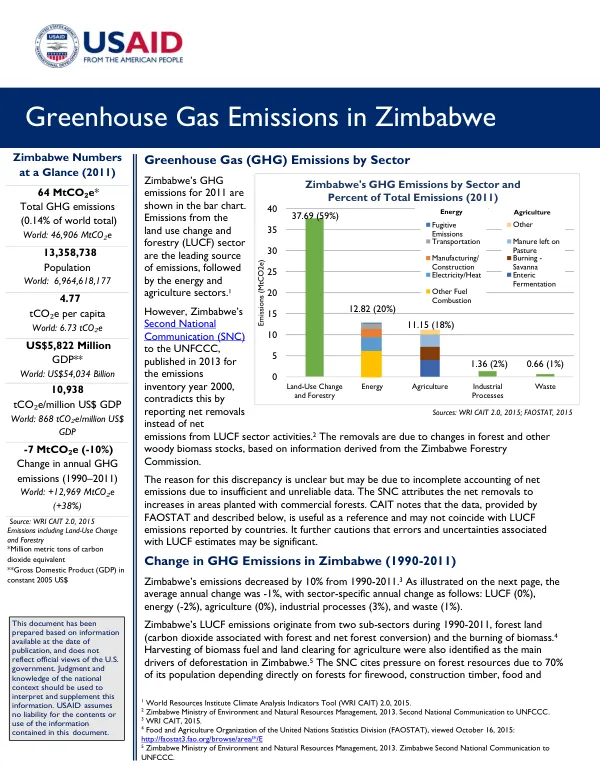
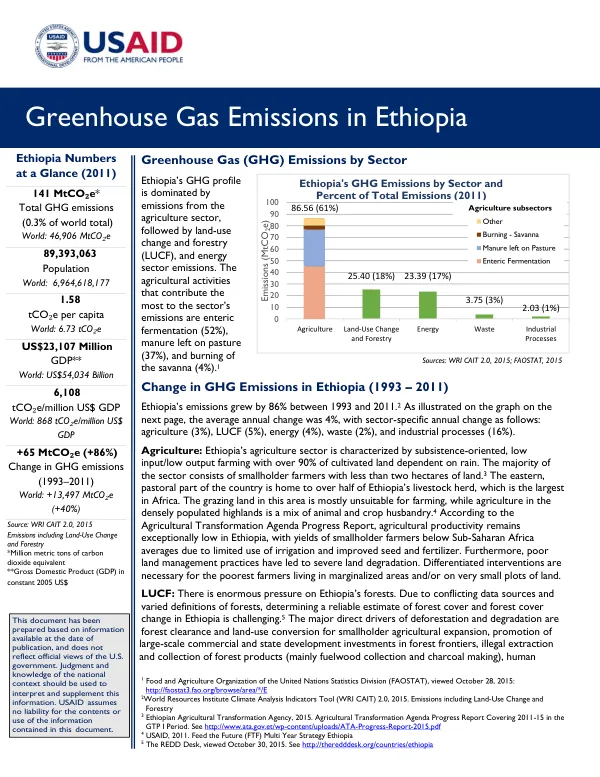
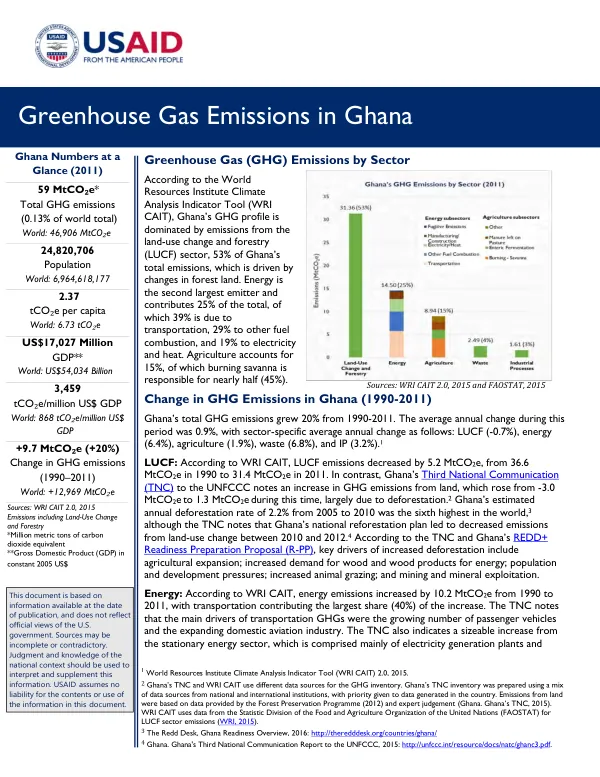
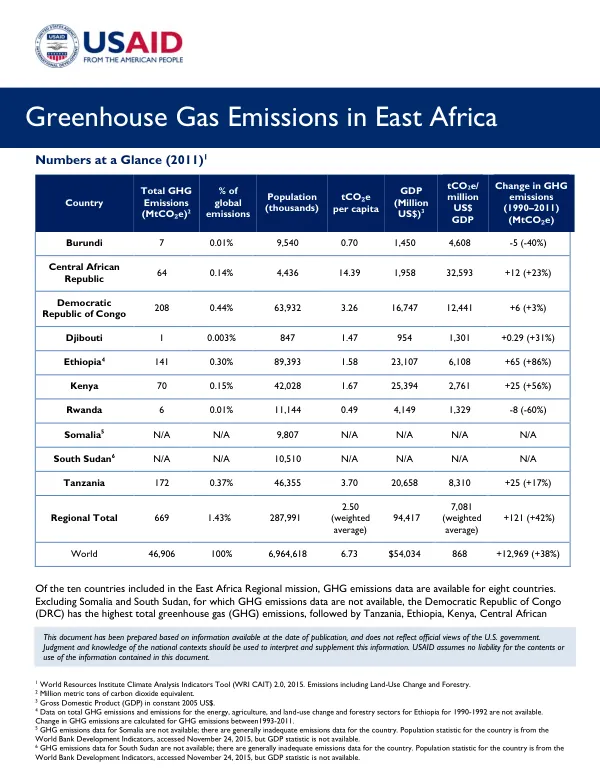
LUCF has been a net source of GHG emissions since 1990, with more carbon dioxide released than trees and other vegetation absorbed. In contrast, GHG emissions from waste, agriculture, and industrial processes are relatively low. The Initial National Communication (INC) to the UNFCCC presents a different story, with a national GHG inventory for the year 2000 showing that the uptake and storage of carbon dioxide in 2000 resulted in the overall removal of 96.8 million metric tons of CO2 equivalent (MtCO2e) from the LUCF sector. The INC also identifies energy as the leading source of Liberia's emissions, emitting 5.4 MtCO2e, followed by the agriculture sector with 2.6 MtCO2e, and the waste sector with 0.5 MtCO2e in 2000. Liberia's forest cover is approximately 45% of the total land area, with an estimated annual deforestation rate of 0.2% or 2.6% forest loss per year. Drivers of deforestation include logging, charcoal, and the use of firewood for heating and cooking. The INC projects that stricter forest regulations and concessions will reverse deforestation. Liberia's energy sector is dominated by petroleum products, primarily gasoline and diesel, which supply over 96% of the country's primary energy. The INC reports that energy is the leading source of GHG emissions due to the use of petroleum products, firewood, charcoal, and palm oil. The country has a long-term strategy to achieve carbon neutrality by 2050 and is developing a National Climate Change Policy and implementing REDD+ readiness. Liberia's carbon intensity is approximately 17 times the global average, indicating significant potential for reducing GHG emissions relative to GDP. The country's INDC identifies four mitigation scenarios that, combined, have the potential to reduce GHG emissions by 15% (797,000 tCO2e) from projected business-as-usual (BAU) emissions in 2030. Achieving the INDC is conditioned upon receipt of financial resources, capacity building, and technology transfer from the international community. Liberia's GDP and average annual change in GHG emissions from 1990 to 2012 show a 4% increase in emissions, with sector-specific annual changes as follows: LUCF (0%), waste (4%), agriculture (2%), and industrial processes (85%). The INC indicates a reduction of energy emissions of almost 78% from 1986 to 2000.