USAID'S MATERNAL AND CHILD SURVIVAL PROGRAM/JOHN SNOW, INC.
Handwashing: Postnatal Entrance
The Maternal and Child Survival Program emphasizes the importance of hand hygiene in preventing the spread of infection among newborns.
2019 · 1 pages
Sign in to readA free account is required to download.
Abstract
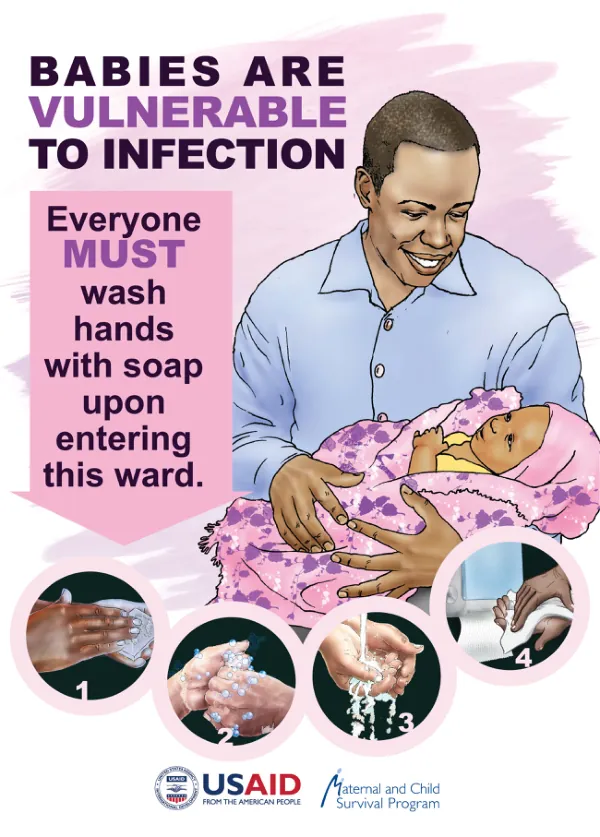
Babies are particularly vulnerable to infection due to their immature immune systems. To mitigate this risk, strict handwashing protocols are enforced in the ward where newborns are cared for. All individuals entering the ward are required to wash their hands with soap upon entry. This measure is crucial in preventing the transmission of pathogens that can cause serious illness in newborns. The program recognizes the critical role that hand hygiene plays in protecting vulnerable populations, particularly those in the early stages of life. The program's handwashing protocol is designed to be simple and effective. Upon entering the ward, individuals must wash their hands with soap and water. This basic yet essential practice is a critical component of infection prevention and control. By prioritizing hand hygiene, the program aims to create a safe environment for newborns and their families. The Maternal and Child Survival Program's focus on hand hygiene is part of a broader effort to improve maternal and child health outcomes. By addressing the root causes of infection and promoting evidence-based practices, the program seeks to reduce morbidity and mortality rates among newborns and their families. The program's commitment to hand hygiene is a key aspect of this effort, underscoring the importance of this simple yet effective practice in protecting vulnerable populations. The program's emphasis on hand hygiene is also reflective of the broader global health community's recognition of the critical role that infection prevention and control play in improving health outcomes. By prioritizing hand hygiene and other evidence-based practices, the program aims to contribute to a safer and healthier environment for newborns and their families.